THE ADVENTURE COLLECTIVE® · Independent discovery and booking for outdoor travel

Speed past long road transfers with a morning flight to Abu Simbel—stand beneath Ramses II’s colossi, explore the Nefertari temple, and learn the story of the 1960s relocation from an Egyptologist guide. This private day trip returns to Aswan the same afternoon.
Speed past long road transfers with a morning flight to Abu Simbel—stand beneath Ramses II’s colossi, explore the Nefertari temple, and learn the story of the 1960s relocation from an Egyptologist guide. This private day trip returns to Aswan the same afternoon.
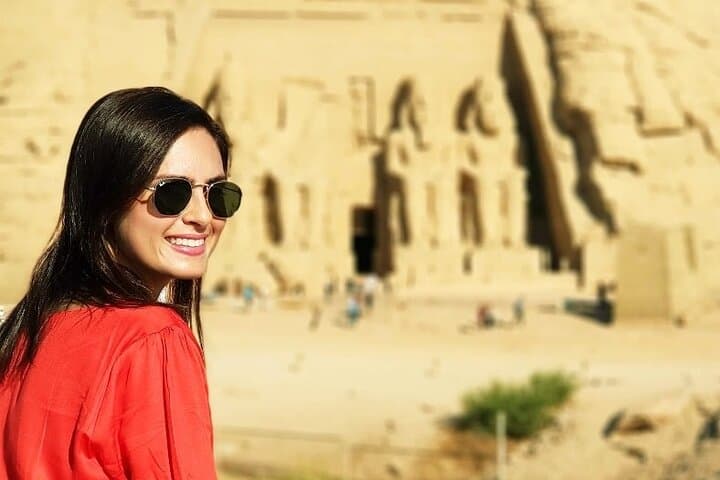
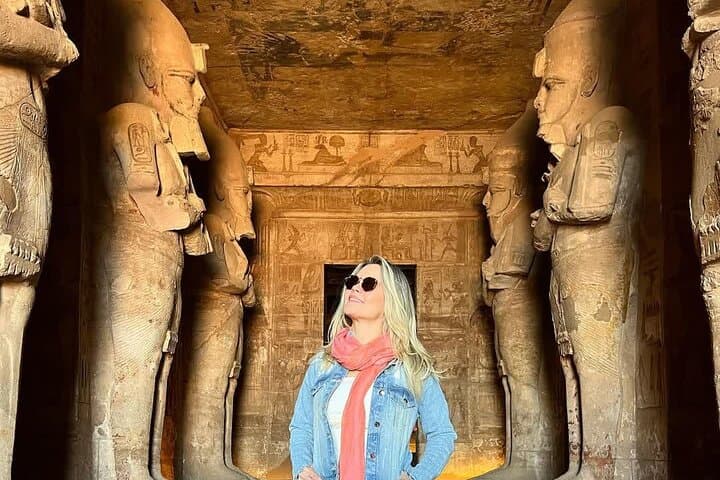
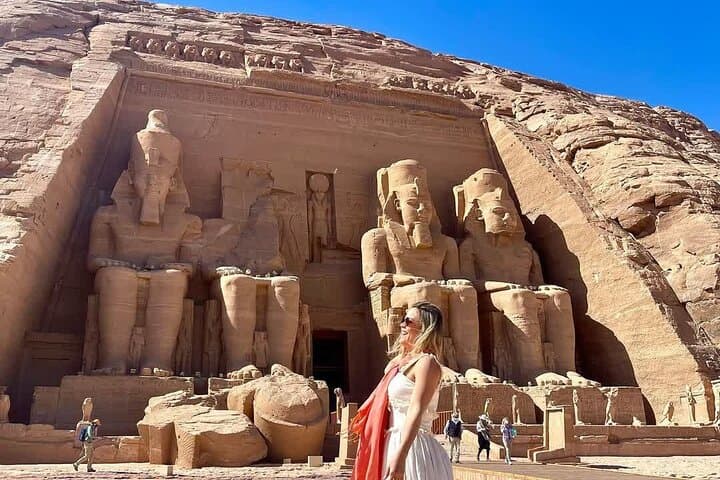
The plane climbs out of Aswan at first light and the desert widens beneath you; Lake Nasser lies like a slow-breathing giant guiding the route toward two colossal stone faces. At Abu Simbel the four seated colossi of Ramses II dominate the approach, their features chipped by time but utterly present. Baboons and Hathoric columns punctuate the facades while narrow stairways lead into dim, painted chambers.
Verified experiences and guided adventures in the surrounding area.
Operated by Bastet Travel · Abu Simbel, Aswan Governorate
The plane climbs out of Aswan at first light and the desert widens beneath you; Lake Nasser lies like a slow-breathing giant guiding the route toward two colossal stone faces. At Abu Simbel the four seated colossi of Ramses II dominate the approach, their features chipped by time but utterly present. Baboons and Hathoric columns punctuate the facades while narrow stairways lead into dim, painted chambers.
Discovered in 1813 and famously relocated in the 1960s to escape the rising waters behind the Aswan High Dam, the Great Temple of Ramses II and the adjoining temple to Nefertari sit on sandstone terraces that record pharaonic power in stone and pigment. The temples’ orientation still catches low-angle sun at specific times of year, an astronomical flourish that rewards careful observation.
Culturally the site is an exercise in scale and statecraft; an Egyptologist guide turns hieroglyphs and battle scenes into readable narratives, and the visitor center explains the international conservation project that moved the complex. Expect dry heat, reflective sand, and short but sometimes steep steps inside the sanctuaries.
Practical points: flying from Aswan compresses travel time but requires an early hotel pickup and basic ID checks. Wear sturdy closed shoes for uneven stone, bring 1–2 liters of water, sun protection, and a small camera with a fast lens for interior shots. The full excursion takes roughly 6–8 hours door-to-door—allow extra time for queues and the slow, contemplative moments on the lakeshore before you fly back to Aswan.
easy.
6–8 hours.
Suitable for most fitness levels; involves short walks on flat ground and climbing several sets of stairs inside temples.
Plan for approximately 6–8 hours door-to-door, including hotel pickup, flight time, site visits, and return transfer to your hotel in Aswan.
The site has some level terrain around the entrance, but interiors involve narrow, stepped passageways; assistance and shorter routes can sometimes be arranged—ask at booking.
Photography is allowed in many areas but flash and tripods may be restricted to protect pigments; follow your Egyptologist guide and posted signs.
Yes—the standard visit includes both the Great Temple of Ramses II and the Temple of Nefertari, with time for guided interpretation and photo stops.
Built in the 13th century BCE, the twin temples were moved in blocks during a UNESCO-backed operation in the 1960s to save them from flooding caused by the Aswan High Dam.
Site management limits interior crowding and enforces photography rules to protect wall pigments; visitors are asked to carry out waste and keep to marked paths.
Bastet Travel operates guided outdoor trips and adventures with an emphasis on safety, stewardship, and memorable experiences.
The plane climbs out of Aswan at first light and the desert widens beneath you; Lake Nasser lies like a slow-breathing giant guiding the route toward two colossal stone faces. At Abu Simbel the four seated colossi of Ramses II dominate the approach, their features chipped by time but utterly present. Baboons and Hathoric columns punctuate the facades while narrow stairways lead into dim, painted chambers.
The plane climbs out of Aswan at first light and the desert widens beneath you; Lake Nasser lies like a slow-breathing giant guiding the route toward two colossal stone faces. At Abu Simbel the four seated colossi of Ramses II dominate the approach, their features chipped by time but utterly present. Baboons and Hathoric columns punctuate the facades while narrow stairways lead into dim, painted chambers.
Discovered in 1813 and famously relocated in the 1960s to escape the rising waters behind the Aswan High Dam, the Great Temple of Ramses II and the adjoining temple to Nefertari sit on sandstone terraces that record pharaonic power in stone and pigment. The temples’ orientation still catches low-angle sun at specific times of year, an astronomical flourish that rewards careful observation.
Culturally the site is an exercise in scale and statecraft; an Egyptologist guide turns hieroglyphs and battle scenes into readable narratives, and the visitor center explains the international conservation project that moved the complex. Expect dry heat, reflective sand, and short but sometimes steep steps inside the sanctuaries.
Practical points: flying from Aswan compresses travel time but requires an early hotel pickup and basic ID checks. Wear sturdy closed shoes for uneven stone, bring 1–2 liters of water, sun protection, and a small camera with a fast lens for interior shots. The full excursion takes roughly 6–8 hours door-to-door—allow extra time for queues and the slow, contemplative moments on the lakeshore before you fly back to Aswan.