THE ADVENTURE COLLECTIVE® · Independent discovery and booking for outdoor travel

Watch orphaned elephants take their milk at David Sheldrick, tour a women-run bead factory, then head into Nairobi National Park for a game drive—an efficient half-day that pairs conservation, craft and city-adjacent wildlife.
Watch orphaned elephants take their milk at David Sheldrick, tour a women-run bead factory, then head into Nairobi National Park for a game drive—an efficient half-day that pairs conservation, craft and city-adjacent wildlife.
You step out of the van into a clearing where the city’s skyline is a distant silhouette and the air smells of dusty grass and acacia. Between 11:00 and 12:00 the orphanage opens a small window on rescue and recovery: baby elephants trot in, take bottle feeds, and roll in the dust as keepers call them by name. The scene is intimate and disciplined — a working rescue with routines and stories.
Verified experiences and guided adventures in the surrounding area.
Operated by Gracepatt Ecotours Kenya · Nairobi, Nairobi County
You step out of the van into a clearing where the city’s skyline is a distant silhouette and the air smells of dusty grass and acacia. Between 11:00 and 12:00 the orphanage opens a small window on rescue and recovery: baby elephants trot in, take bottle feeds, and roll in the dust as keepers call them by name. The scene is intimate and disciplined — a working rescue with routines and stories.
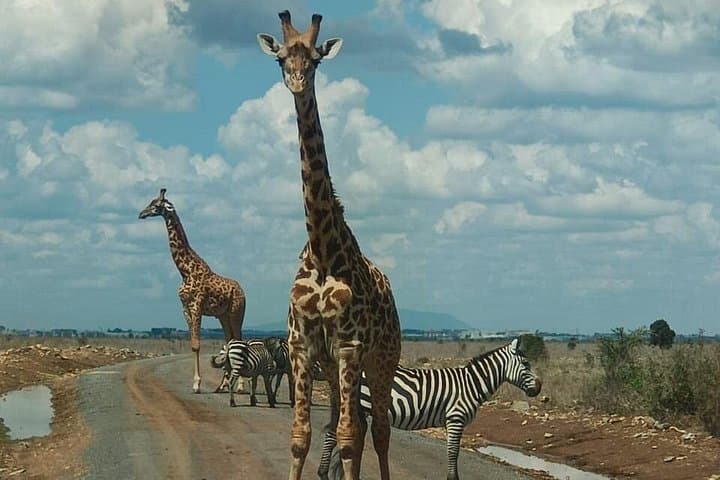
The tour threads contemporary conservation, local craft and urban wilderness into a single half-day loop. David Sheldrick Wildlife Trust grew from on-the-ground rescue work started by David Sheldrick; today the orphanage pairs public viewing with rehabilitation. Nearby, the Kazuri Beads factory channels Nairobi’s informal economy into handmade ceramics and employs single mothers, blending social enterprise with craft tradition. The game drive at Nairobi National Park contrasts sharply: short-grass plains, kopjes, and the odd acacia form a patchwork where lions, giraffes and black rhinos still range close to the city.
Practical details matter: most departures include hotel pickup around 9:30, the orphanage visit is fixed to 11:00–12:00, and the full experience runs about five hours. Wear closed shoes for light walking, bring sun protection and a small pair of binoculars for the park, and plan for morning chill or afternoon heat depending on season. Photography is allowed but follow keepers’ directions and keep noise low; the point is observation and support of active conservation, not disturbance. With basic planning this tour delivers a compact, informative introduction to Kenya’s urban-side wildlife and community-driven craft.
easy.
5 hours.
Minimal fitness required—short, flat walks and seated time in a safari van; suitable for most travelers
Public viewing at David Sheldrick is scheduled between 11:00 and 12:00 and is included in this tour’s itinerary.
Yes; the experience is family-friendly but infants must sit on an adult’s lap and strollers are permitted for small children.
The guide aims to show a variety of species; sightings of lions are possible but never guaranteed—wildlife movements are unpredictable.
Yes—most departures include hotel pickup (approximate pickup around 9:30) and drop-off at the end of the tour.
David Sheldrick Wildlife Trust began as an on-the-ground rescue initiative and has since formalized rehabilitation and reintroduction programs; Nairobi National Park was established in 1946 as one of the world’s first urban-adjacent national parks.
Visitor fees and donations support rescue, veterinary care and anti-poaching efforts; keep noise low and follow rules to minimize stress on animals and habitat.
Gracepatt Ecotours Kenya operates guided outdoor trips and adventures with an emphasis on safety, stewardship, and memorable experiences.
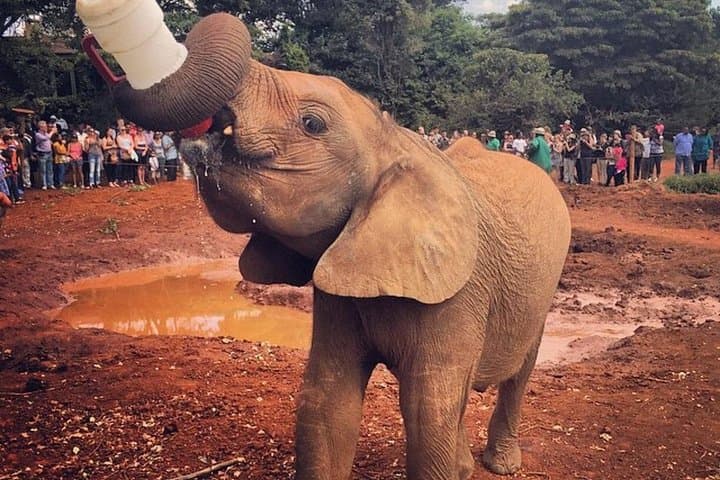
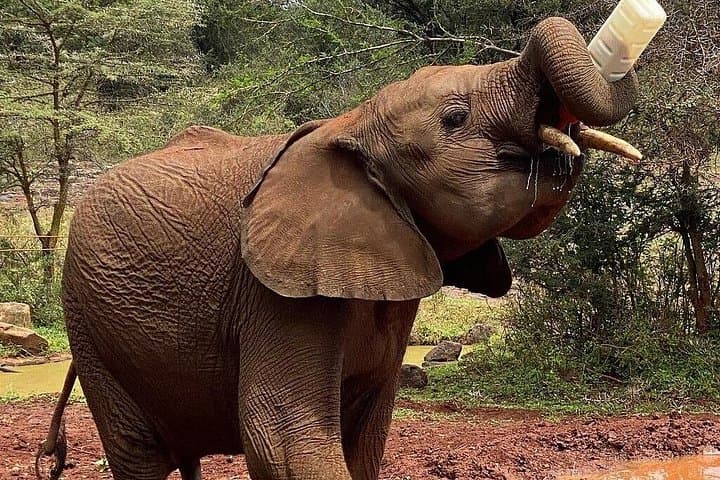
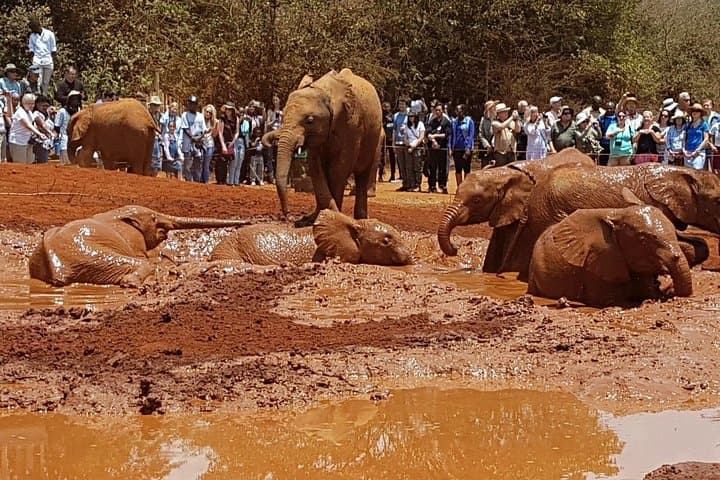
You step out of the van into a clearing where the city’s skyline is a distant silhouette and the air smells of dusty grass and acacia. Between 11:00 and 12:00 the orphanage opens a small window on rescue and recovery: baby elephants trot in, take bottle feeds, and roll in the dust as keepers call them by name. The scene is intimate and disciplined — a working rescue with routines and stories.
You step out of the van into a clearing where the city’s skyline is a distant silhouette and the air smells of dusty grass and acacia. Between 11:00 and 12:00 the orphanage opens a small window on rescue and recovery: baby elephants trot in, take bottle feeds, and roll in the dust as keepers call them by name. The scene is intimate and disciplined — a working rescue with routines and stories.
The tour threads contemporary conservation, local craft and urban wilderness into a single half-day loop. David Sheldrick Wildlife Trust grew from on-the-ground rescue work started by David Sheldrick; today the orphanage pairs public viewing with rehabilitation. Nearby, the Kazuri Beads factory channels Nairobi’s informal economy into handmade ceramics and employs single mothers, blending social enterprise with craft tradition. The game drive at Nairobi National Park contrasts sharply: short-grass plains, kopjes, and the odd acacia form a patchwork where lions, giraffes and black rhinos still range close to the city.
Practical details matter: most departures include hotel pickup around 9:30, the orphanage visit is fixed to 11:00–12:00, and the full experience runs about five hours. Wear closed shoes for light walking, bring sun protection and a small pair of binoculars for the park, and plan for morning chill or afternoon heat depending on season. Photography is allowed but follow keepers’ directions and keep noise low; the point is observation and support of active conservation, not disturbance. With basic planning this tour delivers a compact, informative introduction to Kenya’s urban-side wildlife and community-driven craft.