THE ADVENTURE COLLECTIVE® · Independent discovery and booking for outdoor travel

Witness goats climbing argan trees just south of Agadir, then visit a Berber cooperative to see traditional argan oil production. This short morning tour blends wildlife curiosity with cultural insight — an easy, camera‑friendly start to your day in Morocco.
Witness goats climbing argan trees just south of Agadir, then visit a Berber cooperative to see traditional argan oil production. This short morning tour blends wildlife curiosity with cultural insight — an easy, camera‑friendly start to your day in Morocco.
You step into the darkened lobby at 9:00 AM and the van eases out toward the coastline; within twenty minutes the city’s bustle thins and argan trees begin to punctuate the scrubland. Fifteen kilometres south of Agadir, the goats are the attraction — not timid, but remarkably assured — clambering into the low, gnarled branches to harvest argan fruit. Their hooves click on limbs as the trees offer a stubborn, oily prize.
Verified experiences and guided adventures in the surrounding area.
Operated by The best guide '' king mohamed 7" · Agadir, Souss-Massa
You step into the darkened lobby at 9:00 AM and the van eases out toward the coastline; within twenty minutes the city’s bustle thins and argan trees begin to punctuate the scrubland. Fifteen kilometres south of Agadir, the goats are the attraction — not timid, but remarkably assured — clambering into the low, gnarled branches to harvest argan fruit. Their hooves click on limbs as the trees offer a stubborn, oily prize.
The argan landscape itself is ancient: a drought‑tolerant species endemic to southwest Morocco that helped shape local grazing and farming culture. The area around Agadir is part of the greater Arganeraie — a UNESCO biosphere illustrating how people and trees have coexisted for centuries. That cultural thread continues in the cooperative visit: Berber women demonstrate the time‑honoured milling and pressing of argan nuts into culinary and cosmetic oil, a labor‑intensive craft still rooted in community exchange.
Practically, this is a short, accessible morning excursion — about 2–3 hours door to door, with an hour watching the animals and an hour at the cooperative. Expect light walking on uneven ground, dusty paths, and close photo opportunities. Bring cash for purchases, a camera with a zoom, and sun protection; the van is air‑conditioned and the group size is kept small. Mobility options are available, but tree sites may be uneven.
This outing is less about strenuous adventure and more about up‑close wildlife behavior and cultural insight — an efficient, sensory start to a day in Agadir.
easy.
2–3 hours.
Light activity; minimal walking and short standing periods—suitable for most fitness levels
The tour runs about 2–3 hours with pickup around 9:00 AM and return to your hotel by approximately 11:30 AM.
Seeing goats in argan trees is very likely but not guaranteed; animals are free-roaming and weather or grazing patterns can affect sightings.
Yes—transport and sites are family-friendly and strollers are manageable, though the cooperative may have uneven floors.
Yes—multilingual guides lead the tour and hotel pickup/drop-off in an air‑conditioned vehicle is included.
Argan forests in southwest Morocco have supported local Berber communities for centuries; the Arganeraie was designated a UNESCO biosphere reserve to recognize this cultural‑ecological relationship.
Local cooperatives help preserve argan trees by providing economic alternatives to overgrazing; visitors should avoid feeding animals or disturbing trees to support sustainable tourism.
The best guide '' king mohamed 7" operates guided outdoor trips and adventures with an emphasis on safety, stewardship, and memorable experiences.
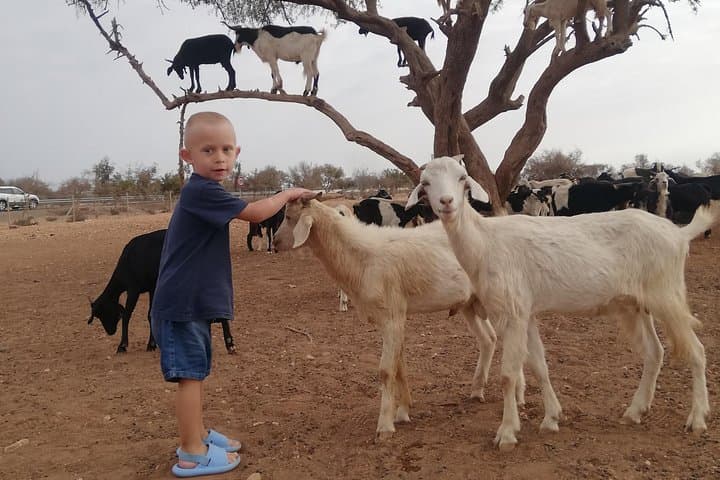
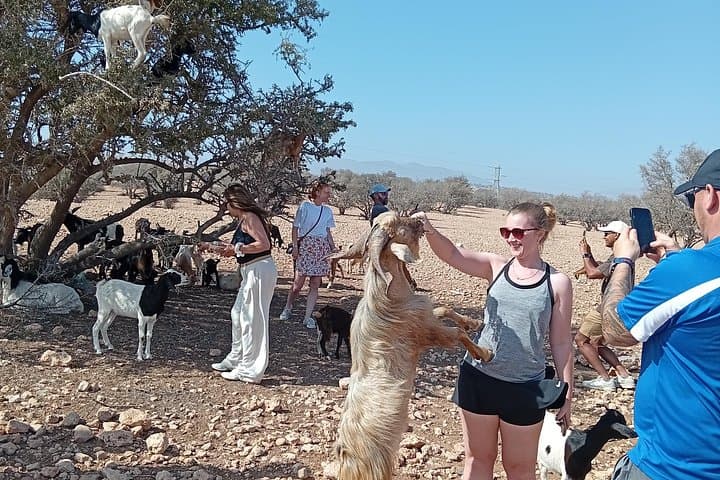
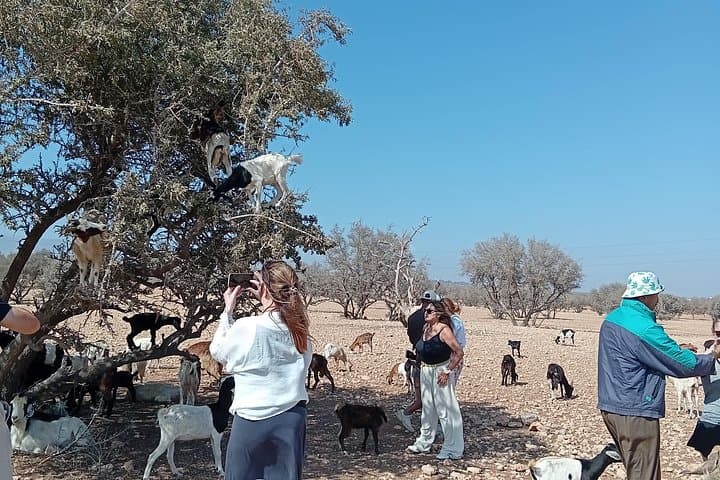
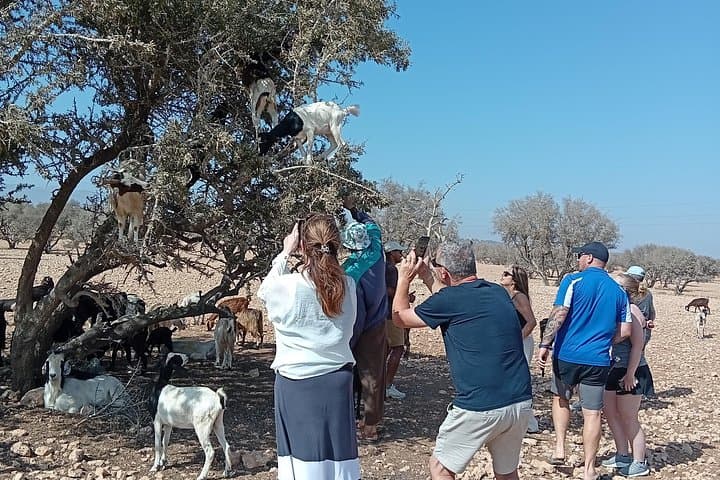
You step into the darkened lobby at 9:00 AM and the van eases out toward the coastline; within twenty minutes the city’s bustle thins and argan trees begin to punctuate the scrubland. Fifteen kilometres south of Agadir, the goats are the attraction — not timid, but remarkably assured — clambering into the low, gnarled branches to harvest argan fruit. Their hooves click on limbs as the trees offer a stubborn, oily prize.
You step into the darkened lobby at 9:00 AM and the van eases out toward the coastline; within twenty minutes the city’s bustle thins and argan trees begin to punctuate the scrubland. Fifteen kilometres south of Agadir, the goats are the attraction — not timid, but remarkably assured — clambering into the low, gnarled branches to harvest argan fruit. Their hooves click on limbs as the trees offer a stubborn, oily prize.
The argan landscape itself is ancient: a drought‑tolerant species endemic to southwest Morocco that helped shape local grazing and farming culture. The area around Agadir is part of the greater Arganeraie — a UNESCO biosphere illustrating how people and trees have coexisted for centuries. That cultural thread continues in the cooperative visit: Berber women demonstrate the time‑honoured milling and pressing of argan nuts into culinary and cosmetic oil, a labor‑intensive craft still rooted in community exchange.
Practically, this is a short, accessible morning excursion — about 2–3 hours door to door, with an hour watching the animals and an hour at the cooperative. Expect light walking on uneven ground, dusty paths, and close photo opportunities. Bring cash for purchases, a camera with a zoom, and sun protection; the van is air‑conditioned and the group size is kept small. Mobility options are available, but tree sites may be uneven.
This outing is less about strenuous adventure and more about up‑close wildlife behavior and cultural insight — an efficient, sensory start to a day in Agadir.