THE ADVENTURE COLLECTIVE® · Independent discovery and booking for outdoor travel

Trade the city skyline for sandstone cliffs in Morialta Conservation Park. This guided rock climb and abseil half-day delivers hands-on instruction, big views over the Adelaide Plains, and access to routes suitable for beginners and seasoned climbers alike.
Trade the city skyline for sandstone cliffs in Morialta Conservation Park. This guided rock climb and abseil half-day delivers hands-on instruction, big views over the Adelaide Plains, and access to routes suitable for beginners and seasoned climbers alike.
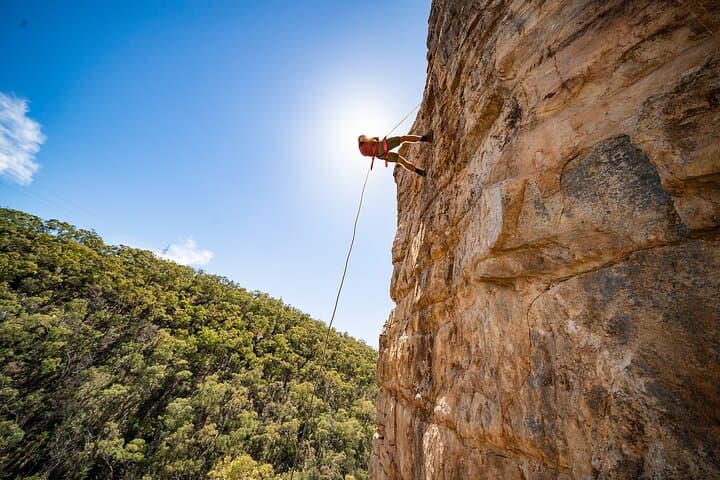
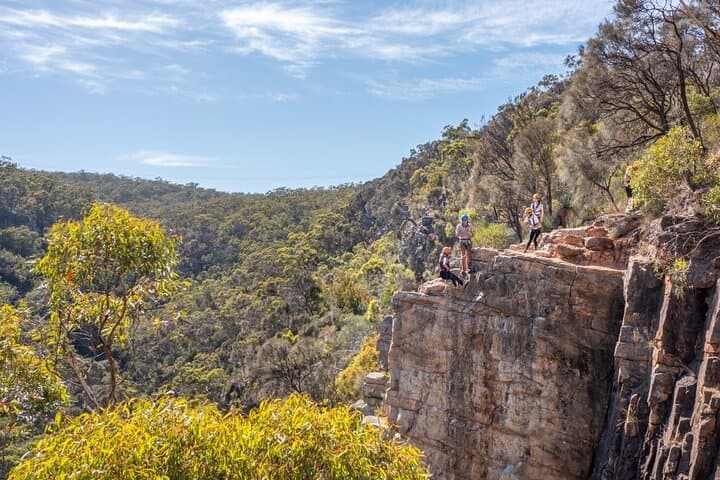
The morning sun slices across steep sandstone at Morialta and the gorge wakes like a long-held breath. Dusty tracks lead from the gate into a bowl of gumtrees; birds call as guides sort ropes and harnesses. You clip in, hear the rope settle, and feel the cliff underfoot — a raw, textured surface that dares you to move upward. The city’s skyline is a faint ribbon across the plains below; here, attention narrows to handholds, belays and a single patch of sky.
Verified experiences and guided adventures in the surrounding area.
Operated by Earth Adventure · Adelaide, South Australia
The morning sun slices across steep sandstone at Morialta and the gorge wakes like a long-held breath. Dusty tracks lead from the gate into a bowl of gumtrees; birds call as guides sort ropes and harnesses. You clip in, hear the rope settle, and feel the cliff underfoot — a raw, textured surface that dares you to move upward. The city’s skyline is a faint ribbon across the plains below; here, attention narrows to handholds, belays and a single patch of sky.
Morialta Conservation Park sits on Kaurna land and has been a protected reserve since the early 20th century. The gorge was carved by seasonal creeks cutting through soft, fossil-rich sandstone, leaving sheer faces and ledges that climbers now use. Locals have long come here for the waterfalls — First, Second and Third Falls — and the park’s geology tells a slow story of wind, water and time.
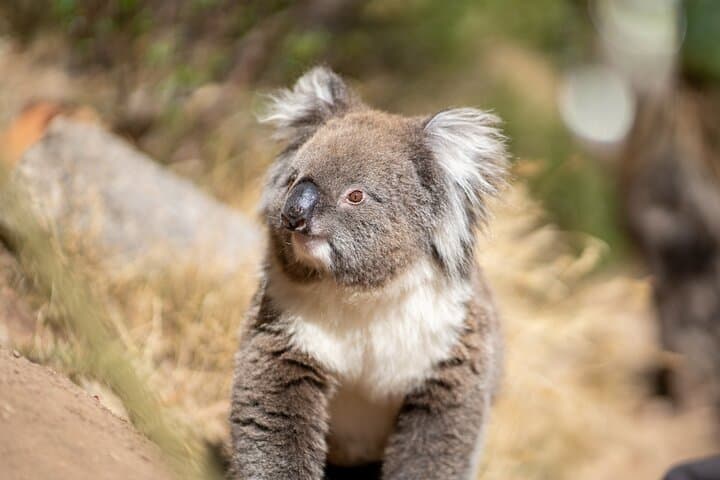
Climbing at Morialta is immediate: the routes range from short single-pitch problems for newcomers to longer faces that test route-finding and confidence at height. Guides set up top-rope and abseil systems to match ability, and the park’s vertical lines open onto wide views over the Adelaide Plains. Native wildlife — western grey kangaroos, kookaburras and the occasional rock wallaby — moves through the trees, indifferent to the human drama on the cliff.
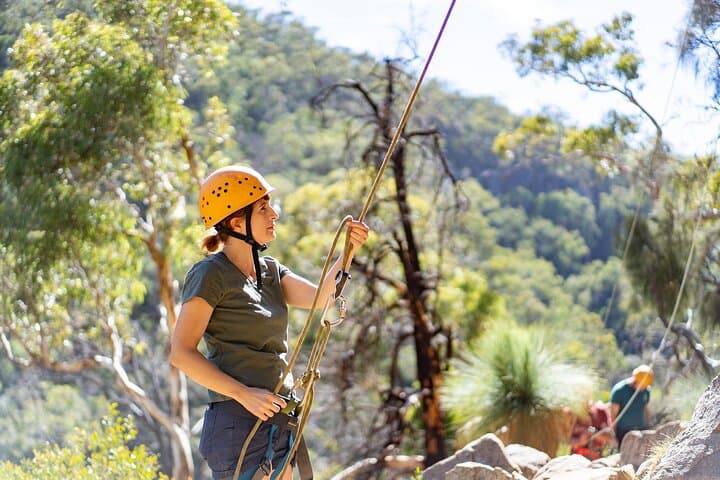
Culturally, the space is both recreational and reverent. Climbers and hikers share narrow tracks, and there’s an unspoken code: leave no trace, keep noise low near the falls, and respect cultural sites. The guides provide gear, instruction and a compact climbing curriculum: knot work, belaying, and basic lead awareness for those curious.
Practical guide: plan for a 3–4 hour session. Expect a 10–20 minute walk from the meeting gate to most crags; routes vary in length, but vertical exposure can reach roughly 40–60 meters on some faces. The operator supplies harnesses, helmets and ropes; bring sun protection, a full water bottle and sturdy approach shoes. There’s a minimum participant size and weight limits for safety — confirm at booking if you’re near those thresholds.
Timing matters: mornings are cooler and calmer for learning; afternoons can bring thermals that make abseils lively. After rain, the falls are spectacular but some climbs are closed for safety. If you want photos, ask the guide to spot you at a belay point; action shots work best with the falls or the Adelaide plain as backdrop.
For a half-day that compresses instruction, adrenaline and landscape, Morialta delivers. It’s a place where technique meets scenery and where a guided climb teaches skills you can carry to other crags across South Australia.
moderate.
4 hours.
Moderate fitness: able to walk short steep approaches, comfortable with sustained physical effort and exposure to heights.
No — the guides provide instruction for beginners and set routes to match skill levels; a moderate fitness level and comfort with heights help.
Meet at the park gate where your instructor will hold an Earth Adventure flag; the approach to crags is a short walk from there.
Yes — minimum height 120cm/25kg and maximum weight 120kg for harness and safety-system compatibility.
Yes — guides typically allow short pauses for photos at belays; bring a compact camera and secure it with a strap.
Activities are cancelled in poor weather for safety; the operator will refund or reschedule if cancelled due to weather.
Public transport runs near Morialta but you should confirm connections and allow extra time; most visitors drive or use a taxi/rideshare to the gate.
Morialta occupies traditional Kaurna country and has been a managed reserve since the early 20th century, preserving gorge features and waterfalls popular with locals.
Climbers are asked to minimize chalk marks, stay on established routes, pack out rubbish and avoid sensitive vegetation on approach tracks.
Earth Adventure operates guided outdoor trips and adventures with an emphasis on safety, stewardship, and memorable experiences.
The morning sun slices across steep sandstone at Morialta and the gorge wakes like a long-held breath. Dusty tracks lead from the gate into a bowl of gumtrees; birds call as guides sort ropes and harnesses. You clip in, hear the rope settle, and feel the cliff underfoot — a raw, textured surface that dares you to move upward. The city’s skyline is a faint ribbon across the plains below; here, attention narrows to handholds, belays and a single patch of sky.
The morning sun slices across steep sandstone at Morialta and the gorge wakes like a long-held breath. Dusty tracks lead from the gate into a bowl of gumtrees; birds call as guides sort ropes and harnesses. You clip in, hear the rope settle, and feel the cliff underfoot — a raw, textured surface that dares you to move upward. The city’s skyline is a faint ribbon across the plains below; here, attention narrows to handholds, belays and a single patch of sky.
Morialta Conservation Park sits on Kaurna land and has been a protected reserve since the early 20th century. The gorge was carved by seasonal creeks cutting through soft, fossil-rich sandstone, leaving sheer faces and ledges that climbers now use. Locals have long come here for the waterfalls — First, Second and Third Falls — and the park’s geology tells a slow story of wind, water and time.
Climbing at Morialta is immediate: the routes range from short single-pitch problems for newcomers to longer faces that test route-finding and confidence at height. Guides set up top-rope and abseil systems to match ability, and the park’s vertical lines open onto wide views over the Adelaide Plains. Native wildlife — western grey kangaroos, kookaburras and the occasional rock wallaby — moves through the trees, indifferent to the human drama on the cliff.
Culturally, the space is both recreational and reverent. Climbers and hikers share narrow tracks, and there’s an unspoken code: leave no trace, keep noise low near the falls, and respect cultural sites. The guides provide gear, instruction and a compact climbing curriculum: knot work, belaying, and basic lead awareness for those curious.
Practical guide: plan for a 3–4 hour session. Expect a 10–20 minute walk from the meeting gate to most crags; routes vary in length, but vertical exposure can reach roughly 40–60 meters on some faces. The operator supplies harnesses, helmets and ropes; bring sun protection, a full water bottle and sturdy approach shoes. There’s a minimum participant size and weight limits for safety — confirm at booking if you’re near those thresholds.
Timing matters: mornings are cooler and calmer for learning; afternoons can bring thermals that make abseils lively. After rain, the falls are spectacular but some climbs are closed for safety. If you want photos, ask the guide to spot you at a belay point; action shots work best with the falls or the Adelaide plain as backdrop.
For a half-day that compresses instruction, adrenaline and landscape, Morialta delivers. It’s a place where technique meets scenery and where a guided climb teaches skills you can carry to other crags across South Australia.