THE ADVENTURE COLLECTIVE® · Independent discovery and booking for outdoor travel

A half-day that pairs a tranquil boat crossing on Lake Lugano with a guided stroll through Morcote—the village voted Switzerland’s most beautiful—where subtropical gardens, stone alleys and lakeside views compress a region's history into a few unforgettable hours.
A half-day that pairs a tranquil boat crossing on Lake Lugano with a guided stroll through Morcote—the village voted Switzerland’s most beautiful—where subtropical gardens, stone alleys and lakeside views compress a region's history into a few unforgettable hours.
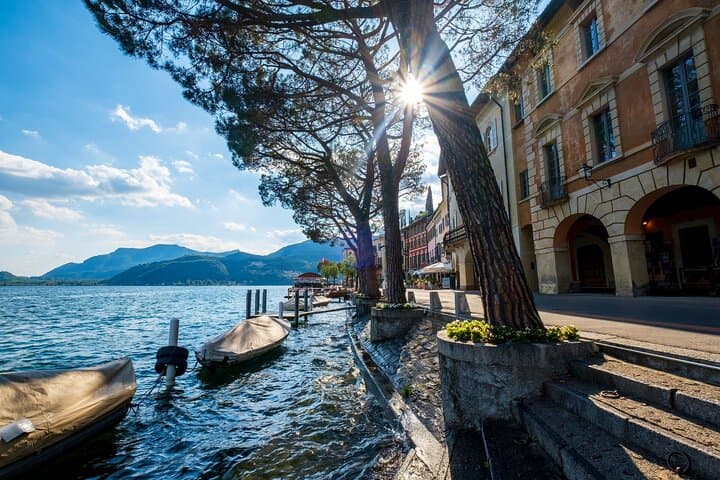
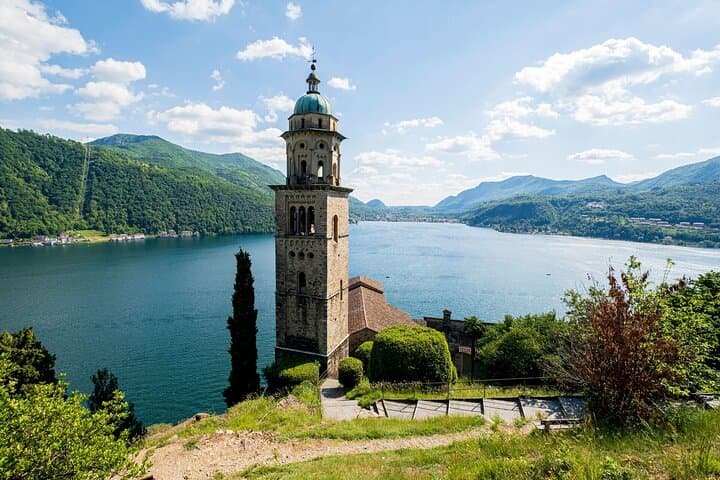
You step off the Lugano pier as the boat slides free from the quay and the city’s hum falls behind you. Lake Lugano opens like a dark mirror; mountains lean close, their slopes throwing down a green that seems determined to reclaim the shoreline. The boat hums along the main channel, past villas and lidos, until Morcote appears—a compact, stone-slow village clinging to the water with arcaded alleys, a Renaissance church, and terraces that melt into subtropical gardens. The guide’s voice points out the Captain’s Tower and the 404-step stairway while gulls wheel, daring the engine to outpace them.
Verified experiences and guided adventures in the surrounding area.
Operated by Ente Turistico del Luganese · Morcote, Ticino
You step off the Lugano pier as the boat slides free from the quay and the city’s hum falls behind you. Lake Lugano opens like a dark mirror; mountains lean close, their slopes throwing down a green that seems determined to reclaim the shoreline. The boat hums along the main channel, past villas and lidos, until Morcote appears—a compact, stone-slow village clinging to the water with arcaded alleys, a Renaissance church, and terraces that melt into subtropical gardens. The guide’s voice points out the Captain’s Tower and the 404-step stairway while gulls wheel, daring the engine to outpace them.
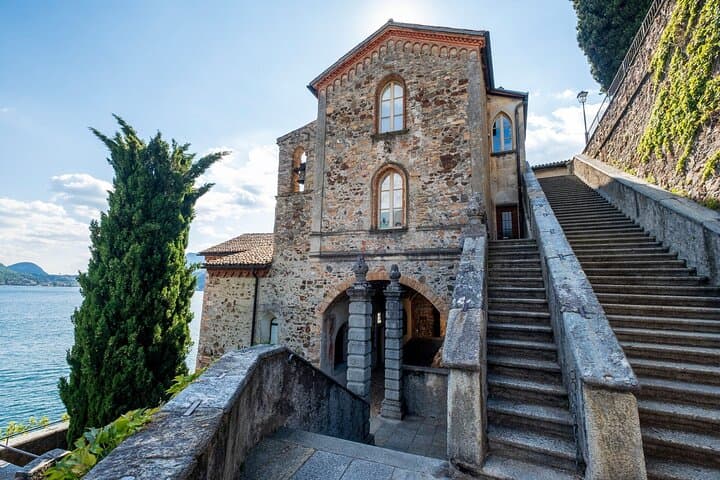
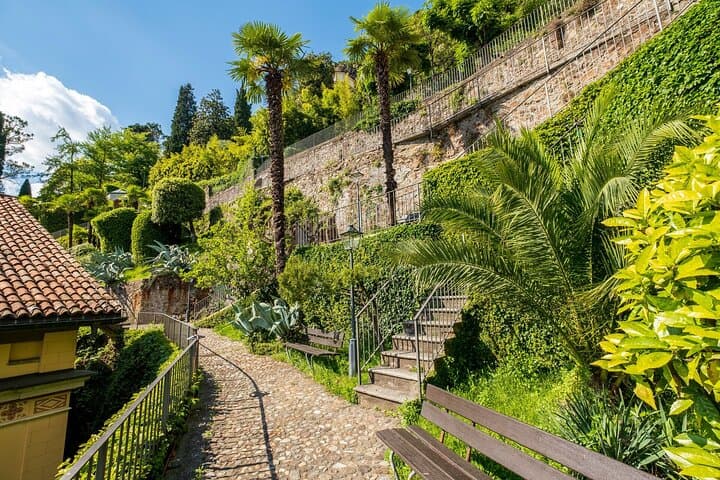
Morcote has a long history as a fishing and trade port on the Ceresio. Its buildings record a sequence of styles: Romanesque foundations, Renaissance façades and Baroque touches in Santa Maria del Sasso. In the late 19th and early 20th centuries affluent visitors began planting exotic specimens, and Scherrer Park still reads like an experimental conservatory for palms, camellias and magnolias—plants that defy expectations in this microclimate.
Geologically, the lake sits in a glacial hollow carved by ice and fed by mountain streams; the water’s clarity varies with season and wind, and currents can push the boat’s bow to one side as the landscape narrows. Culturally, Morcote is intimate: narrow streets open onto squares where cafés keep folded chairs for the late-afternoon crowd, and the terraced cemetery offers quiet views and carved stone markers that track the town’s maritime past.
Practicalities are straightforward. The half-day runs about 5.5 hours, leaving from Lugano in the early afternoon and returning by evening. Expect a mix of gentle walking on uneven stone and a climb if you want the cemetery or the church terrace views. Bring sensible footwear—the lanes are old and often stepped—and sun protection; the lake reflects enough heat to make midday bright even in spring and fall. There’s a short window to swim off the lakeshore if you’ve packed a suit, but currents and municipal rules mean swims are best at the official lidos.
Guides typically speak multiple languages and set a relaxed pace, allowing free time to explore Scherrer Park, climb to the Captain’s Tower or pause at a café for risotto or fresh fish. Weather governs the schedule—boats run when conditions allow—so check forecasts and bring a light waterproof layer. For photographers, late afternoon light slants across the arcades and the park’s palms, making golden-hour shots of stone and leaves especially moody.
This excursion rewards travelers who want a compact but layered escape from Lugano: a lake crossing, a living garden, and a village that still feels shaped by fishermen and boatmen, where the water continually invites you back toward the next bend.
moderate.
5–6 hours.
Moderate fitness for walking on uneven stone and climbing short flights of stairs; not suitable for those with severe mobility limitations.
Yes; the price includes a round-trip boat transfer from Lugano to Morcote and back.
Meet at Info Point Lugano Region, Via Magatti 6, at the time specified on your voucher—typically early afternoon for this half-day tour.
Children are welcome but the village’s steep stairways and cobbled lanes are not stroller-friendly; be prepared to carry small children on steps.
Guides are often multilingual or operate in the main languages of the group; check at booking for language-specific departures.
Swimming is possible at nearby lidos or calm shoreline spots, but check local signage and conditions—currents and water quality vary.
If canceled due to weather, operators offer an alternative date or full refund; standard cancellations also allow a full refund if made at least 24 hours in advance.
Morcote evolved from a medieval fishing and trading port; its Church of Santa Maria del Sasso and Captain’s Tower reflect centuries of maritime and architectural history.
Lake Lugano’s ecology is sensitive—respect park plantings, avoid disturbing shoreline vegetation and follow local waste and boating regulations to minimize impact.
Ente Turistico del Luganese operates guided outdoor trips and adventures with an emphasis on safety, stewardship, and memorable experiences.
You step off the Lugano pier as the boat slides free from the quay and the city’s hum falls behind you. Lake Lugano opens like a dark mirror; mountains lean close, their slopes throwing down a green that seems determined to reclaim the shoreline. The boat hums along the main channel, past villas and lidos, until Morcote appears—a compact, stone-slow village clinging to the water with arcaded alleys, a Renaissance church, and terraces that melt into subtropical gardens. The guide’s voice points out the Captain’s Tower and the 404-step stairway while gulls wheel, daring the engine to outpace them.
You step off the Lugano pier as the boat slides free from the quay and the city’s hum falls behind you. Lake Lugano opens like a dark mirror; mountains lean close, their slopes throwing down a green that seems determined to reclaim the shoreline. The boat hums along the main channel, past villas and lidos, until Morcote appears—a compact, stone-slow village clinging to the water with arcaded alleys, a Renaissance church, and terraces that melt into subtropical gardens. The guide’s voice points out the Captain’s Tower and the 404-step stairway while gulls wheel, daring the engine to outpace them.
Morcote has a long history as a fishing and trade port on the Ceresio. Its buildings record a sequence of styles: Romanesque foundations, Renaissance façades and Baroque touches in Santa Maria del Sasso. In the late 19th and early 20th centuries affluent visitors began planting exotic specimens, and Scherrer Park still reads like an experimental conservatory for palms, camellias and magnolias—plants that defy expectations in this microclimate.
Geologically, the lake sits in a glacial hollow carved by ice and fed by mountain streams; the water’s clarity varies with season and wind, and currents can push the boat’s bow to one side as the landscape narrows. Culturally, Morcote is intimate: narrow streets open onto squares where cafés keep folded chairs for the late-afternoon crowd, and the terraced cemetery offers quiet views and carved stone markers that track the town’s maritime past.
Practicalities are straightforward. The half-day runs about 5.5 hours, leaving from Lugano in the early afternoon and returning by evening. Expect a mix of gentle walking on uneven stone and a climb if you want the cemetery or the church terrace views. Bring sensible footwear—the lanes are old and often stepped—and sun protection; the lake reflects enough heat to make midday bright even in spring and fall. There’s a short window to swim off the lakeshore if you’ve packed a suit, but currents and municipal rules mean swims are best at the official lidos.
Guides typically speak multiple languages and set a relaxed pace, allowing free time to explore Scherrer Park, climb to the Captain’s Tower or pause at a café for risotto or fresh fish. Weather governs the schedule—boats run when conditions allow—so check forecasts and bring a light waterproof layer. For photographers, late afternoon light slants across the arcades and the park’s palms, making golden-hour shots of stone and leaves especially moody.
This excursion rewards travelers who want a compact but layered escape from Lugano: a lake crossing, a living garden, and a village that still feels shaped by fishermen and boatmen, where the water continually invites you back toward the next bend.