THE ADVENTURE COLLECTIVE® · Independent discovery and booking for outdoor travel

Walk the living laboratory of Moray, wander the glittering salt ponds of Maras, sip chicha in a family chichería and stroll with alpacas — all in a day from Cusco. This combined archaeological and cultural tour balances quiet landscapes with hands‑on traditions.
Walk the living laboratory of Moray, wander the glittering salt ponds of Maras, sip chicha in a family chichería and stroll with alpacas — all in a day from Cusco. This combined archaeological and cultural tour balances quiet landscapes with hands‑on traditions.
A dry Andean wind cuts across the high valley as you step out of the van and the terrace rings of Moray open like a geological amphitheater. Light drops into the concentric bowls, and you feel the air change as the slope holds heat — the Incas engineered microclimates here, and the place still breathes its experiments. Later, thousands of salt ponds glint on a rust-red slope at Maras, each shallow pool a hand-worked mirror of sky. The day softens in Chinchero, where alpacas graze while weavers bend over waist looms and a family-run chichería pours fermented corn into clay cups.
Verified experiences and guided adventures in the surrounding area.
Operated by Sky Dome Peru · Maras, Cusco Region
A dry Andean wind cuts across the high valley as you step out of the van and the terrace rings of Moray open like a geological amphitheater. Light drops into the concentric bowls, and you feel the air change as the slope holds heat — the Incas engineered microclimates here, and the place still breathes its experiments. Later, thousands of salt ponds glint on a rust-red slope at Maras, each shallow pool a hand-worked mirror of sky. The day softens in Chinchero, where alpacas graze while weavers bend over waist looms and a family-run chichería pours fermented corn into clay cups.
This route threads archaeology, agronomy and living tradition. Moray’s circular terraces were likely used to trial crops at varied temperatures; Maras relies on an underground saline spring and centuries of hand-harvested evaporation ponds; Chinchero preserves Andean dyeing and weaving techniques still taught by women in the town. The alpaca walk through Machuqlq’a Archaeological Center adds quiet, animal-paced miles and panoramic views of valley terraces and distant peaks.
Practical realities: expect an 8-hour day with short, uneven walks at 3,300–3,800 m elevation — altitude will affect pace. Trails are mostly compact dirt with stone steps; footwear with good grip is recommended. Bring water, sun protection, layered clothing for wide temperature swings, small local currency for craft stalls, and a respectful approach when meeting artisans and animals. Guides typically handle transport and entry logistics, but carry a light daypack and allow time for photography and short stops to taste chicha and learn local techniques.
moderate.
6–8 hours.
Should be comfortable with several hours of walking on uneven ground at high altitude; brief uphill sections possible.
The full day is about 6–8 hours and typically includes private transport, a guide, visits to Moray and Maras, a chichería stop, alpaca walk and Chinchero textile demonstrations; confirm exact inclusions when booking.
It’s family-friendly but involves walking on uneven ground and some steps; not recommended for those with serious back issues or pregnancy—check operator guidance for infants or mobility limits.
Yes—sites sit around 3,300–3,800 m; allow time in Cusco to acclimatize, drink water, avoid heavy meals and consider medication if prone to altitude symptoms.
Yes—Chinchero artisans sell handwoven goods and the chichería offers traditional chicha and snacks; carry small soles (PEN) for purchases and tipping.
The concentric terraces at Moray reflect Incan agricultural experimentation; Maras’ salt pans have been harvested since pre-Inca times using a local saline spring.
These sites are fragile—stick to marked paths, avoid leaving waste, and support local stewards by buying from certified artisan cooperatives.
Sky Dome Peru operates guided outdoor trips and adventures with an emphasis on safety, stewardship, and memorable experiences.

A dry Andean wind cuts across the high valley as you step out of the van and the terrace rings of Moray open like a geological amphitheater. Light drops into the concentric bowls, and you feel the air change as the slope holds heat — the Incas engineered microclimates here, and the place still breathes its experiments. Later, thousands of salt ponds glint on a rust-red slope at Maras, each shallow pool a hand-worked mirror of sky. The day softens in Chinchero, where alpacas graze while weavers bend over waist looms and a family-run chichería pours fermented corn into clay cups.
A dry Andean wind cuts across the high valley as you step out of the van and the terrace rings of Moray open like a geological amphitheater. Light drops into the concentric bowls, and you feel the air change as the slope holds heat — the Incas engineered microclimates here, and the place still breathes its experiments. Later, thousands of salt ponds glint on a rust-red slope at Maras, each shallow pool a hand-worked mirror of sky. The day softens in Chinchero, where alpacas graze while weavers bend over waist looms and a family-run chichería pours fermented corn into clay cups.
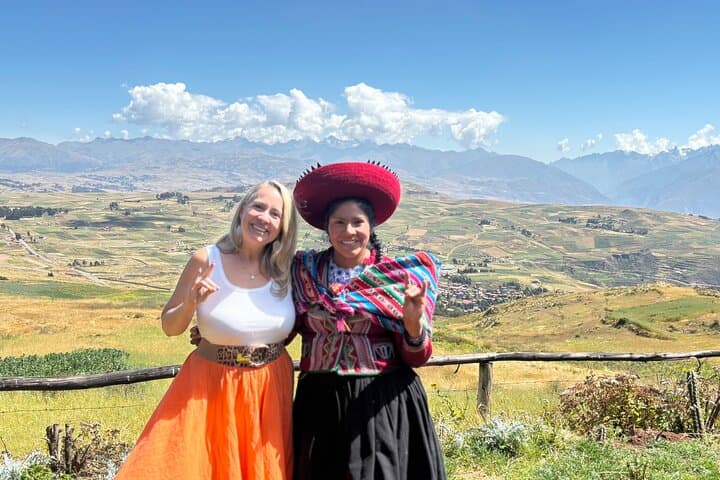
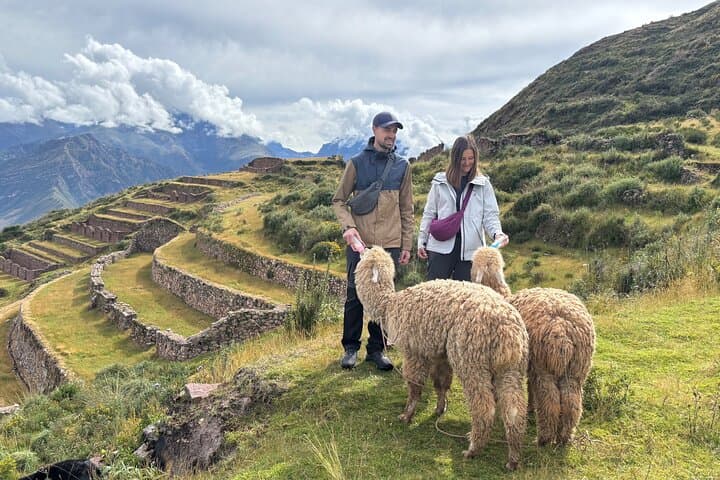
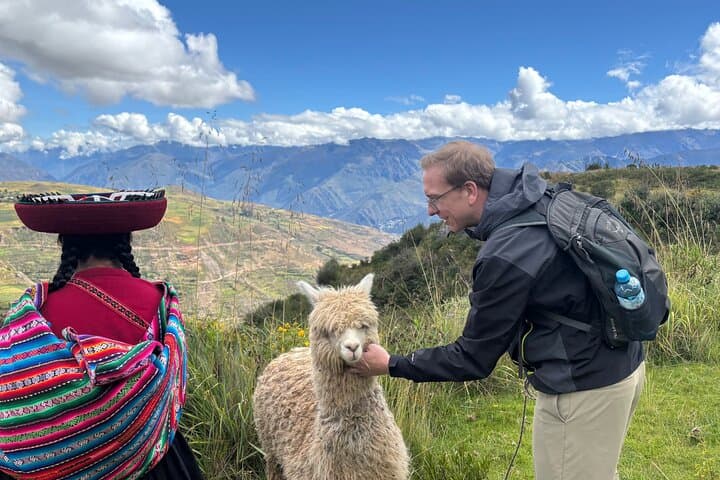
This route threads archaeology, agronomy and living tradition. Moray’s circular terraces were likely used to trial crops at varied temperatures; Maras relies on an underground saline spring and centuries of hand-harvested evaporation ponds; Chinchero preserves Andean dyeing and weaving techniques still taught by women in the town. The alpaca walk through Machuqlq’a Archaeological Center adds quiet, animal-paced miles and panoramic views of valley terraces and distant peaks.
Practical realities: expect an 8-hour day with short, uneven walks at 3,300–3,800 m elevation — altitude will affect pace. Trails are mostly compact dirt with stone steps; footwear with good grip is recommended. Bring water, sun protection, layered clothing for wide temperature swings, small local currency for craft stalls, and a respectful approach when meeting artisans and animals. Guides typically handle transport and entry logistics, but carry a light daypack and allow time for photography and short stops to taste chicha and learn local techniques.