THE ADVENTURE COLLECTIVE® · Independent discovery and booking for outdoor travel

Watch the moon and Milky Way rise over Teide’s volcanic ridges on an 80-minute guided stargazing tour. Learn naked-eye constellations and view planets and deep-sky objects through professional telescopes while staying warm and safe at altitude.
Watch the moon and Milky Way rise over Teide’s volcanic ridges on an 80-minute guided stargazing tour. Learn naked-eye constellations and view planets and deep-sky objects through professional telescopes while staying warm and safe at altitude.
A chill wind moves across black volcanic ridges as the moon rises over Teide’s raw contours, washing pumice and rock in silver. Small clusters gather near the parked telescopes; guides check alignment while the island’s light fades to reveal the Milky Way. The experience centers on a close lunar observation and a guided introduction to naked-eye constellations before telescopes bring planets, star clusters and distant galaxies into focus.
Verified experiences and guided adventures in the surrounding area.
Operated by Discover Experience · Vilaflor, Santa Cruz de Tenerife
A chill wind moves across black volcanic ridges as the moon rises over Teide’s raw contours, washing pumice and rock in silver. Small clusters gather near the parked telescopes; guides check alignment while the island’s light fades to reveal the Milky Way. The experience centers on a close lunar observation and a guided introduction to naked-eye constellations before telescopes bring planets, star clusters and distant galaxies into focus.
Teide National Park, a UNESCO World Heritage Site, sits on Tenerife’s volcanic spine. The landscape is recent in geological terms—lava flows and ash fields carved by eruptions that built the volcanic cone crowned by Mount Teide (3,718 m). The park also holds cultural weight: the island’s original Guanche people considered the mountain sacred, and its stark slopes remain a living laboratory of island biogeography.
Practical guidance is immediate. Tour length is roughly 80 minutes and usually begins at a designated car park in the Cañadas caldera; guides supply telescopes and astrophotographic support. Temperatures drop quickly after sunset—layering is essential—and altitude can affect exertion and breathing. Shoes should handle gravel and uneven ground; a headlamp with a red filter preserves night vision.
The outing is ideal for first-time stargazers and photographers who want a short, guided session without an overnight trek. Respect park rules: stay on designated areas, avoid flash photography that disturbs equipment and wildlife, and be prepared to cancel if weather obscures the sky. With clear conditions, the moon and nearby planets make a surprisingly intimate introduction to Tenerife’s celebrated night sky.
easy.
1–1.5 hours.
Suitable for most fitness levels; minimal walking but be prepared for short, uneven terrain and higher altitude.
Yes—children can join but must be supervised; infants should sit on an adult’s lap and strollers are usable for short distances.
The meeting area is at high elevation; light-headedness can occur—move slowly and stay hydrated and inform the guide of any health concerns.
Yes—guides often offer astrophotographic setups and can help capture images; bring a camera adapter or use guide-provided equipment where available.
Tours are canceled if the sky is overcast or conditions are unsafe; check cancellation windows and rebooking options when you book.
Teide’s caldera and volcanic features formed over hundreds of thousands of years; the area holds significance for the indigenous Guanche people and was later mapped during Spanish colonization.
The park enforces light pollution controls and strict path use to protect fragile high-altitude ecosystems—follow Leave No Trace principles and park signage.
Discover Experience operates guided outdoor trips and adventures with an emphasis on safety, stewardship, and memorable experiences.
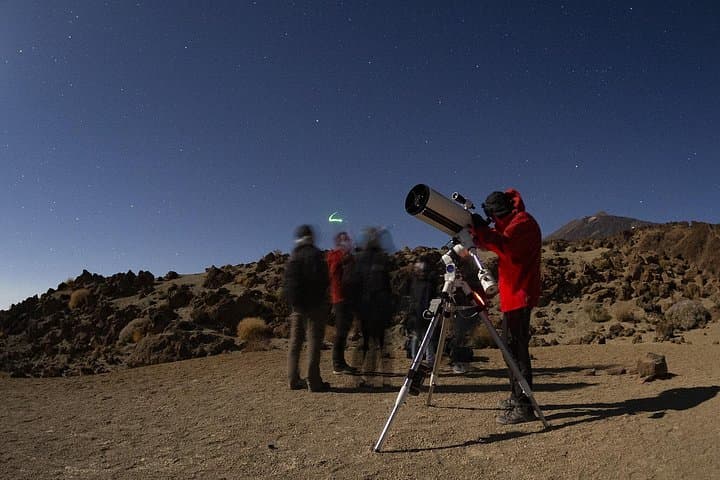
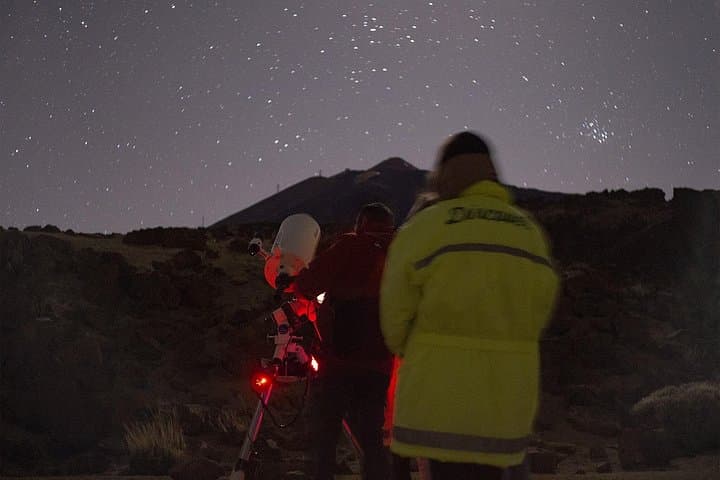
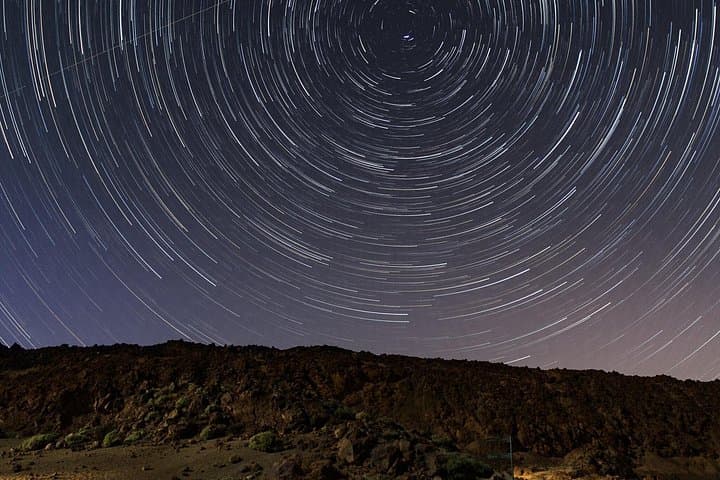
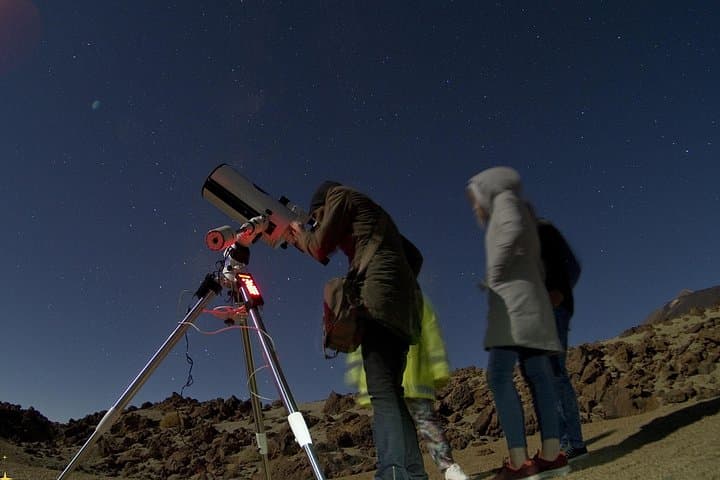
A chill wind moves across black volcanic ridges as the moon rises over Teide’s raw contours, washing pumice and rock in silver. Small clusters gather near the parked telescopes; guides check alignment while the island’s light fades to reveal the Milky Way. The experience centers on a close lunar observation and a guided introduction to naked-eye constellations before telescopes bring planets, star clusters and distant galaxies into focus.
A chill wind moves across black volcanic ridges as the moon rises over Teide’s raw contours, washing pumice and rock in silver. Small clusters gather near the parked telescopes; guides check alignment while the island’s light fades to reveal the Milky Way. The experience centers on a close lunar observation and a guided introduction to naked-eye constellations before telescopes bring planets, star clusters and distant galaxies into focus.
Teide National Park, a UNESCO World Heritage Site, sits on Tenerife’s volcanic spine. The landscape is recent in geological terms—lava flows and ash fields carved by eruptions that built the volcanic cone crowned by Mount Teide (3,718 m). The park also holds cultural weight: the island’s original Guanche people considered the mountain sacred, and its stark slopes remain a living laboratory of island biogeography.
Practical guidance is immediate. Tour length is roughly 80 minutes and usually begins at a designated car park in the Cañadas caldera; guides supply telescopes and astrophotographic support. Temperatures drop quickly after sunset—layering is essential—and altitude can affect exertion and breathing. Shoes should handle gravel and uneven ground; a headlamp with a red filter preserves night vision.
The outing is ideal for first-time stargazers and photographers who want a short, guided session without an overnight trek. Respect park rules: stay on designated areas, avoid flash photography that disturbs equipment and wildlife, and be prepared to cancel if weather obscures the sky. With clear conditions, the moon and nearby planets make a surprisingly intimate introduction to Tenerife’s celebrated night sky.