THE ADVENTURE COLLECTIVE® · Independent discovery and booking for outdoor travel

Walk among wind‑carved ridges and climb a vast dune as the Atacama sun dips behind salt‑streaked mountains. This 5‑hour Moon Valley tour from San Pedro de Atacama mixes short hikes, geology, and a sunset viewpoint ideal for photography.
Walk among wind‑carved ridges and climb a vast dune as the Atacama sun dips behind salt‑streaked mountains. This 5‑hour Moon Valley tour from San Pedro de Atacama mixes short hikes, geology, and a sunset viewpoint ideal for photography.
You step from the air‑conditioned van into a landscape that refuses to behave like any other on Earth: layered salt flats, wind‑scarred ridgelines and dunes that hold heat like memory. The air is dry and still; the wind arrives as the day cools and sculpts shadows across broad sweeps of ochre and pale gray.
Verified experiences and guided adventures in the surrounding area.
Operated by Atacama Extrema spa · San Pedro de Atacama, Antofagasta Region
You step from the air‑conditioned van into a landscape that refuses to behave like any other on Earth: layered salt flats, wind‑scarred ridgelines and dunes that hold heat like memory. The air is dry and still; the wind arrives as the day cools and sculpts shadows across broad sweeps of ochre and pale gray.
Valle de la Luna lies on the western edge of the Atacama Salt Flat within the Cordillera de la Sal. Millennia of salt, clay and volcanic ash compacted and were then carved by relentless wind and rare rains into ridges, caverns and the famous Three Marys formation. The Duna Mayor — a towering dune — reads like a suspended ocean of sand that dares you to climb for a panoramic payoff.
Local Aymara and Atacameño communities have long lived with this landscape; petroglyphs and pre‑Hispanic routes nearby hint at the human history threaded through the desert. Geologically, the valley showcases exposed salt layers and eroded volcanic sediments that reveal climatic shifts over time.
On a guided 5‑hour tour from San Pedro de Atacama you’ll visit the Kari Viewpoint (Coyote Stone), walk among sculpted formations and stand on Duna Mayor for sunset photography. Practicalities: bring at least 2 liters of water, sun protection, and balanced footwear — walking is mostly on sand and uneven rock. The site charges an entrance fee and permits can vary; tours often run in the late afternoon for cooler temperatures and dramatic light.
Expect straightforward hiking, clear interpretive stops, and a small‑group rhythm that balances exploration with time for photos and quiet observation.
moderate.
4–5 hours.
Moderate fitness: able to walk on loose sand and uneven rocky sections, climb short dunes and stand for photos.
The tour is about 5 hours and typically includes transport from San Pedro de Atacama, a guide, park admission (paid locally), and stops at the Kari Viewpoint, Three Marys, and Duna Mayor.
People with moderate mobility can join, but it’s not recommended for those with serious heart or spinal conditions; expect walking on sand and uneven rock—ask about private options if mobility is limited.
Late afternoon into sunset offers cooler temperatures and the best light for photos; mornings are also pleasant but colder in the shoulder seasons.
The tour usually doesn’t include a full meal; bring snacks if you need them, but avoid leaving any litter in the park.
The valley sits within a landscape used historically by Atacameño peoples and lies near ancient caravan routes; nearby petroglyphs and archaeological sites trace human use back centuries.
Valle de la Luna is environmentally sensitive — staying on trails, carrying out waste, and respecting restricted areas helps protect fragile salt and sediment formations.
Atacama Extrema spa operates guided outdoor trips and adventures with an emphasis on safety, stewardship, and memorable experiences.
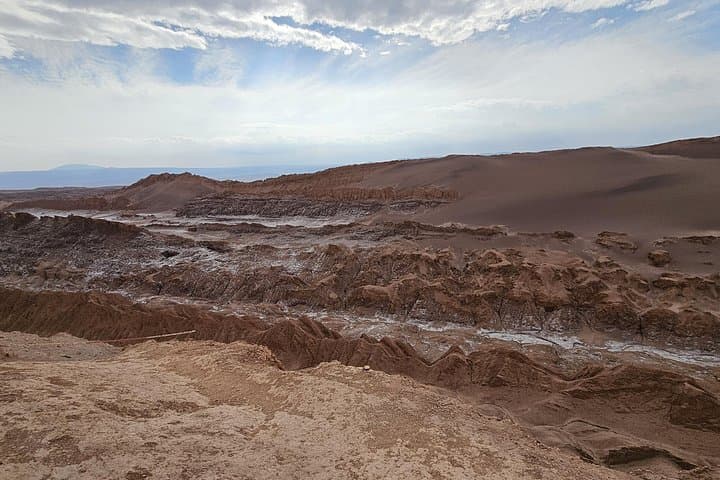
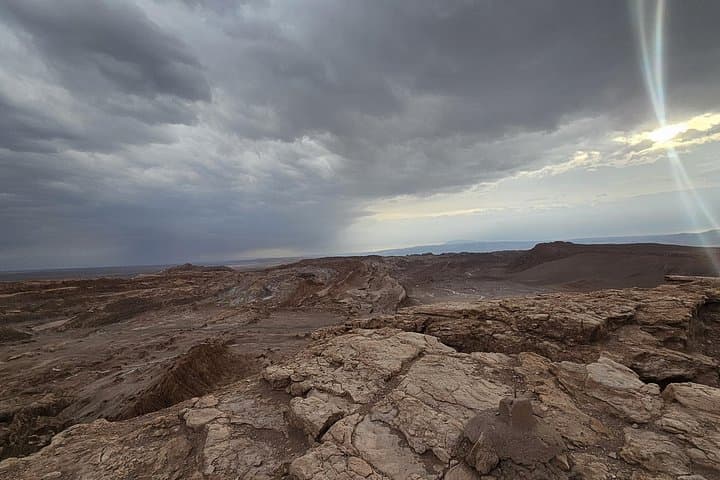
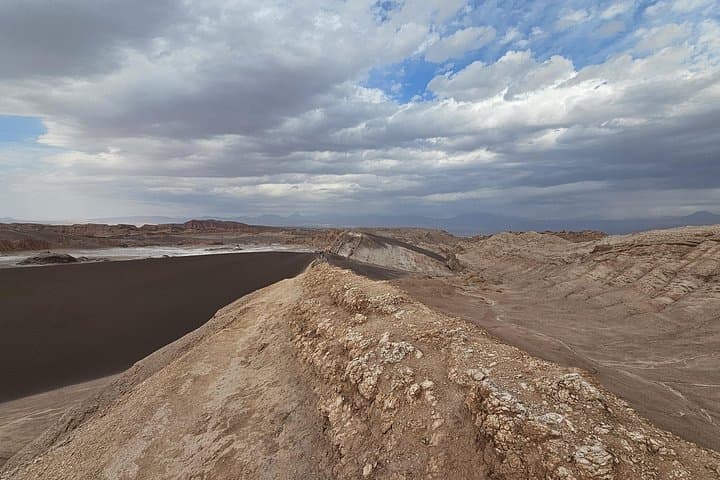
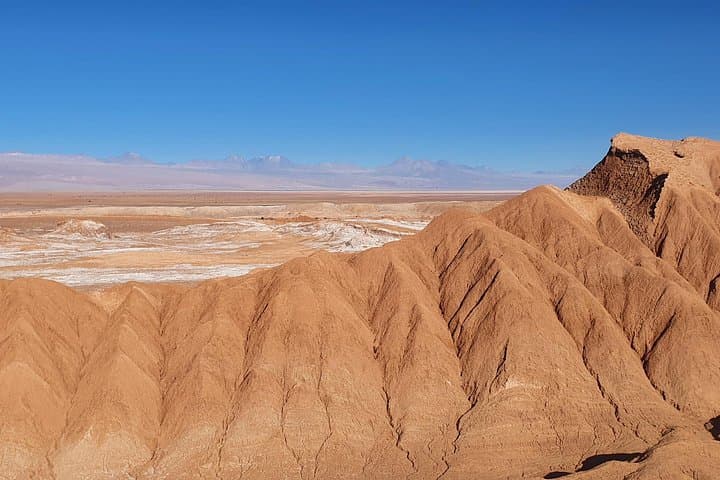
You step from the air‑conditioned van into a landscape that refuses to behave like any other on Earth: layered salt flats, wind‑scarred ridgelines and dunes that hold heat like memory. The air is dry and still; the wind arrives as the day cools and sculpts shadows across broad sweeps of ochre and pale gray.
You step from the air‑conditioned van into a landscape that refuses to behave like any other on Earth: layered salt flats, wind‑scarred ridgelines and dunes that hold heat like memory. The air is dry and still; the wind arrives as the day cools and sculpts shadows across broad sweeps of ochre and pale gray.
Valle de la Luna lies on the western edge of the Atacama Salt Flat within the Cordillera de la Sal. Millennia of salt, clay and volcanic ash compacted and were then carved by relentless wind and rare rains into ridges, caverns and the famous Three Marys formation. The Duna Mayor — a towering dune — reads like a suspended ocean of sand that dares you to climb for a panoramic payoff.
Local Aymara and Atacameño communities have long lived with this landscape; petroglyphs and pre‑Hispanic routes nearby hint at the human history threaded through the desert. Geologically, the valley showcases exposed salt layers and eroded volcanic sediments that reveal climatic shifts over time.
On a guided 5‑hour tour from San Pedro de Atacama you’ll visit the Kari Viewpoint (Coyote Stone), walk among sculpted formations and stand on Duna Mayor for sunset photography. Practicalities: bring at least 2 liters of water, sun protection, and balanced footwear — walking is mostly on sand and uneven rock. The site charges an entrance fee and permits can vary; tours often run in the late afternoon for cooler temperatures and dramatic light.
Expect straightforward hiking, clear interpretive stops, and a small‑group rhythm that balances exploration with time for photos and quiet observation.