THE ADVENTURE COLLECTIVE® · Independent discovery and booking for outdoor travel

Stand on the rim where a meteor once hit and read the landscape: serrated Andes to the east, Salar de Atacama to the north, and an exposed record of planetary collision beneath your feet. This private day trip combines a short crater rim walk with geological interpretation and desert transit from San Pedro de Atacama.
Stand on the rim where a meteor once hit and read the landscape: serrated Andes to the east, Salar de Atacama to the north, and an exposed record of planetary collision beneath your feet. This private day trip combines a short crater rim walk with geological interpretation and desert transit from San Pedro de Atacama.
Morning light carves the desert into hard edges—ochre plains, fluted basalt, and a rim that drops away into a shallow bowl. On the rim of Monturaqui Meteor Crater the desert feels intentionally quiet; wind reads the surface and the Andes loom like a slow-moving presence to the east while the Salar de Atacama shimmers to the north.
Verified experiences and guided adventures in the surrounding area.
Operated by Know Chile Tours · San Pedro de Atacama, Antofagasta Region
Morning light carves the desert into hard edges—ochre plains, fluted basalt, and a rim that drops away into a shallow bowl. On the rim of Monturaqui Meteor Crater the desert feels intentionally quiet; wind reads the surface and the Andes loom like a slow-moving presence to the east while the Salar de Atacama shimmers to the north.
Geologically the crater is an impact feature whose heat-and-pressure fingerprints survive in shock-metamorphosed rocks called impactites. The surrounding plain is high-altiplano desert: volcanic plates, salt flats, and sparse cushions of scrub adapted to intense sun and punishing cold. Culturally the area sits within the territory long used by Atacameño communities; routes across this landscape have connected salt, llamas and water sources for centuries.
Expect a guided rim visit with an interpretive talk on formation and local geology, followed by a supervised search and inspection of surface impact materials (photograph only unless permits state otherwise). The day is mostly vehicle transit across high desert roads with a short on-foot exploration at the crater rim.
Practical guidance: bring layered clothing for rapid temperature swings, strong sun protection, and at least 2–3 liters of water. Altitude will nudge your breathing—move deliberately and hydrate. Footing at the rim is uneven volcanic rock; sensible hiking shoes are recommended. The trip is a long day from San Pedro (roughly 7–9 hours roundtrip with stops), so plan arrival and rest accordingly. Leave no trace: this is a fragile desert where erosion is slow and human impact lasts.
moderate.
7–9 hours.
Suitable for most travelers with basic fitness; expect hours in a vehicle plus short uneven walks at altitude, and limited standing time.
The full outing is about 7–9 hours door-to-door, typically leaving around 8:00 and returning between 16:00–17:00 depending on stops and road conditions.
No — removing geological material is discouraged and often prohibited; guides will show and explain samples while you photograph them.
The tour is suitable for a wide range of ages, but it’s not recommended for pregnant travelers or those with serious heart or spinal conditions; short uneven walks at altitude are required.
Monturaqui sits at high elevation; mild symptoms are common—stay hydrated, avoid alcohol the night before, and notify your guide if you feel dizzy or nauseous.
Monturaqui is an impact crater whose altered rocks record the high-energy collision of a meteorite; the surrounding region has long been traversed by Atacameño people who adapted to the high desert environment.
The Atacama is ecologically fragile—soils and cryptobiotic crusts recover slowly; stick to existing paths, carry out all waste, and avoid taking samples to minimize lasting impact.
Know Chile Tours operates guided outdoor trips and adventures with an emphasis on safety, stewardship, and memorable experiences.
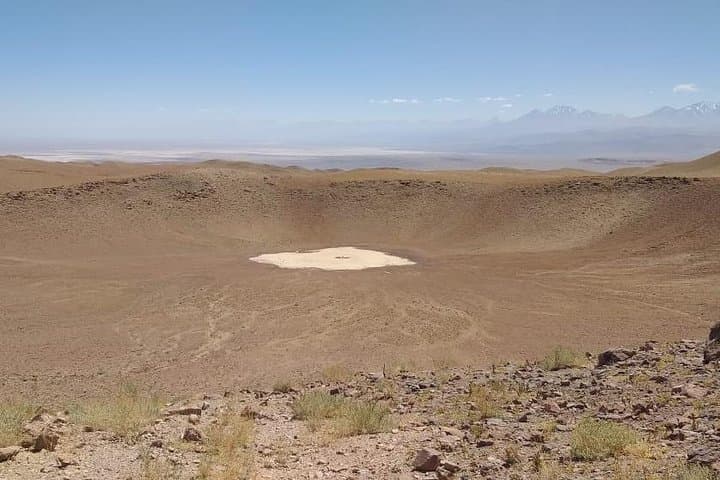
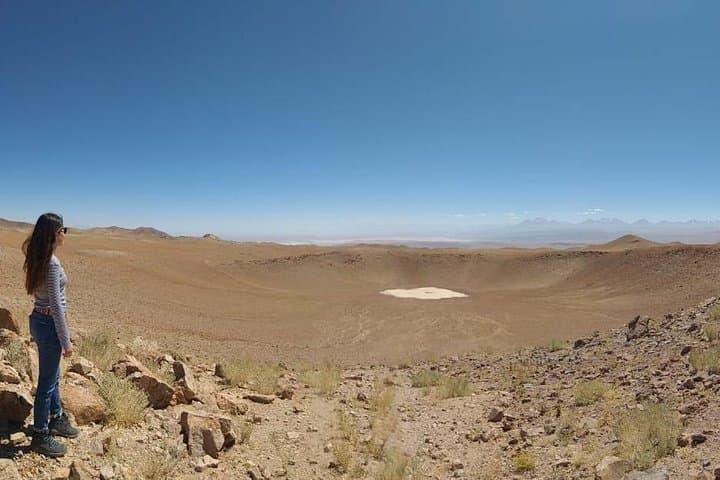
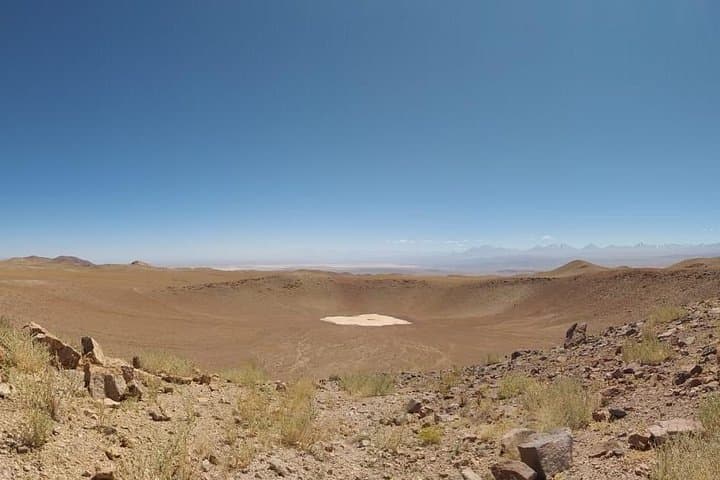
Morning light carves the desert into hard edges—ochre plains, fluted basalt, and a rim that drops away into a shallow bowl. On the rim of Monturaqui Meteor Crater the desert feels intentionally quiet; wind reads the surface and the Andes loom like a slow-moving presence to the east while the Salar de Atacama shimmers to the north.
Morning light carves the desert into hard edges—ochre plains, fluted basalt, and a rim that drops away into a shallow bowl. On the rim of Monturaqui Meteor Crater the desert feels intentionally quiet; wind reads the surface and the Andes loom like a slow-moving presence to the east while the Salar de Atacama shimmers to the north.
Geologically the crater is an impact feature whose heat-and-pressure fingerprints survive in shock-metamorphosed rocks called impactites. The surrounding plain is high-altiplano desert: volcanic plates, salt flats, and sparse cushions of scrub adapted to intense sun and punishing cold. Culturally the area sits within the territory long used by Atacameño communities; routes across this landscape have connected salt, llamas and water sources for centuries.
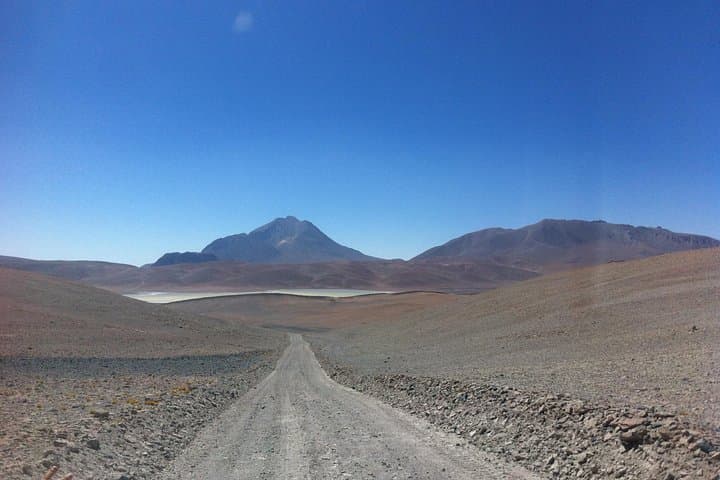
Expect a guided rim visit with an interpretive talk on formation and local geology, followed by a supervised search and inspection of surface impact materials (photograph only unless permits state otherwise). The day is mostly vehicle transit across high desert roads with a short on-foot exploration at the crater rim.
Practical guidance: bring layered clothing for rapid temperature swings, strong sun protection, and at least 2–3 liters of water. Altitude will nudge your breathing—move deliberately and hydrate. Footing at the rim is uneven volcanic rock; sensible hiking shoes are recommended. The trip is a long day from San Pedro (roughly 7–9 hours roundtrip with stops), so plan arrival and rest accordingly. Leave no trace: this is a fragile desert where erosion is slow and human impact lasts.