THE ADVENTURE COLLECTIVE® · Independent discovery and booking for outdoor travel

A full-day guided hike across Montserrat’s volcanic interior, leading to a dry waterfall, newly found petroglyphs and ridge-top views of the Caribbean. Ideal for hikers with moderate fitness who want geology, history and coastal panoramas in one route.
A full-day guided hike across Montserrat’s volcanic interior, leading to a dry waterfall, newly found petroglyphs and ridge-top views of the Caribbean. Ideal for hikers with moderate fitness who want geology, history and coastal panoramas in one route.
You step off the air-conditioned minivan into a sharp, warm breeze and immediately feel the island’s geology underfoot — black volcanic scree, compacted ash trails and ancient limestone ledges that roll toward the sea.
Verified experiences and guided adventures in the surrounding area.
Operated by Trek Tours · Brades, Montserrat
You step off the air-conditioned minivan into a sharp, warm breeze and immediately feel the island’s geology underfoot — black volcanic scree, compacted ash trails and ancient limestone ledges that roll toward the sea.
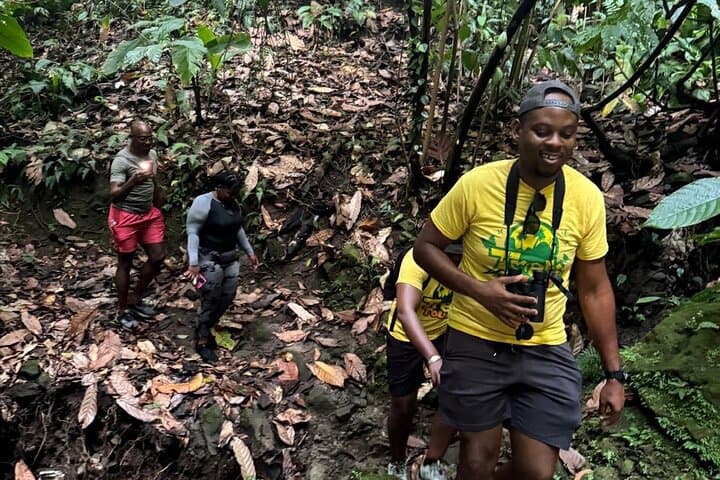
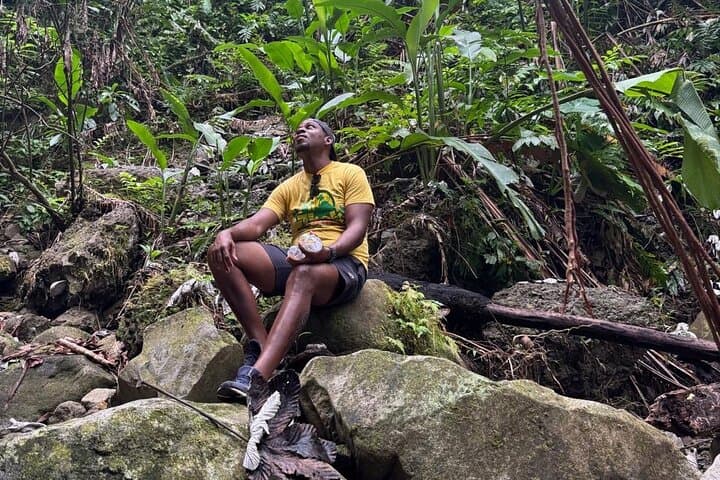
The six-hour route threads through Montserrat’s interior: open scrub, shaded gullies and a short ascent to ridgelines that offer sudden panoramas of the Caribbean. A local guide leads the group to a dry waterfall — a channel carved by past eruptions — and to low rock faces marked by recently discovered petroglyphs, quiet human marks against volcanic stone.
Montserrat’s landscape is defined by its volcanic history; Soufrière Hills reshaped the island in the 1990s, burying the old capital and leaving steep slopes and fresh rock exposures. Cultural memory here runs close to the surface: small settlements like Brades keep community life alive, and Creole rhythms and British influences combine in local food and conversation.
Expect 10–12 miles (16–19 km) of mixed trail with several steep sections and roughly 1,500–2,000 ft (450–600 m) of cumulative elevation gain depending on the chosen loops. Trails vary from compact dirt to loose volcanic gravel; sections can be exposed to sun and trade winds.
Practical notes: carry at least 2–3 liters of water, wear grippy boots and sun protection, and plan for a steady pace with frequent breaks — guides provide bottled water and a packed lunch. Morning departures give cooler air and clearer views; be prepared for abrupt weather shifts and respect fragile rock art and vegetation when pausing for photos.
moderate.
6 hours.
Moderate endurance with comfort on uneven, steep terrain; good cardiovascular fitness recommended
The route is rated moderate — beginners with regular walking experience can complete it if prepared for several hours and some steep sections; pace yourself and use the guide.
Facilities are limited on the trail; guides provide bottled water and there is typically one lunch stop, but bring your own toilet paper and hand sanitizer for stops.
Wear broken-in hiking shoes, breathable layers for sun protection and wind, and a light rain jacket; trekking poles help on steep descent sections.
The tour recommends moderate fitness; older adults or children may participate if comfortable with long walks and elevation gain, but check restrictions about health conditions before booking.
Soufrière Hills volcanic activity dramatically reshaped Montserrat in the 1990s, displacing communities and exposing fresh volcanic geology that hikers now traverse.
Trails cross sensitive volcanic soils and fragile vegetation — stick to marked paths, pack out all trash, and avoid disturbing archaeological features.
Trek Tours operates guided outdoor trips and adventures with an emphasis on safety, stewardship, and memorable experiences.

You step off the air-conditioned minivan into a sharp, warm breeze and immediately feel the island’s geology underfoot — black volcanic scree, compacted ash trails and ancient limestone ledges that roll toward the sea.
You step off the air-conditioned minivan into a sharp, warm breeze and immediately feel the island’s geology underfoot — black volcanic scree, compacted ash trails and ancient limestone ledges that roll toward the sea.
The six-hour route threads through Montserrat’s interior: open scrub, shaded gullies and a short ascent to ridgelines that offer sudden panoramas of the Caribbean. A local guide leads the group to a dry waterfall — a channel carved by past eruptions — and to low rock faces marked by recently discovered petroglyphs, quiet human marks against volcanic stone.
Montserrat’s landscape is defined by its volcanic history; Soufrière Hills reshaped the island in the 1990s, burying the old capital and leaving steep slopes and fresh rock exposures. Cultural memory here runs close to the surface: small settlements like Brades keep community life alive, and Creole rhythms and British influences combine in local food and conversation.
Expect 10–12 miles (16–19 km) of mixed trail with several steep sections and roughly 1,500–2,000 ft (450–600 m) of cumulative elevation gain depending on the chosen loops. Trails vary from compact dirt to loose volcanic gravel; sections can be exposed to sun and trade winds.
Practical notes: carry at least 2–3 liters of water, wear grippy boots and sun protection, and plan for a steady pace with frequent breaks — guides provide bottled water and a packed lunch. Morning departures give cooler air and clearer views; be prepared for abrupt weather shifts and respect fragile rock art and vegetation when pausing for photos.