THE ADVENTURE COLLECTIVE® · Independent discovery and booking for outdoor travel

Escape Barcelona for six hours to explore Montserrat’s dramatic rock towers, Benedictine basilica and the revered Black Madonna. This private guided trip combines accessible walks, cultural history and dramatic viewpoints—ideal for history lovers and nature lovers alike.
Escape Barcelona for six hours to explore Montserrat’s dramatic rock towers, Benedictine basilica and the revered Black Madonna. This private guided trip combines accessible walks, cultural history and dramatic viewpoints—ideal for history lovers and nature lovers alike.
A wind that smells of pine and sun greets the van as it climbs away from Barcelona, and within an hour the city’s grid loosens into serrated ridgelines. The Montserrat monastery sits high on a knuckled ridge—its stonework and bell towers cut against cliffs that look as if the mountain itself has been hewn into towers. You step out, the air cooler, and the massif seems to watch, its narrow spires daring you to look closer.
Verified experiences and guided adventures in the surrounding area.
Operated by Visit Barca · Montserrat, Catalonia
A wind that smells of pine and sun greets the van as it climbs away from Barcelona, and within an hour the city’s grid loosens into serrated ridgelines. The Montserrat monastery sits high on a knuckled ridge—its stonework and bell towers cut against cliffs that look as if the mountain itself has been hewn into towers. You step out, the air cooler, and the massif seems to watch, its narrow spires daring you to look closer.
History here is layered: a Benedictine foundation established in the 11th–12th centuries, a pilgrimage site anchored by the Black Madonna and a boys’ choir tradition that stretches back centuries. Geologically, Montserrat is a conglomerate of compressed sediments—rounded boulders fused together into surreal pillars that hikers and climbers use as natural routes and viewpoints. Culturally, the monastery has been a Catalan symbol of identity and refuge through wars and revival.
On the half-day private tour you’ll visit the basilica, access the throne area where the Black Madonna is displayed, and take short walks into Montserrat Natural Park for panoramic photos. Expect paved steps, short steep ramps, and viewpoints rather than long alpine trails; wildlife sightings can include griffon vultures wheeling above and Iberian hares on lower slopes.
Practical guidance: reserve choir or Madonna access well ahead, bring layered clothing for changing mountain temps, and wear supportive footwear for uneven stone paths. Hydrate before and during the visit—water is limited on some paths—and aim for early morning or late afternoon to avoid peak crowds and midday heat in summer.
easy.
6 hours.
Suitable for people who can handle short walks and stairs; minimal sustained exertion but expect uneven stone surfaces and steps.
Private transfers typically take about 50–70 minutes each way depending on traffic; the full experience is around six hours including travel time.
Yes—access to the Basilica Throne and the Black Madonna is included, but viewing slots are limited and may require advance reservation for choir visits.
The site has steps and some steep ramps; while the tour is described as suitable for all fitness levels, those with significant mobility limitations should check specific access points and request accommodations beforehand.
Bring layered clothing, sun protection, a refillable water bottle, and comfortable shoes; money for souvenirs and optional food is useful.
Montserrat’s Benedictine abbey dates back to the 11th–12th centuries and has long been a Catalan religious and cultural center, housing the Black Madonna and a famed boys’ choir.
Montserrat Natural Park protects unique conglomerate rock formations and Mediterranean flora; visitors are asked to stay on marked paths and follow leave-no-trace principles to limit erosion and disturbance.
Visit Barca operates guided outdoor trips and adventures with an emphasis on safety, stewardship, and memorable experiences.


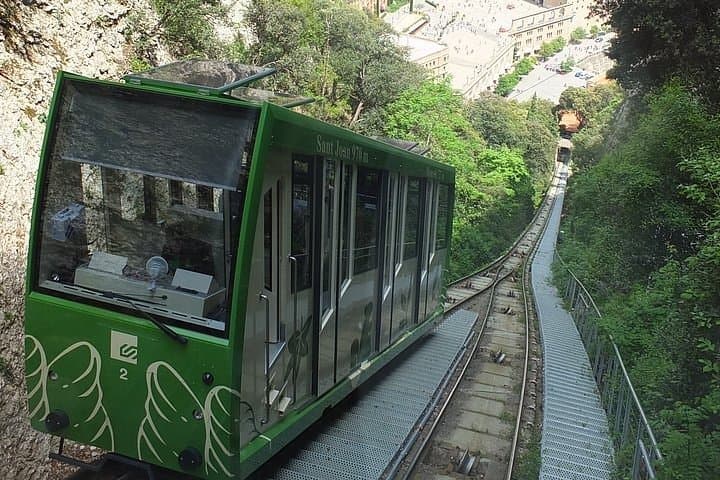

A wind that smells of pine and sun greets the van as it climbs away from Barcelona, and within an hour the city’s grid loosens into serrated ridgelines. The Montserrat monastery sits high on a knuckled ridge—its stonework and bell towers cut against cliffs that look as if the mountain itself has been hewn into towers. You step out, the air cooler, and the massif seems to watch, its narrow spires daring you to look closer.
A wind that smells of pine and sun greets the van as it climbs away from Barcelona, and within an hour the city’s grid loosens into serrated ridgelines. The Montserrat monastery sits high on a knuckled ridge—its stonework and bell towers cut against cliffs that look as if the mountain itself has been hewn into towers. You step out, the air cooler, and the massif seems to watch, its narrow spires daring you to look closer.
History here is layered: a Benedictine foundation established in the 11th–12th centuries, a pilgrimage site anchored by the Black Madonna and a boys’ choir tradition that stretches back centuries. Geologically, Montserrat is a conglomerate of compressed sediments—rounded boulders fused together into surreal pillars that hikers and climbers use as natural routes and viewpoints. Culturally, the monastery has been a Catalan symbol of identity and refuge through wars and revival.
On the half-day private tour you’ll visit the basilica, access the throne area where the Black Madonna is displayed, and take short walks into Montserrat Natural Park for panoramic photos. Expect paved steps, short steep ramps, and viewpoints rather than long alpine trails; wildlife sightings can include griffon vultures wheeling above and Iberian hares on lower slopes.
Practical guidance: reserve choir or Madonna access well ahead, bring layered clothing for changing mountain temps, and wear supportive footwear for uneven stone paths. Hydrate before and during the visit—water is limited on some paths—and aim for early morning or late afternoon to avoid peak crowds and midday heat in summer.