THE ADVENTURE COLLECTIVE® · Independent discovery and booking for outdoor travel

Combine skip-the-line access to the 11th-century Montserrat Monastery with a guided hike reached by the Sant Joan funicular. This small-group experience mixes geology, monastic history, and panoramic ridgeline trails in a single day trip from Barcelona.
Combine skip-the-line access to the 11th-century Montserrat Monastery with a guided hike reached by the Sant Joan funicular. This small-group experience mixes geology, monastic history, and panoramic ridgeline trails in a single day trip from Barcelona.
You step off the minivan and the mountain greets you with a raw, stony skyline: tooth-like conglomerate towers rising from pine-slashed terraces. The Benedictine monastery sits low on the ridge, its bells punctuating the air while the Sant Joan funicular hums up to the higher trails, carrying hikers to viewpoints that dare you to look further.
Verified experiences and guided adventures in the surrounding area.
Operated by Catalan Trails · Montserrat, Catalonia
You step off the minivan and the mountain greets you with a raw, stony skyline: tooth-like conglomerate towers rising from pine-slashed terraces. The Benedictine monastery sits low on the ridge, its bells punctuating the air while the Sant Joan funicular hums up to the higher trails, carrying hikers to viewpoints that dare you to look further.
Montserrat’s odd, bulbous rock comes from millions of years of marine sediment compressed and uplifted, creating rounded pinnacles and narrow gullies that channel wind and light. Catalan history is woven into these cliffs — a place of pilgrimage since the 11th century where the Black Madonna and monastic life shaped regional identity. Local shepherding and small-scale farming survive in pockets; you’ll smell rosemary and hear the distant bleat of sheep more often than traffic.
On this small-group tour you skip monastery queues, ride Sant Joan to the upper network, and hike roughly 3 km with about 300 m elevation change (mostly descent). Trails alternate between paved monastery approaches and loose, stony singletrack across sun-exposed ridges and shaded cork-oak stands. The guide points out endemic plants and the geology that makes Montserrat unique while keeping pace manageable for moderately fit walkers.
Practical note: bring sturdy shoes, a refillable water bottle, layered clothing for wind at the ridge, and snacks for the trail. Morning light is best for photos and thinner crowds; afternoons warm but can be windy. The route balances cultural immersion and alpine-style hiking — compact, scenic, and distinctly Catalan.
moderate.
6–7 hours.
Suitable for someone with moderate fitness who can handle a 3 km hike with ~300 m elevation change and some uneven terrain.
The guided hike covers about 3 km (2 miles) with roughly 300 m (1,000 ft) of elevation change and takes around 2 hours within the full 6–7 hour tour.
Yes — skip-the-line tickets for Montserrat Monastery and a guided visit are included in the tour price.
The itinerary uses the Sant Joan funicular to reach higher trails; return logistics are managed by the guide and transport is included back to Barcelona.
The hike requires a moderate fitness level and uneven terrain—children in good shape can join, but it’s not recommended for those with limited mobility.
Montserrat has been an important religious site since the 11th century; the abbey and the image of the Virgin of Montserrat became central symbols for Catalan culture.
Montserrat Natural Park protects unique geology and endemic plants; visitors are encouraged to stay on trails, pack out waste, and use refill stations to reduce plastic.
Catalan Trails operates guided outdoor trips and adventures with an emphasis on safety, stewardship, and memorable experiences.
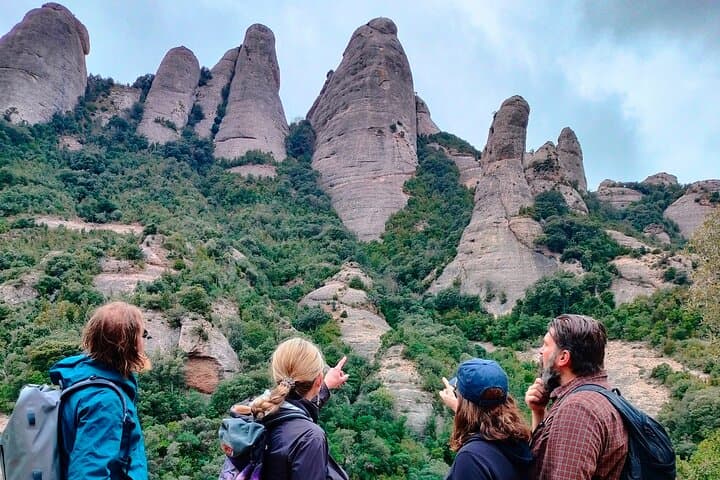
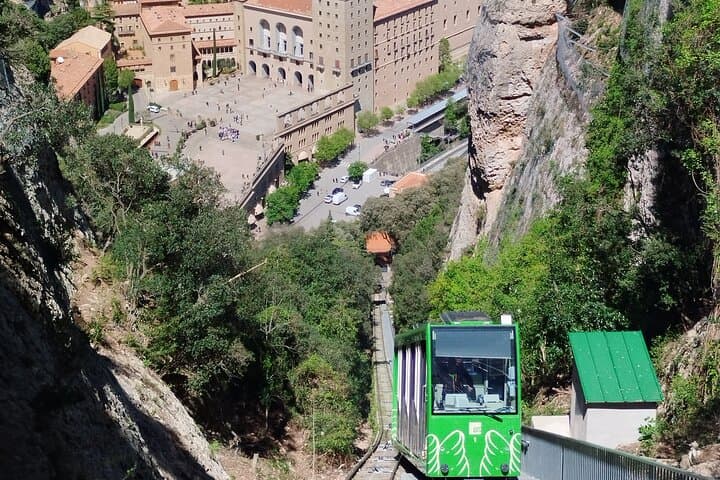
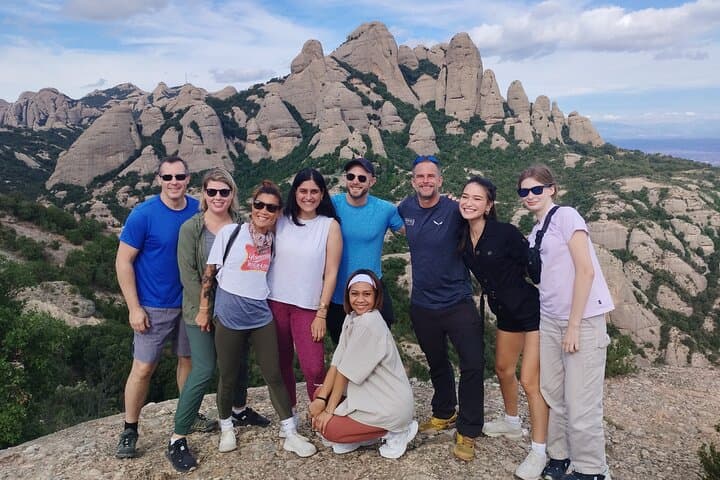
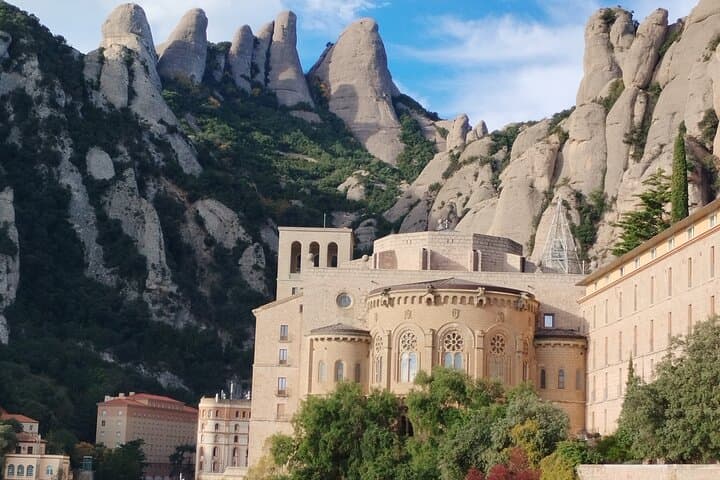
You step off the minivan and the mountain greets you with a raw, stony skyline: tooth-like conglomerate towers rising from pine-slashed terraces. The Benedictine monastery sits low on the ridge, its bells punctuating the air while the Sant Joan funicular hums up to the higher trails, carrying hikers to viewpoints that dare you to look further.
You step off the minivan and the mountain greets you with a raw, stony skyline: tooth-like conglomerate towers rising from pine-slashed terraces. The Benedictine monastery sits low on the ridge, its bells punctuating the air while the Sant Joan funicular hums up to the higher trails, carrying hikers to viewpoints that dare you to look further.
Montserrat’s odd, bulbous rock comes from millions of years of marine sediment compressed and uplifted, creating rounded pinnacles and narrow gullies that channel wind and light. Catalan history is woven into these cliffs — a place of pilgrimage since the 11th century where the Black Madonna and monastic life shaped regional identity. Local shepherding and small-scale farming survive in pockets; you’ll smell rosemary and hear the distant bleat of sheep more often than traffic.
On this small-group tour you skip monastery queues, ride Sant Joan to the upper network, and hike roughly 3 km with about 300 m elevation change (mostly descent). Trails alternate between paved monastery approaches and loose, stony singletrack across sun-exposed ridges and shaded cork-oak stands. The guide points out endemic plants and the geology that makes Montserrat unique while keeping pace manageable for moderately fit walkers.
Practical note: bring sturdy shoes, a refillable water bottle, layered clothing for wind at the ridge, and snacks for the trail. Morning light is best for photos and thinner crowds; afternoons warm but can be windy. The route balances cultural immersion and alpine-style hiking — compact, scenic, and distinctly Catalan.