THE ADVENTURE COLLECTIVE® · Independent discovery and booking for outdoor travel

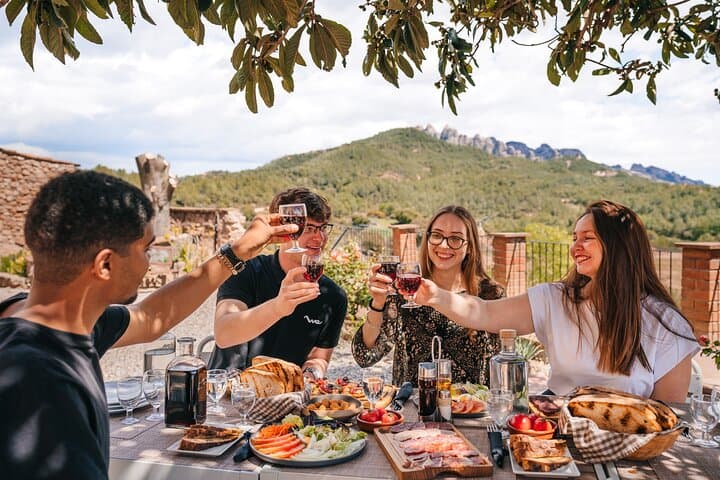
Ride the Sant Joan funicular into Montserrat, hike rocky trails with sweeping views, visit the monastery and La Moreneta, then settle in for a country-house lunch before returning to Barcelona. A compact day that pairs culture, geology, and moderate hiking.
Ride the Sant Joan funicular into Montserrat, hike rocky trails with sweeping views, visit the monastery and La Moreneta, then settle in for a country-house lunch before returning to Barcelona. A compact day that pairs culture, geology, and moderate hiking.
You step off the coach and feel the mountain pull at you—craggy conglomerate spires rising like teeth against the Catalan sky. The Sant Joan funicular slides upward, trees rushing past, and when the doors open you’re on a plate of rock, wind drafting around you as choughs wheel overhead.
Verified experiences and guided adventures in the surrounding area.
Operated by BARCELONA BEST EXPERIENCES · Monistrol de Montserrat, Catalonia
You step off the coach and feel the mountain pull at you—craggy conglomerate spires rising like teeth against the Catalan sky. The Sant Joan funicular slides upward, trees rushing past, and when the doors open you’re on a plate of rock, wind drafting around you as choughs wheel overhead.
Montserrat’s monastery has been a pilgrimage anchor for centuries; the Benedictine community and the Black Madonna (La Moreneta) draw devotion and music—the boys’ choir still sings in the basilica. Geologically, the range is a jumble of compacted sandstone and pebbly conglomerate sculpted by erosion into cliffs and narrow ridges, which makes the trails both dramatic and uneven. The culture here blends faith, Catalan identity, and a long tradition of mountain walking.
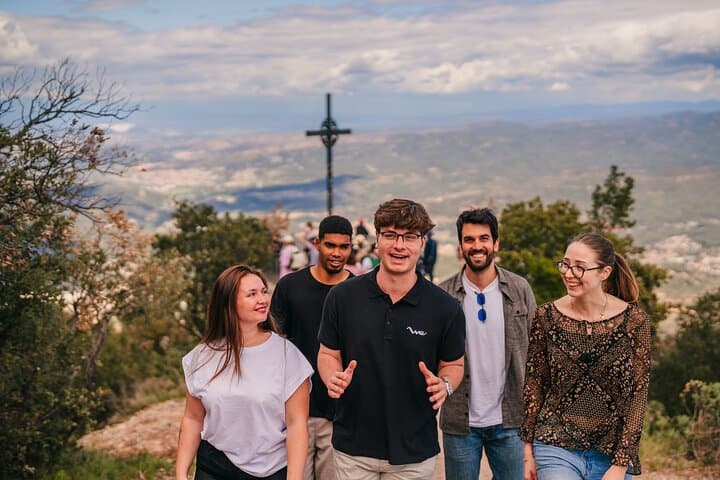
On this half-day outing you’ll ascend by funicular, follow marked trails with short rocky scrambles and loose scree, then descend toward the monastery for a country-house lunch—expect 4–6 km of walking, roughly 200–400 m of elevation change, and varied footing.
Practical edge: wear grippy hiking shoes, bring 1–1.5 liters of water, and layer up—the summit is often cooler and windier than Barcelona. Mornings are quieter; check monastery visiting hours if La Moreneta is a priority, and bring a light daypack for snacks, camera, and sun protection. Stay on established paths to protect fragile soils, and leave time to savor the view before the return transfer to the city.
moderate.
6–7 hours.
Moderate fitness; comfortable with 4–6 km of mixed-terrain hiking and some elevation change.
Yes—visiting the basilica and La Moreneta is part of most tours, but check current visiting hours and queue times; modest dress and quiet are expected.
The Sant Joan funicular ascent is included on this itinerary; the hike after the funicular involves moderate uphill/downhill sections with rocky footing rather than technical climbing.
Children with basic walking ability can join, but the tour notes recommend against it for pregnant travelers due to uneven terrain and some strenuous sections.
Yes—the operator asks for dietary restrictions at booking; notify them in advance to arrange suitable options.
Montserrat’s Benedictine monastery dates back many centuries and the Black Madonna has been a focus of Catalan devotion; the site also became an emblem of Catalan culture during periods of political struggle.
High visitor numbers strain fragile soils and endemic plants—stay on trails, pack out waste, and avoid removing geological or botanical samples.
BARCELONA BEST EXPERIENCES operates guided outdoor trips and adventures with an emphasis on safety, stewardship, and memorable experiences.
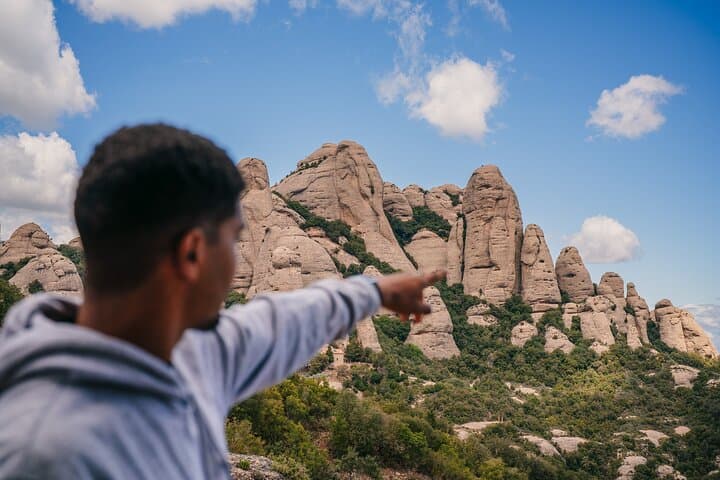
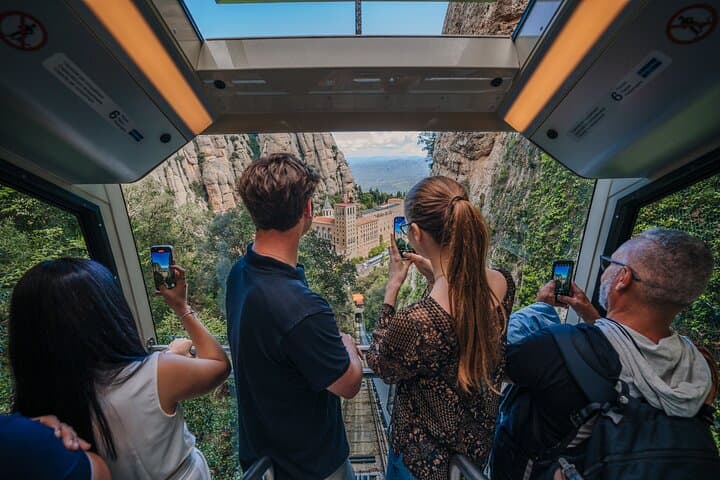
You step off the coach and feel the mountain pull at you—craggy conglomerate spires rising like teeth against the Catalan sky. The Sant Joan funicular slides upward, trees rushing past, and when the doors open you’re on a plate of rock, wind drafting around you as choughs wheel overhead.
You step off the coach and feel the mountain pull at you—craggy conglomerate spires rising like teeth against the Catalan sky. The Sant Joan funicular slides upward, trees rushing past, and when the doors open you’re on a plate of rock, wind drafting around you as choughs wheel overhead.
Montserrat’s monastery has been a pilgrimage anchor for centuries; the Benedictine community and the Black Madonna (La Moreneta) draw devotion and music—the boys’ choir still sings in the basilica. Geologically, the range is a jumble of compacted sandstone and pebbly conglomerate sculpted by erosion into cliffs and narrow ridges, which makes the trails both dramatic and uneven. The culture here blends faith, Catalan identity, and a long tradition of mountain walking.
On this half-day outing you’ll ascend by funicular, follow marked trails with short rocky scrambles and loose scree, then descend toward the monastery for a country-house lunch—expect 4–6 km of walking, roughly 200–400 m of elevation change, and varied footing.
Practical edge: wear grippy hiking shoes, bring 1–1.5 liters of water, and layer up—the summit is often cooler and windier than Barcelona. Mornings are quieter; check monastery visiting hours if La Moreneta is a priority, and bring a light daypack for snacks, camera, and sun protection. Stay on established paths to protect fragile soils, and leave time to savor the view before the return transfer to the city.