THE ADVENTURE COLLECTIVE® · Independent discovery and booking for outdoor travel

Ride the cog-wheel up Montserrat to a monastery perched among serrated rock towers, visit the famed Black Madonna, and choose from short hikes, tastings, and a compact museum. This half-day trip pairs dramatic geology with centuries of monastic history.
Ride the cog-wheel up Montserrat to a monastery perched among serrated rock towers, visit the famed Black Madonna, and choose from short hikes, tastings, and a compact museum. This half-day trip pairs dramatic geology with centuries of monastic history.
You step off the cog-wheel carriage and the air shifts—cooler, thinner, and smelling faintly of pine and limestone dust. Jagged towers of conglomerate rise like teeth above the plaza; pilgrims and day-trippers thread between benches and the basilica doors, while bells mark the monastery’s slow rhythm.
Verified experiences and guided adventures in the surrounding area.
Operated by Julia Travel S.L · Monistrol de Montserrat, Catalonia
You step off the cog-wheel carriage and the air shifts—cooler, thinner, and smelling faintly of pine and limestone dust. Jagged towers of conglomerate rise like teeth above the plaza; pilgrims and day-trippers thread between benches and the basilica doors, while bells mark the monastery’s slow rhythm.
Montserrat’s serrated silhouette owes itself to compressed riverbed rock of sand and pebbles, sculpted by erosion into the steep spires that define this Natural Park since 1987. The Benedictine abbey here has drawn Catalans for centuries; inside the basilica sits la Moreneta, the Black Madonna, wrapped in folklore and ritual. Nearby, small chapels, a concise museum of medieval to modern art, and short walking trails offer cultural and geological contrasts—Gothic and Renaissance stonework against raw, wind-carved crags.
On a half-day excursion, the cog-wheel ascent is part transport, part scenic reveal: terraces fall away to reveal vineyards and the Llobregat valley below. Guides typically cover monastery history and basilica etiquette, then leave time for a tasting of local liquors, a quick hike to Sant Miquel viewpoint, or the audiovisual exhibition.
Practical notes: dress respectfully for the basilica (no tank tops or short shorts), wear sturdy walking shoes, and carry a reusable water bottle—the mountain weather changes fast, so layers and a lightweight rain shell are smart. If you plan to visit the museum or hike, check opening times and factor in limited free time; opt for the shorter Sant Miquel loop if you want a reliable view without straying far from the group.
easy.
5–7 hours.
Suitable for most fitness levels; involves moderate walking on paved and short rocky paths.
The tour lasts about 5–7 hours depending on departure time and includes round-trip transportation by air-conditioned coach and the cog-wheel train ascent.
Priority access reduces wait time but there can still be a short queue; visitors must follow basilica rules and time limits may apply during busy periods.
The tour is generally suitable for families; however, the site involves walking on uneven ground and steps—infants must sit on laps and those with mobility limits should notify at booking.
Conservative clothing is required—no tank tops, strapless tops, short shorts or flip-flops; bring a scarf or layer to cover shoulders if needed.
Montserrat has been a spiritual site since medieval times; the Benedictine community established the current monastery complex and conserves Catalan religious traditions including the shrine to la Moreneta.
Montserrat is protected as a Natural Park; visitors should stay on marked paths, avoid littering, and respect restricted areas to protect fragile rock and endemic flora.
Julia Travel S.L operates guided outdoor trips and adventures with an emphasis on safety, stewardship, and memorable experiences.
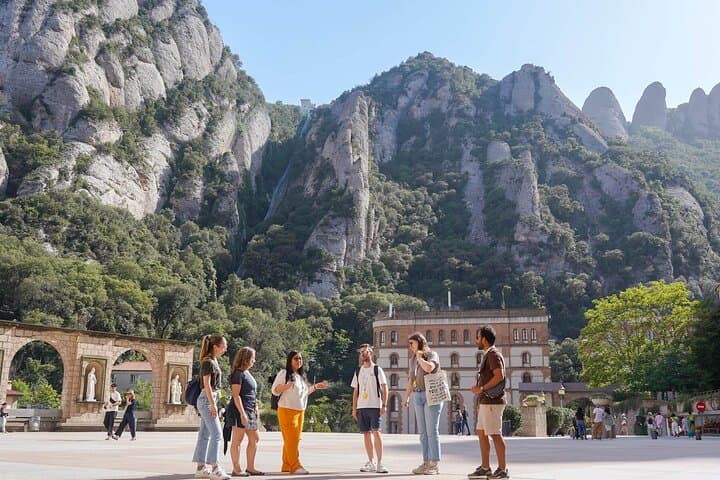
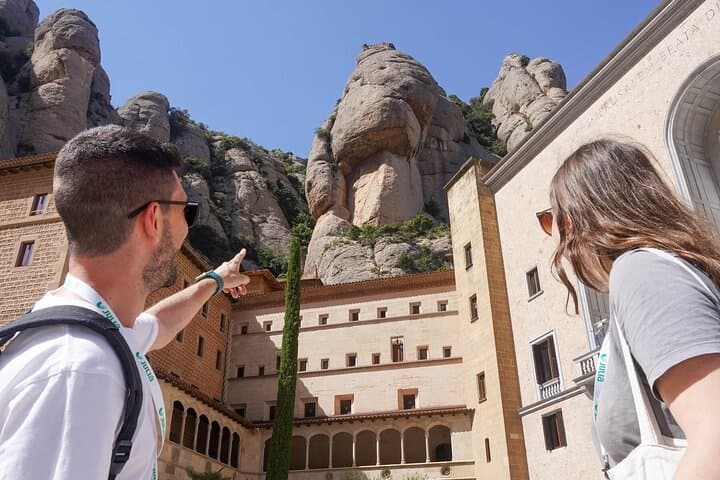
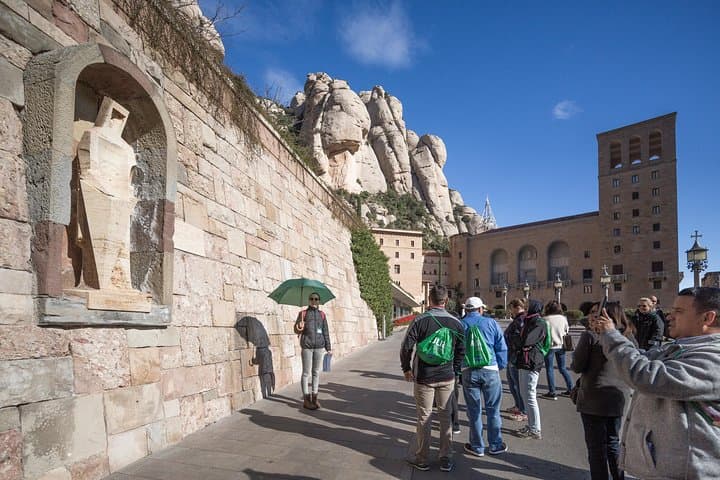
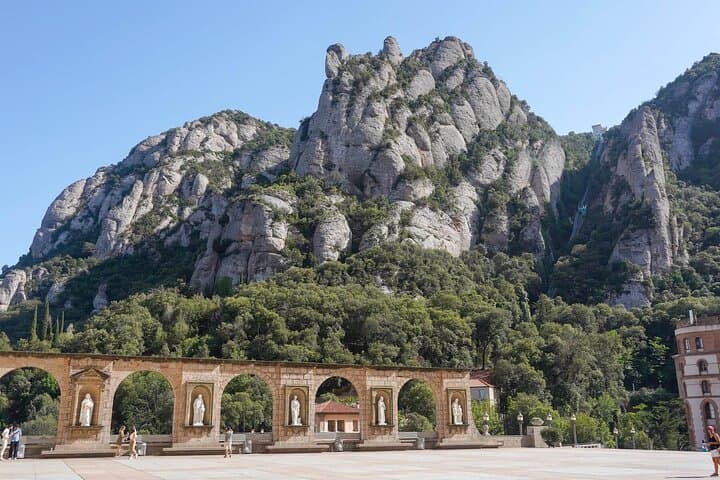
You step off the cog-wheel carriage and the air shifts—cooler, thinner, and smelling faintly of pine and limestone dust. Jagged towers of conglomerate rise like teeth above the plaza; pilgrims and day-trippers thread between benches and the basilica doors, while bells mark the monastery’s slow rhythm.
You step off the cog-wheel carriage and the air shifts—cooler, thinner, and smelling faintly of pine and limestone dust. Jagged towers of conglomerate rise like teeth above the plaza; pilgrims and day-trippers thread between benches and the basilica doors, while bells mark the monastery’s slow rhythm.
Montserrat’s serrated silhouette owes itself to compressed riverbed rock of sand and pebbles, sculpted by erosion into the steep spires that define this Natural Park since 1987. The Benedictine abbey here has drawn Catalans for centuries; inside the basilica sits la Moreneta, the Black Madonna, wrapped in folklore and ritual. Nearby, small chapels, a concise museum of medieval to modern art, and short walking trails offer cultural and geological contrasts—Gothic and Renaissance stonework against raw, wind-carved crags.
On a half-day excursion, the cog-wheel ascent is part transport, part scenic reveal: terraces fall away to reveal vineyards and the Llobregat valley below. Guides typically cover monastery history and basilica etiquette, then leave time for a tasting of local liquors, a quick hike to Sant Miquel viewpoint, or the audiovisual exhibition.
Practical notes: dress respectfully for the basilica (no tank tops or short shorts), wear sturdy walking shoes, and carry a reusable water bottle—the mountain weather changes fast, so layers and a lightweight rain shell are smart. If you plan to visit the museum or hike, check opening times and factor in limited free time; opt for the shorter Sant Miquel loop if you want a reliable view without straying far from the group.