THE ADVENTURE COLLECTIVE® · Independent discovery and booking for outdoor travel

A guided 3–3.5 hour e‑bike loop from Montpellier into the Petite Camargue, passing the gold pond (Étang de l’Or), vineyards and marshes where flamingos and avocets feed. Ideal for riders with moderate fitness who want wildlife and landscape without steep climbs.
A guided 3–3.5 hour e‑bike loop from Montpellier into the Petite Camargue, passing the gold pond (Étang de l’Or), vineyards and marshes where flamingos and avocets feed. Ideal for riders with moderate fitness who want wildlife and landscape without steep climbs.
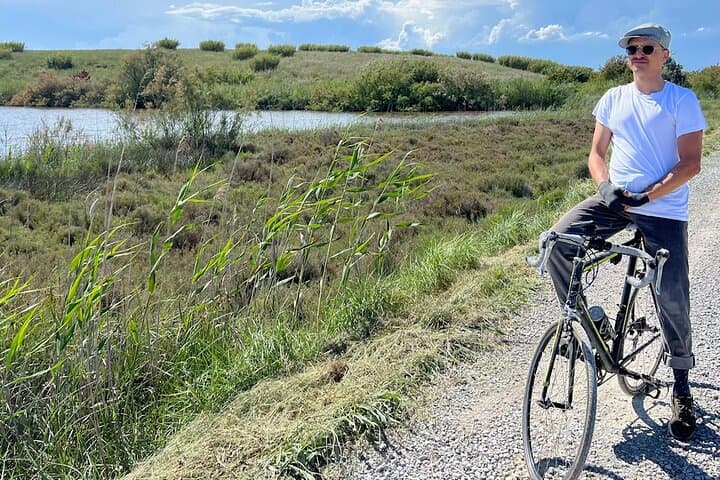
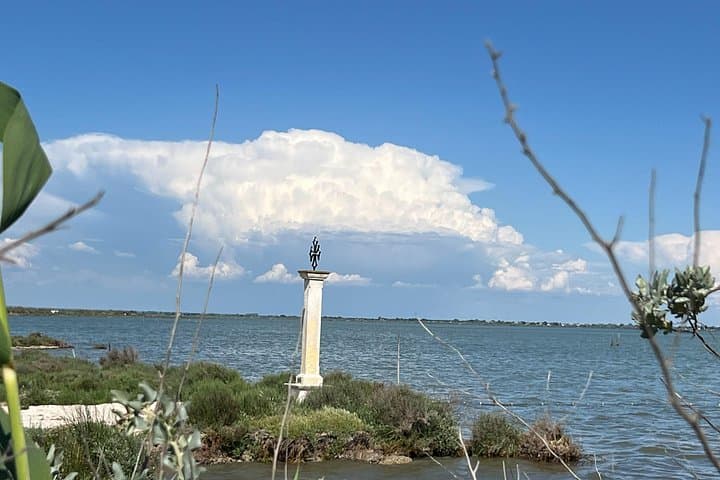
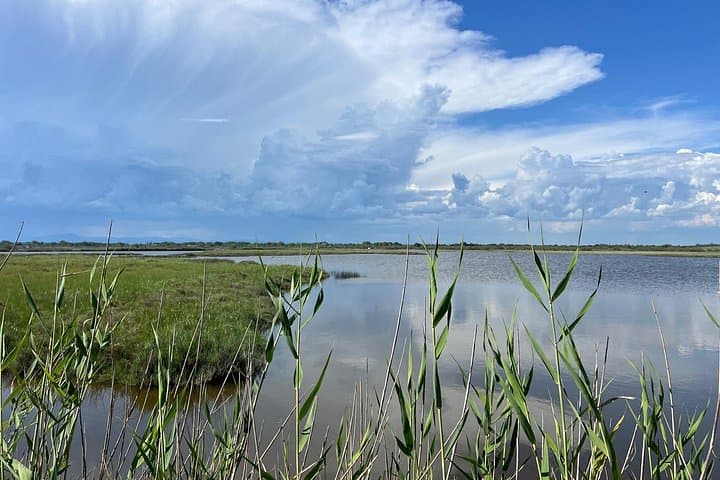
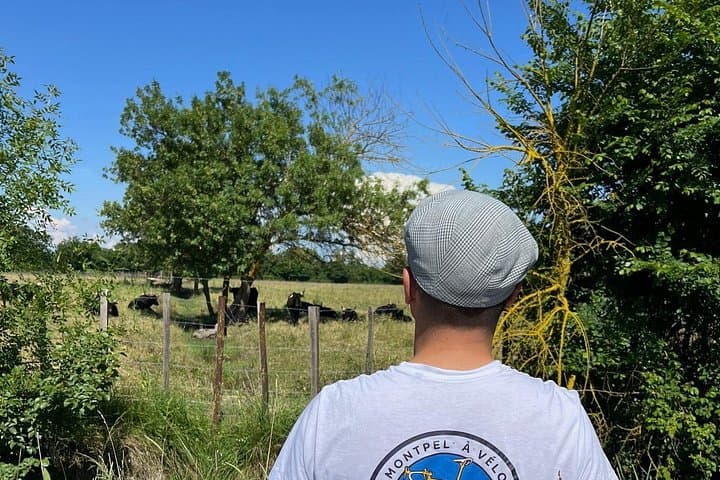
You push off from Montpellier’s Grammont district and the city slips away into flat vineyards and salt‑tinted lagoons. The e-bike eases the rhythm—pedal assist smoothing the push where farmland gives way to marsh and a golden pond opens like a shallow mirror. Pink flamingos stand like punctuation along the water’s edge; avocets and grey herons move with practiced indifference.
Verified experiences and guided adventures in the surrounding area.
Operated by Montpel' A Velo · Montpellier, Occitanie
You push off from Montpellier’s Grammont district and the city slips away into flat vineyards and salt‑tinted lagoons. The e-bike eases the rhythm—pedal assist smoothing the push where farmland gives way to marsh and a golden pond opens like a shallow mirror. Pink flamingos stand like punctuation along the water’s edge; avocets and grey herons move with practiced indifference.
This corridor is the Petite Camargue, a coastal wetland shaped by Rhône sediments and centuries of grazing, salt work and small-scale viticulture. Geologically it’s a young plain: sandy soils, reed beds and shallow étangs (lagoons) that host migratory birds and shallow-rooted salt-tolerant plants. Culturally the route threads past small mas (farmhouses), vineyards, and the Mas de Fabre fields—land uses that have defined the region for generations.
Expect a guided loop of roughly 20–30 km over about 3–3.5 hours with minimal elevation gain (under ~200 m). Terrain alternates paved country roads, dedicated cycle paths and short farm tracks that can be gritty after rain. The guide times stops for views at the Motte lookout, the gold lake (Étang de l’Or), and Lake Mourre; binoculars help. Practicalities: bring sun protection, a refillable water bottle, and shoes with some tread for unpaved sections. Ride politely around colonies of birds—guides will point where to pause and where to keep moving to avoid disturbance.
The tour includes an e‑bike, helmet and local guide for small groups. It’s an accessible way to sample Camargue wildlife and the agricultural landscapes that fringe Montpellier without heavy climbing or technical riding.
moderate.
3–3.5 hours.
Suitable for riders with a moderate level of fitness; e‑bike assist reduces strain but expect sustained pedaling and short standing efforts on loose ground.
Yes — the tour supplies electric pedal‑assist bikes suited to mixed terrain; they provide support on flats and into light headwinds but still require pedaling.
Riders with basic bike skills can usually participate; children should be comfortable on a standard adult e‑bike and the operator sets a pace for mixed abilities.
Very likely in spring through late summer; sightings depend on water levels and season but guides know reliable viewing spots along the étangs.
Meeting is typically in Montpellier near the Grammont area; public transport and parking options exist nearby—confirm exact pickup on your booking voucher.
The Petite Camargue developed as a mosaic of wetlands and agricultural land shaped by Rhône sedimentation and centuries of grazing, salt extraction and viticulture.
This wetland is ecologically sensitive—stay on designated paths, follow guide instructions near nesting areas, and avoid leaving litter to protect bird habitats.
Montpel' A Velo operates guided outdoor trips and adventures with an emphasis on safety, stewardship, and memorable experiences.
You push off from Montpellier’s Grammont district and the city slips away into flat vineyards and salt‑tinted lagoons. The e-bike eases the rhythm—pedal assist smoothing the push where farmland gives way to marsh and a golden pond opens like a shallow mirror. Pink flamingos stand like punctuation along the water’s edge; avocets and grey herons move with practiced indifference.
You push off from Montpellier’s Grammont district and the city slips away into flat vineyards and salt‑tinted lagoons. The e-bike eases the rhythm—pedal assist smoothing the push where farmland gives way to marsh and a golden pond opens like a shallow mirror. Pink flamingos stand like punctuation along the water’s edge; avocets and grey herons move with practiced indifference.
This corridor is the Petite Camargue, a coastal wetland shaped by Rhône sediments and centuries of grazing, salt work and small-scale viticulture. Geologically it’s a young plain: sandy soils, reed beds and shallow étangs (lagoons) that host migratory birds and shallow-rooted salt-tolerant plants. Culturally the route threads past small mas (farmhouses), vineyards, and the Mas de Fabre fields—land uses that have defined the region for generations.
Expect a guided loop of roughly 20–30 km over about 3–3.5 hours with minimal elevation gain (under ~200 m). Terrain alternates paved country roads, dedicated cycle paths and short farm tracks that can be gritty after rain. The guide times stops for views at the Motte lookout, the gold lake (Étang de l’Or), and Lake Mourre; binoculars help. Practicalities: bring sun protection, a refillable water bottle, and shoes with some tread for unpaved sections. Ride politely around colonies of birds—guides will point where to pause and where to keep moving to avoid disturbance.
The tour includes an e‑bike, helmet and local guide for small groups. It’s an accessible way to sample Camargue wildlife and the agricultural landscapes that fringe Montpellier without heavy climbing or technical riding.