THE ADVENTURE COLLECTIVE® · Independent discovery and booking for outdoor travel

Climb Montmartre’s narrow streets with a local guide and arrive at Sacré‑Cœur for sweeping city views. This semi‑private two‑hour walk blends bohemian history, artists’ squares, and practical tips for navigating cobbles and crowds.
Climb Montmartre’s narrow streets with a local guide and arrive at Sacré‑Cœur for sweeping city views. This semi‑private two‑hour walk blends bohemian history, artists’ squares, and practical tips for navigating cobbles and crowds.
You step off the métro and the hill answers—cobblestones tilting underfoot, stairs nudging you upward toward the white silhouette of Sacré‑Cœur. The streets of Montmartre press close: narrow lanes threaded with cafés, artists hunched over sketchpads, and stairways that remember a different Paris. Your guide leads, pointing out plaques, doorways, and tiny courtyards that carry names of painters and salons long gone.
Verified experiences and guided adventures in the surrounding area.
Operated by Tour Across Worlds · Paris, Île-de-France
You step off the métro and the hill answers—cobblestones tilting underfoot, stairs nudging you upward toward the white silhouette of Sacré‑Cœur. The streets of Montmartre press close: narrow lanes threaded with cafés, artists hunched over sketchpads, and stairways that remember a different Paris. Your guide leads, pointing out plaques, doorways, and tiny courtyards that carry names of painters and salons long gone.
Montmartre was once a separate village of vineyards and windmills before 19th‑century annexation; its slopes collected artists fleeing the city’s formal academies. The basilica itself, completed after the Franco‑Prussian War, sits on limestone that peeks through here and there—stone that has weathered city soot into a pale patina. You’ll pass Place du Tertre where painters still barter for portraits, the wall of love, and the old cabaret districts whose nightlife retooled Parisian culture.
Expect a compact, socially paced two‑hour walk with stops for history, art, and panoramic views over Paris. The route packs stair climbs and uneven paving; shoes with grip matter more than style. Early morning or late afternoon visits mute the crowds and let the light fall across rooftops. Bring a small bill for sketches, keep voices low near the basilica where worshippers come to pray, and allow 20–30 minutes if you want to explore Sacré‑Cœur on your own after the tour. This is a walking experience that blends urban geology, bohemian history, and everyday Paris—practical, tactile, and vividly close-up.
easy.
2 hours.
Suitable for most walkers who can handle uneven cobbles and short stair flights; minimal endurance required.
No—entry to the basilica is free, but optional access to the dome or crypt has a separate fee and is handled independently.
This is a semi‑private tour capped at eight people, which keeps the experience intimate and easy to hear the guide.
Montmartre’s steep streets and many stairs make full accessibility limited; contact the operator for tailored assistance or alternate routes.
Children are welcome and service animals are permitted; advise the operator of special requirements when booking.
Montmartre evolved from a village of windmills and vineyards into a 19th‑century artists’ quarter frequented by Picasso, Van Gogh and Toulouse‑Lautrec; Sacré‑Cœur was completed as a national vow after conflict in the 1870s.
High foot traffic stresses narrow streets—stick to pavements, avoid climbing on monuments, and support local businesses to help maintain the neighborhood’s character.
Tour Across Worlds operates guided outdoor trips and adventures with an emphasis on safety, stewardship, and memorable experiences.
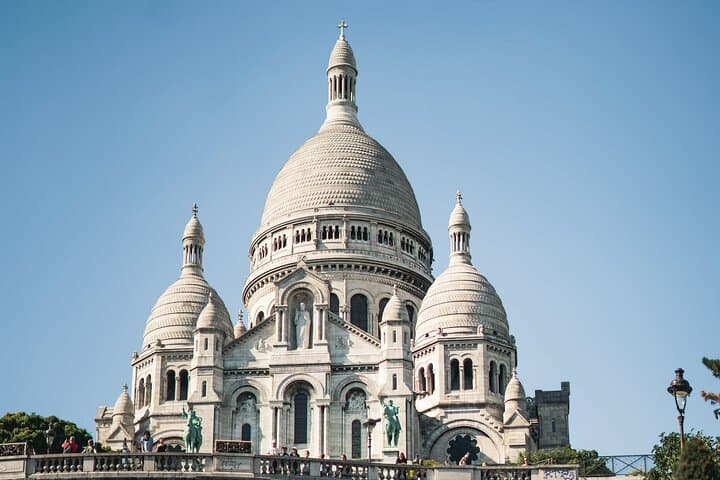
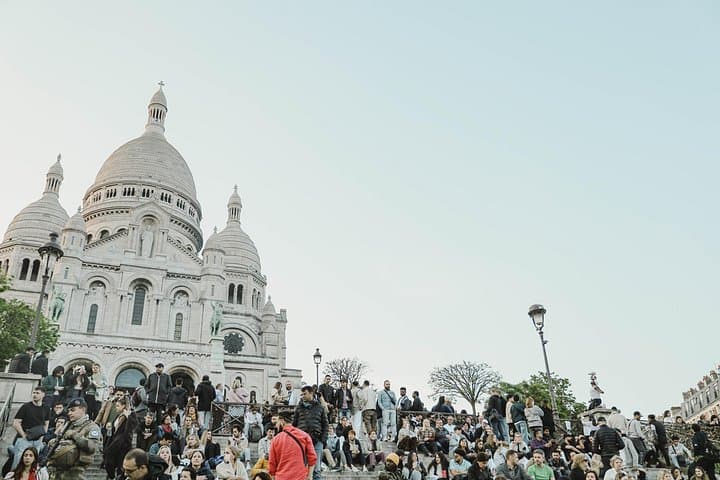
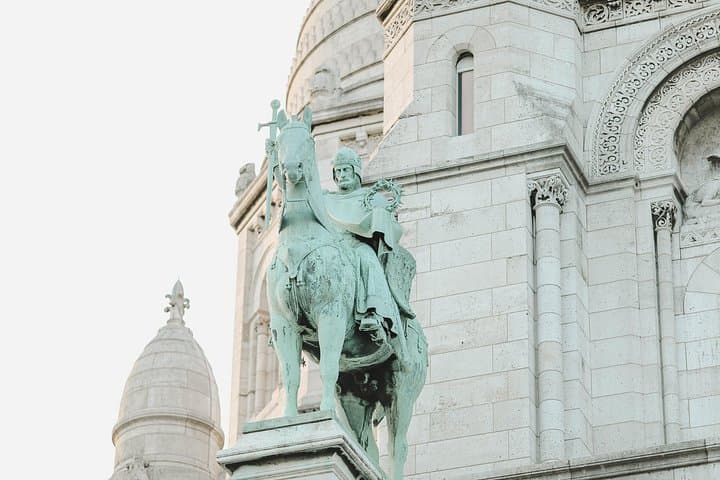
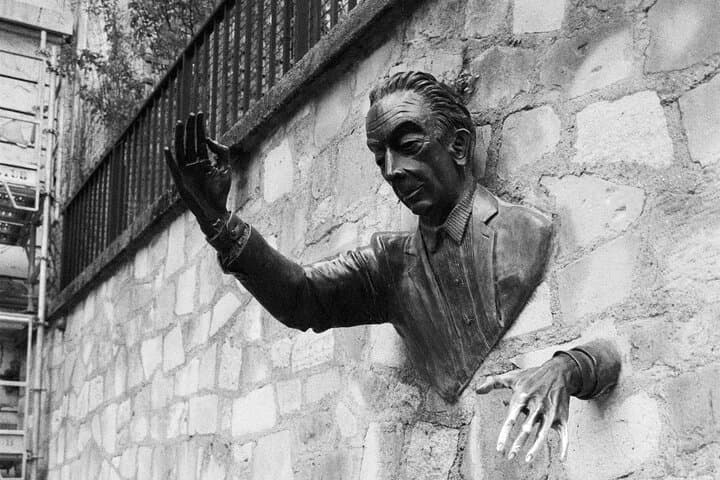
You step off the métro and the hill answers—cobblestones tilting underfoot, stairs nudging you upward toward the white silhouette of Sacré‑Cœur. The streets of Montmartre press close: narrow lanes threaded with cafés, artists hunched over sketchpads, and stairways that remember a different Paris. Your guide leads, pointing out plaques, doorways, and tiny courtyards that carry names of painters and salons long gone.
You step off the métro and the hill answers—cobblestones tilting underfoot, stairs nudging you upward toward the white silhouette of Sacré‑Cœur. The streets of Montmartre press close: narrow lanes threaded with cafés, artists hunched over sketchpads, and stairways that remember a different Paris. Your guide leads, pointing out plaques, doorways, and tiny courtyards that carry names of painters and salons long gone.
Montmartre was once a separate village of vineyards and windmills before 19th‑century annexation; its slopes collected artists fleeing the city’s formal academies. The basilica itself, completed after the Franco‑Prussian War, sits on limestone that peeks through here and there—stone that has weathered city soot into a pale patina. You’ll pass Place du Tertre where painters still barter for portraits, the wall of love, and the old cabaret districts whose nightlife retooled Parisian culture.
Expect a compact, socially paced two‑hour walk with stops for history, art, and panoramic views over Paris. The route packs stair climbs and uneven paving; shoes with grip matter more than style. Early morning or late afternoon visits mute the crowds and let the light fall across rooftops. Bring a small bill for sketches, keep voices low near the basilica where worshippers come to pray, and allow 20–30 minutes if you want to explore Sacré‑Cœur on your own after the tour. This is a walking experience that blends urban geology, bohemian history, and everyday Paris—practical, tactile, and vividly close-up.