THE ADVENTURE COLLECTIVE® · Independent discovery and booking for outdoor travel

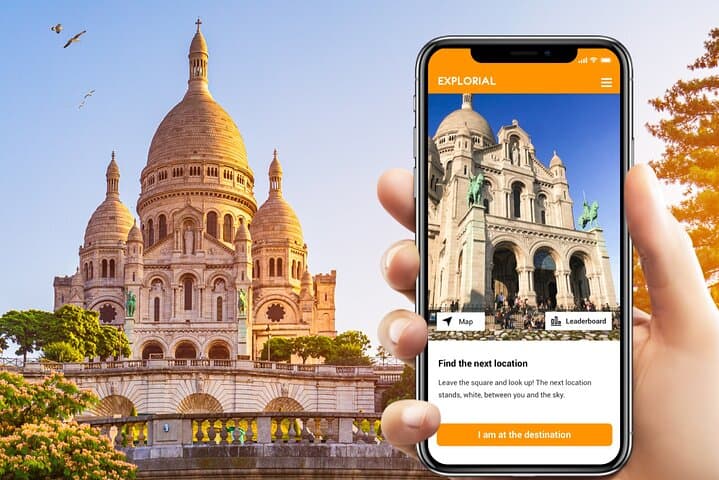
Explore Montmartre on a self-guided scavenger hunt that turns sightseeing into a game. Follow clues through cobbled lanes, solve location-based puzzles, and end at Sacré‑Cœur — all at your own pace.
Explore Montmartre on a self-guided scavenger hunt that turns sightseeing into a game. Follow clues through cobbled lanes, solve location-based puzzles, and end at Sacré‑Cœur — all at your own pace.
The climb begins on cobbles that remember painters’ footsteps and the city spreads below like a map you can walk into.
Verified experiences and guided adventures in the surrounding area.
Operated by Explorial · Paris, Île-de-France
The climb begins on cobbles that remember painters’ footsteps and the city spreads below like a map you can walk into.
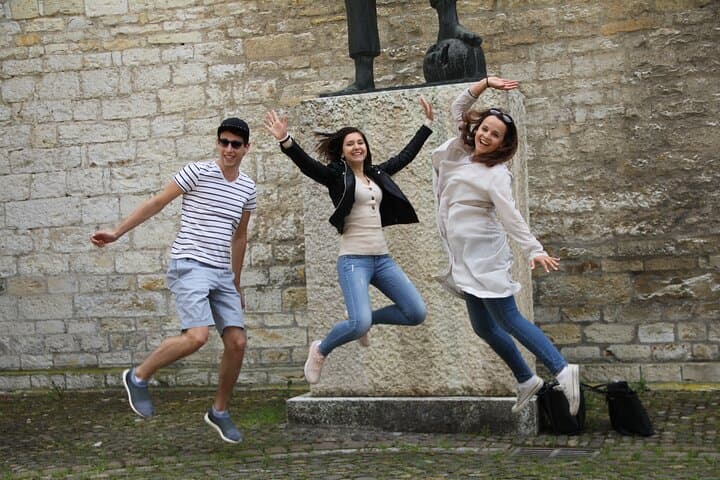
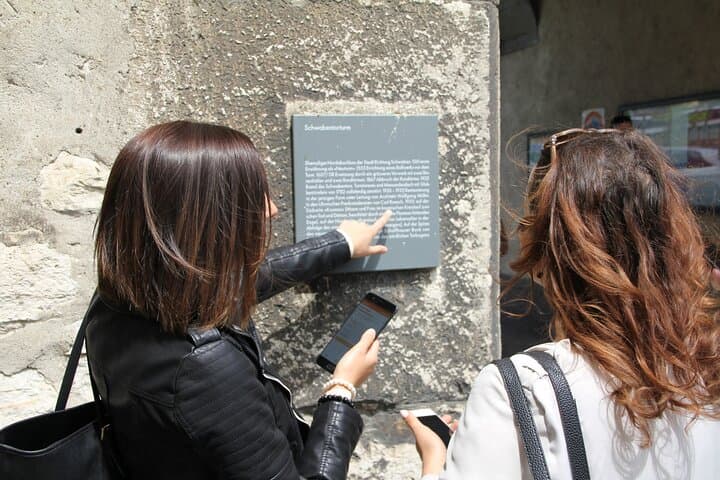
This self-guided scavenger hunt pushes visitors up through Montmartre’s narrow lanes, past the Mur des "Je t’aime," by the red neon of the Moulin Rouge and finally to the steps of the Basilique du Sacré‑Cœur. The experience blends puzzle-solving with place: clues point to plaques, shopfronts and public art, and photo tasks reward curiosity as much as speed.
Montmartre’s story reads in stone and paint — a former village on a gypsum hill that became the artistic heart of bohemian Paris in the 19th and early 20th centuries. Geologically the area sits on the Butte Montmartre, an isolated hill whose quarries shaped the neighborhood’s lanes and stairways. Culturally, expect café terraces, small ateliers, and a mix of souvenir stalls and local commerce.
Practically, the tour runs on a smartphone app: buy a code, download the route, and follow hints at your own pace. Average time is 1–2 hours but you can pause for espresso or sketches. The walk involves short, steep sections and many stairs; comfortable shoes and a charged phone are nonnegotiable. Public transit delivers you close to the start; the route is suitable for most fitness levels but not ideal for those with significant mobility restrictions. Take water, respect residential areas after dark, and treat clues as a way to look closely — the reward is both the answers and the small, often-overlooked corners of Montmartre.
easy.
1–2 hours.
Suitable for most fitness levels; requires comfortable walking and negotiating stairs and short steep sections
Most parties take 1–2 hours depending on pace and photo tasks, but you can pause and resume at any time.
Montmartre’s steep streets and many stairs make full accessibility difficult; some segments may be manageable but the complete route is not wheelchair-friendly.
The experience is offered in multiple languages, including English, French, Italian and German via the app.
You’ll need intermittent connectivity for maps and scoring; download the app and any available offline content beforehand and bring data if possible.
Montmartre began as a separate village and quarry site and became a hub for artists like Picasso and Toulouse‑Lautrec; Sacré‑Cœur was built after the Franco‑Prussian War as a national monument.
High foot traffic strains narrow lanes and historic facades — stick to paths, avoid littering, and respect private property and local residents.
Explorial operates guided outdoor trips and adventures with an emphasis on safety, stewardship, and memorable experiences.

The climb begins on cobbles that remember painters’ footsteps and the city spreads below like a map you can walk into.
The climb begins on cobbles that remember painters’ footsteps and the city spreads below like a map you can walk into.
This self-guided scavenger hunt pushes visitors up through Montmartre’s narrow lanes, past the Mur des "Je t’aime," by the red neon of the Moulin Rouge and finally to the steps of the Basilique du Sacré‑Cœur. The experience blends puzzle-solving with place: clues point to plaques, shopfronts and public art, and photo tasks reward curiosity as much as speed.
Montmartre’s story reads in stone and paint — a former village on a gypsum hill that became the artistic heart of bohemian Paris in the 19th and early 20th centuries. Geologically the area sits on the Butte Montmartre, an isolated hill whose quarries shaped the neighborhood’s lanes and stairways. Culturally, expect café terraces, small ateliers, and a mix of souvenir stalls and local commerce.
Practically, the tour runs on a smartphone app: buy a code, download the route, and follow hints at your own pace. Average time is 1–2 hours but you can pause for espresso or sketches. The walk involves short, steep sections and many stairs; comfortable shoes and a charged phone are nonnegotiable. Public transit delivers you close to the start; the route is suitable for most fitness levels but not ideal for those with significant mobility restrictions. Take water, respect residential areas after dark, and treat clues as a way to look closely — the reward is both the answers and the small, often-overlooked corners of Montmartre.