THE ADVENTURE COLLECTIVE® · Independent discovery and booking for outdoor travel

Take an evening e-bike through Barcelona’s port up Montjuïc, ride through gardens and past the hilltop castle, then finish beneath the Magic Fountain’s light-and-music show. This 3-hour loop balances easy climbs with high-reward viewpoints.
Take an evening e-bike through Barcelona’s port up Montjuïc, ride through gardens and past the hilltop castle, then finish beneath the Magic Fountain’s light-and-music show. This 3-hour loop balances easy climbs with high-reward viewpoints.
You arrive at the port as the day hangs low, the city's glass and terracotta catching the last warm light. Pedal-assist hums beneath you while the harbour breeze pushes across the promenade; the climb toward Montjuïc is deliberate but never unforgiving, and the city unfolds in tiers—industrial quays, parkland gardens, then the old stone of the castle above.
Verified experiences and guided adventures in the surrounding area.
You arrive at the port as the day hangs low, the city's glass and terracotta catching the last warm light. Pedal-assist hums beneath you while the harbour breeze pushes across the promenade; the climb toward Montjuïc is deliberate but never unforgiving, and the city unfolds in tiers—industrial quays, parkland gardens, then the old stone of the castle above.
Montjuïc is a worked landscape: volcanic outcrop turned defensive stronghold, then fairground for the 1929 International Exposition and the 1992 Olympics. Geology here is visible in the hill’s rocky shoulders and reclaimed terraces; culture is visible in the mosaic benches and museums at the summit. Gardens such as the cactus collection and Joan Maragall’s green rooms break the ascent into scented, shaded sections, each offering different photo frames of Barcelona and the sea.
Practically, expect a 3-hour loop that mixes flat promenade cycling, paved park roads and a steady uphill to Castell de Montjuïc. An e-bike’s motor softens the grade but you’ll still be on the saddle for stretches; stops at viewpoints and the Magic Fountain finale punctuate the ride. Bring layers for cooling temperatures after sunset, a charged camera, and a small light for the return. Guides share local history and point out lesser-known viewpoints, making this a short, urban climb with big visual payoff.
Timing matters: arrive early to secure a properly fitted e-bike and leave room to watch the fountain’s light-and-music sequence—the city lights will have emerged by the final descent.
moderate.
3 hours.
Suitable for riders with basic fitness who can stay on a bike for an extended urban loop; pedal-assist reduces strain on steeper sections.
No, basic bike handling is enough; guides give a quick orientation and adjust assist levels, but comfortable balance and confidence braking are important.
The route includes steady paved climbs that are noticeable but manageable on an e-bike—assist reduces effort but you will expend some energy on longer grades.
Most tours meet near the waterfront/port area and return there after the Montjuïc loop, timed to finish at or near the Magic Fountain show.
Many operators supply helmets; lights may be limited—bring your own if possible and confirm inclusions when booking.
Montjuïc’s castle began as a military fortification; the hill later hosted the 1929 International Exposition and the 1992 Olympic venues, shaping much of its present layout.
Stay on paved paths and use bike racks where provided to reduce trampling of historic terraces; local operators encourage low-impact touring and proper battery disposal for e-bikes.
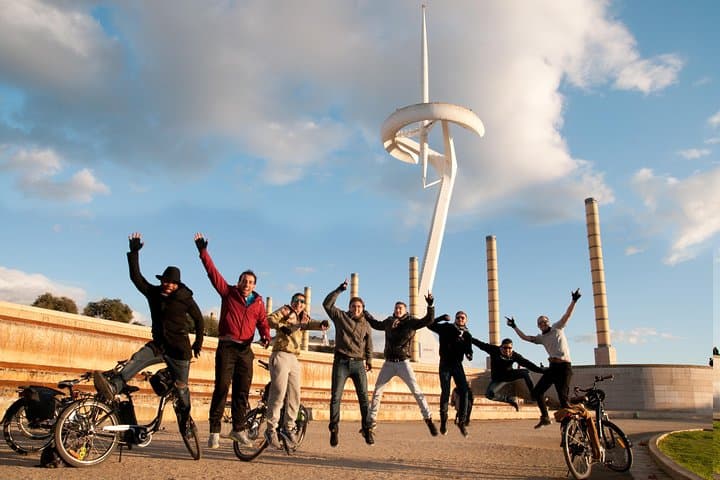
You arrive at the port as the day hangs low, the city's glass and terracotta catching the last warm light. Pedal-assist hums beneath you while the harbour breeze pushes across the promenade; the climb toward Montjuïc is deliberate but never unforgiving, and the city unfolds in tiers—industrial quays, parkland gardens, then the old stone of the castle above.
You arrive at the port as the day hangs low, the city's glass and terracotta catching the last warm light. Pedal-assist hums beneath you while the harbour breeze pushes across the promenade; the climb toward Montjuïc is deliberate but never unforgiving, and the city unfolds in tiers—industrial quays, parkland gardens, then the old stone of the castle above.
Montjuïc is a worked landscape: volcanic outcrop turned defensive stronghold, then fairground for the 1929 International Exposition and the 1992 Olympics. Geology here is visible in the hill’s rocky shoulders and reclaimed terraces; culture is visible in the mosaic benches and museums at the summit. Gardens such as the cactus collection and Joan Maragall’s green rooms break the ascent into scented, shaded sections, each offering different photo frames of Barcelona and the sea.
Practically, expect a 3-hour loop that mixes flat promenade cycling, paved park roads and a steady uphill to Castell de Montjuïc. An e-bike’s motor softens the grade but you’ll still be on the saddle for stretches; stops at viewpoints and the Magic Fountain finale punctuate the ride. Bring layers for cooling temperatures after sunset, a charged camera, and a small light for the return. Guides share local history and point out lesser-known viewpoints, making this a short, urban climb with big visual payoff.
Timing matters: arrive early to secure a properly fitted e-bike and leave room to watch the fountain’s light-and-music sequence—the city lights will have emerged by the final descent.