THE ADVENTURE COLLECTIVE® · Independent discovery and booking for outdoor travel

Glide above Barcelona on the Montjuïc Cable Car and arrive at a 17th‑century castle with sweeping harbor views. This short, scenic ride offers photographic panoramas, easy access to museums and gardens, and flexible roundtrip options for most travelers.
Glide above Barcelona on the Montjuïc Cable Car and arrive at a 17th‑century castle with sweeping harbor views. This short, scenic ride offers photographic panoramas, easy access to museums and gardens, and flexible roundtrip options for most travelers.
You step into a glass-sided cabin and Barcelona opens beneath you—gridlines of streets, the harbor narrowing to a glittering throat, the Mediterranean pushing blue into the horizon.
Verified experiences and guided adventures in the surrounding area.
Operated by Trip Knox Ltd · Barcelona, Catalonia
You step into a glass-sided cabin and Barcelona opens beneath you—gridlines of streets, the harbor narrowing to a glittering throat, the Mediterranean pushing blue into the horizon.
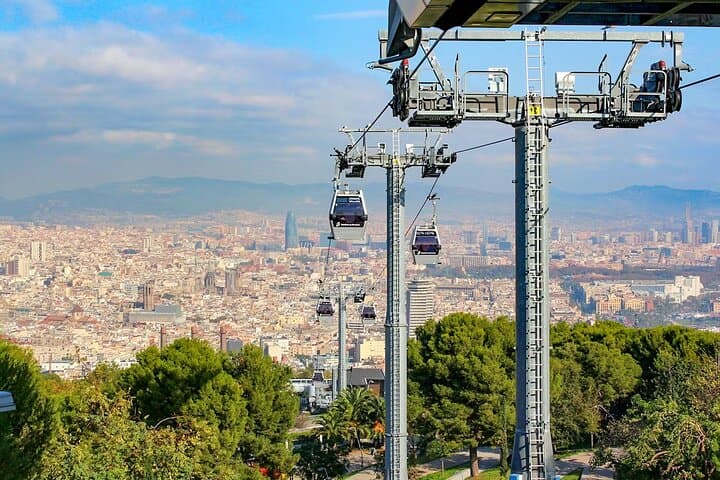
The Montjuïc Cable Car links the hill’s lower gardens with the 17th‑century Montjuïc Castle, lifting riders above parkland, Olympic structures and terraced gardens. The hill itself has long been a defensive high point for the city; the fortress at the summit has seen centuries of military use and public reinvention, while the slopes hold museums, the Palau Nacional and the 1992 Olympic venues.
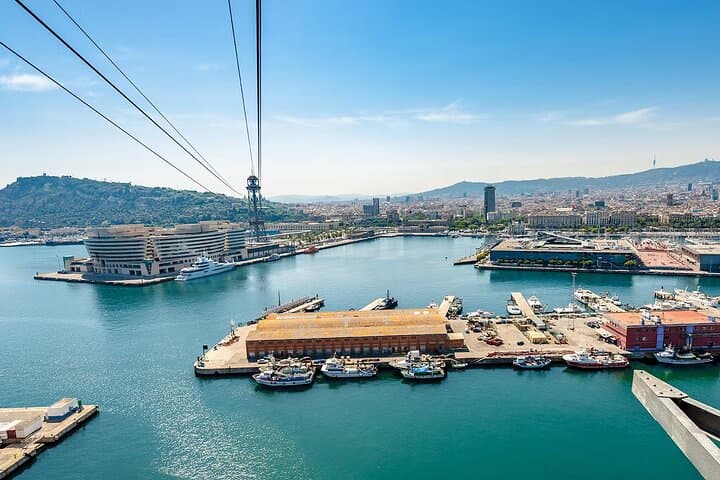
Geologically, Montjuïc reads as an elevated platform carved by human hands and natural erosion—rocky outcrops, planted terraces and broad promenades that frame the view. Culturally, the ride gives a compact primer on Barcelona: industrial harbor, modernist neighborhoods, and public art like Fundació Miró below.
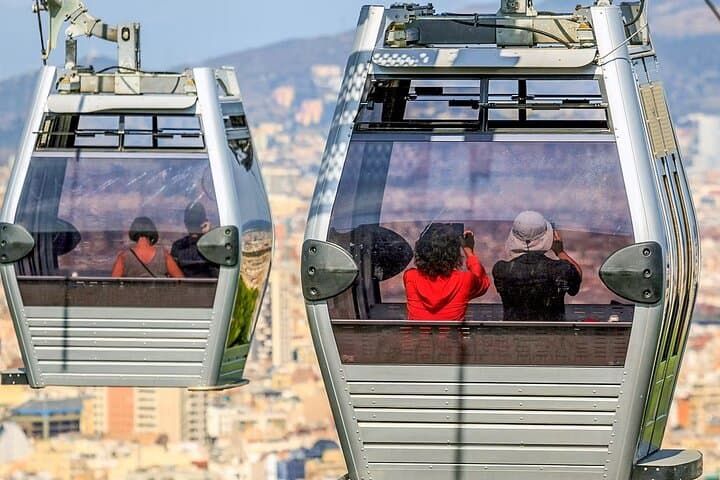
For travelers this is an easy, high-reward outing. Cabins are modern with panoramic windows and audio guides available in major European languages. Plan for 1–4 hours depending on time spent at the castle and nearby gardens. Early morning or late afternoon gives softer light and fewer crowds; weekend afternoons are busiest.
Practical notes: buy roundtrip tickets to avoid queues, bring a light layer for the breeze at the summit, and allow time to walk the castle precincts and terraces after disembarking. Respect signage on paths and avoid stray into fragile planted areas—Montjuïc’s charm is a mix of urban energy and cared-for green spaces that reward quiet attention.
easy.
1–4 hours.
Suitable for most fitness levels; minimal walking required to use the cable car but moderate walking if touring the castle and gardens.
The one‑way ride takes roughly 10–15 minutes; allow more time for boarding, disembarking and queuing during busy periods.
The cabins and stations are generally accessible, but check specific accessibility needs in advance and arrive early for assistance.
Standard roundtrip cable car tickets cover the ride only; castle entry may require a separate admission fee depending on current site rules.
Early mornings on weekdays or late afternoons provide fewer visitors and softer light for photos; weekends and midday are busiest.
Montjuïc Castle began as a military fortress in the 17th century and later became a prison and site of political significance; the hill hosted major 20th‑century cultural and Olympic developments.
Stick to marked paths and avoid trampling planted terraces; Montjuïc’s green zones are actively managed to balance urban recreation with habitat preservation.
Trip Knox Ltd operates guided outdoor trips and adventures with an emphasis on safety, stewardship, and memorable experiences.
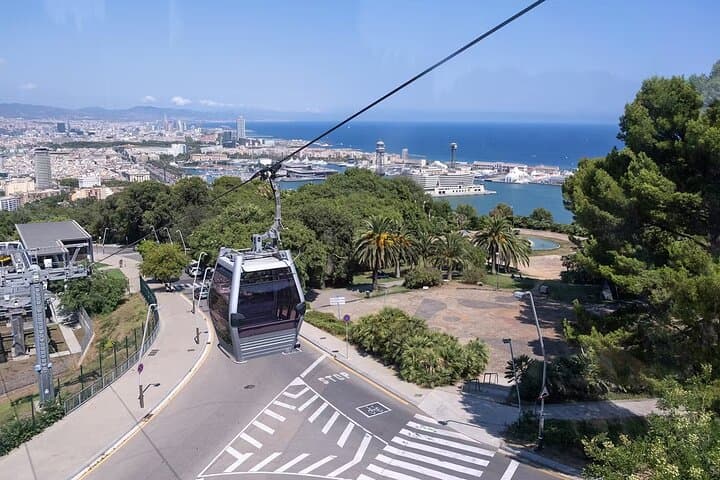
You step into a glass-sided cabin and Barcelona opens beneath you—gridlines of streets, the harbor narrowing to a glittering throat, the Mediterranean pushing blue into the horizon.
You step into a glass-sided cabin and Barcelona opens beneath you—gridlines of streets, the harbor narrowing to a glittering throat, the Mediterranean pushing blue into the horizon.
The Montjuïc Cable Car links the hill’s lower gardens with the 17th‑century Montjuïc Castle, lifting riders above parkland, Olympic structures and terraced gardens. The hill itself has long been a defensive high point for the city; the fortress at the summit has seen centuries of military use and public reinvention, while the slopes hold museums, the Palau Nacional and the 1992 Olympic venues.
Geologically, Montjuïc reads as an elevated platform carved by human hands and natural erosion—rocky outcrops, planted terraces and broad promenades that frame the view. Culturally, the ride gives a compact primer on Barcelona: industrial harbor, modernist neighborhoods, and public art like Fundació Miró below.
For travelers this is an easy, high-reward outing. Cabins are modern with panoramic windows and audio guides available in major European languages. Plan for 1–4 hours depending on time spent at the castle and nearby gardens. Early morning or late afternoon gives softer light and fewer crowds; weekend afternoons are busiest.
Practical notes: buy roundtrip tickets to avoid queues, bring a light layer for the breeze at the summit, and allow time to walk the castle precincts and terraces after disembarking. Respect signage on paths and avoid stray into fragile planted areas—Montjuïc’s charm is a mix of urban energy and cared-for green spaces that reward quiet attention.