THE ADVENTURE COLLECTIVE® · Independent discovery and booking for outdoor travel

Walk through Etna’s birch groves onto black lava and explore a chilled lava tube on this 4.5-hour guided trek. Learn volcanic geology and pioneer plant life while traversing crater rims and forested corridors.
Walk through Etna’s birch groves onto black lava and explore a chilled lava tube on this 4.5-hour guided trek. Learn volcanic geology and pioneer plant life while traversing crater rims and forested corridors.
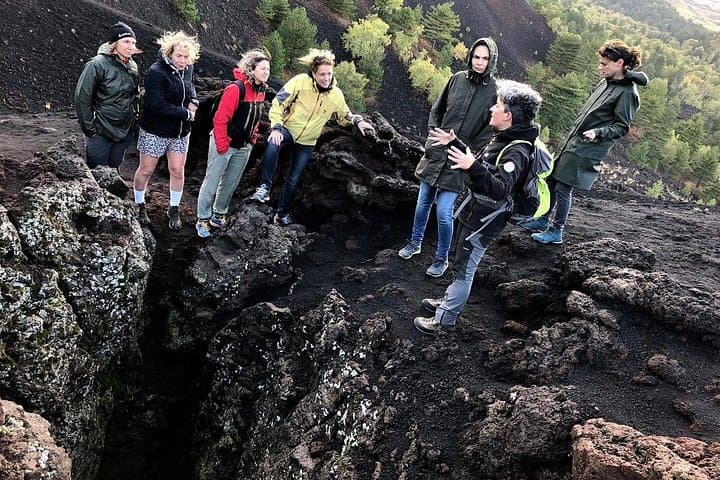
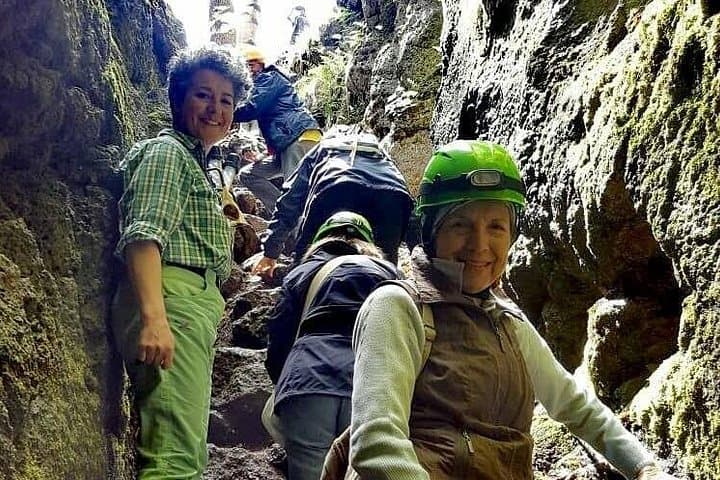
The trail opens under a pale canopy of birch trunks, the bark bright against dark lava, and the air tastes sharp with mineral dust and aromatic pioneer plants. Step after step, the forest gives way to raw black rock and the gullied rims of old lateral craters; a lava tube yawns ahead, where helmets and flashlights turn the cave into a pocket of human light.
Verified experiences and guided adventures in the surrounding area.
Operated by Francesca Laganà · Randazzo, Sicily
The trail opens under a pale canopy of birch trunks, the bark bright against dark lava, and the air tastes sharp with mineral dust and aromatic pioneer plants. Step after step, the forest gives way to raw black rock and the gullied rims of old lateral craters; a lava tube yawns ahead, where helmets and flashlights turn the cave into a pocket of human light.
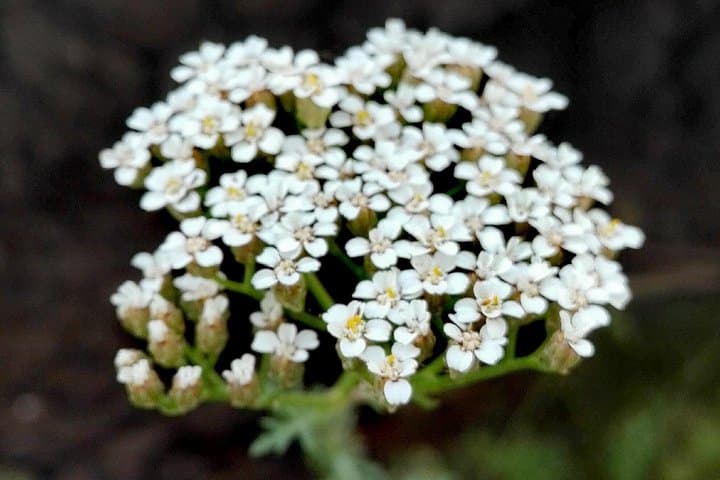
This route runs on the northern slopes of Mount Etna, an active stratovolcano whose repeated eruptions over millennia have built terraces, craters and underground channels. Monti Sartorius is defined by recent lava deposits and resilient pioneer flora — birch, lichens, and low shrubs that colonize fresh rock. Locals have long read the mountain’s moods in smoke and ash; shepherding and small-scale farming took shape where soil allowed, while myths and practical knowledge about eruptions persist in nearby towns.
Practical guidance: expect a guided 4.5-hour loop with short climbs across uneven volcanic rock, roughly 5–8 km total with modest elevation change (approx. 200–400 m). Terrain alternates packed dirt, loose cinder and solidified lava; sturdy boots and steady footing are essential. The itinerary includes a short entry into a lava flow cave (helmets and flashlights provided), viewpoint stops at crater rims, and interpretation of pioneer plants.
Tips: start mid-morning for stable weather, carry 1–1.5 L water, layer for wind and temperature swings, and allow extra time for photography and cautious descents. Respect closed areas — gullies and fresh flows are unstable — and leave no trace: the fragile plants are the first to reclaim the mountain.
easy.
4–5 hours.
Suitable for people with basic stamina able to walk 5–8 km on uneven ground; steady balance helps.
The guided loop is about 4–5 hours and roughly 5–8 km with modest elevation changes; it’s rated easy but involves uneven volcanic terrain.
Yes — helmets and flashlights are included in the tour; you may bring your own headlamp if preferred.
Families with older children who can manage uneven trails generally can join; check operator age guidelines and fitness needs beforehand.
Most visitors stay in Randazzo or Linguaglossa; public transit is limited so plan taxi or hotel transfer to the trailhead or join an organized pickup if offered.
Repeated eruptions have shaped local settlement and agriculture; villagers historically used lava benches for grazing and limited cultivation where soil accumulated.
The Etna environment is fragile: stick to marked paths to protect pioneer plants and avoid walking on recent flows; pack out all trash to limit human impact.
Francesca Laganà operates guided outdoor trips and adventures with an emphasis on safety, stewardship, and memorable experiences.
The trail opens under a pale canopy of birch trunks, the bark bright against dark lava, and the air tastes sharp with mineral dust and aromatic pioneer plants. Step after step, the forest gives way to raw black rock and the gullied rims of old lateral craters; a lava tube yawns ahead, where helmets and flashlights turn the cave into a pocket of human light.
The trail opens under a pale canopy of birch trunks, the bark bright against dark lava, and the air tastes sharp with mineral dust and aromatic pioneer plants. Step after step, the forest gives way to raw black rock and the gullied rims of old lateral craters; a lava tube yawns ahead, where helmets and flashlights turn the cave into a pocket of human light.
This route runs on the northern slopes of Mount Etna, an active stratovolcano whose repeated eruptions over millennia have built terraces, craters and underground channels. Monti Sartorius is defined by recent lava deposits and resilient pioneer flora — birch, lichens, and low shrubs that colonize fresh rock. Locals have long read the mountain’s moods in smoke and ash; shepherding and small-scale farming took shape where soil allowed, while myths and practical knowledge about eruptions persist in nearby towns.
Practical guidance: expect a guided 4.5-hour loop with short climbs across uneven volcanic rock, roughly 5–8 km total with modest elevation change (approx. 200–400 m). Terrain alternates packed dirt, loose cinder and solidified lava; sturdy boots and steady footing are essential. The itinerary includes a short entry into a lava flow cave (helmets and flashlights provided), viewpoint stops at crater rims, and interpretation of pioneer plants.
Tips: start mid-morning for stable weather, carry 1–1.5 L water, layer for wind and temperature swings, and allow extra time for photography and cautious descents. Respect closed areas — gullies and fresh flows are unstable — and leave no trace: the fragile plants are the first to reclaim the mountain.