THE ADVENTURE COLLECTIVE® · Independent discovery and booking for outdoor travel

See Montevideo’s colonial heart and coastal sweep in 90 minutes by e-bike. This short, guided loop covers Plaza Independencia, Teatro Solís, Parque Rodó and the Rambla — a compact introduction for first-time and time-pressed visitors.
See Montevideo’s colonial heart and coastal sweep in 90 minutes by e-bike. This short, guided loop covers Plaza Independencia, Teatro Solís, Parque Rodó and the Rambla — a compact introduction for first-time and time-pressed visitors.
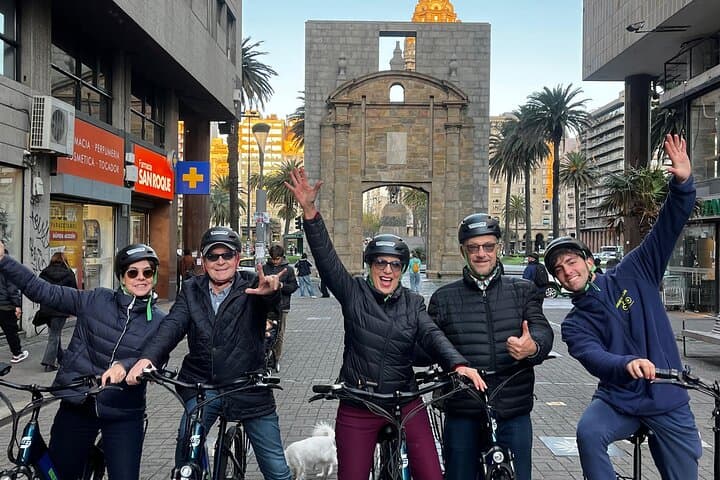
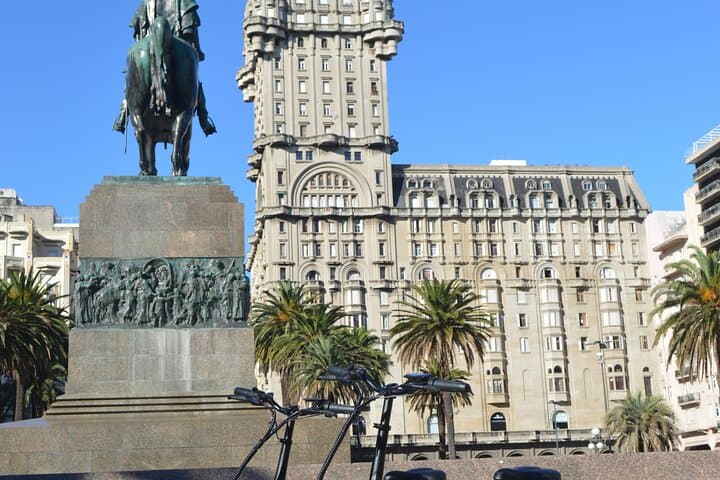
The hum of an electric motor replaces the city’s usual cadence as riders gather at Plaza Independencia — Palacio Salvo rising behind, the Puerta de la Ciudadela marking where old walls once held the port. On an e-bike the city opens quickly: cobbled colonial squares give way to the broad sweep of the Rambla, where wind off the Río de la Plata dares you to lean into it and the water pushes the light across the beaches of Pocitos.
Verified experiences and guided adventures in the surrounding area.
Operated by Beetour · Montevideo, Montevideo
The hum of an electric motor replaces the city’s usual cadence as riders gather at Plaza Independencia — Palacio Salvo rising behind, the Puerta de la Ciudadela marking where old walls once held the port. On an e-bike the city opens quickly: cobbled colonial squares give way to the broad sweep of the Rambla, where wind off the Río de la Plata dares you to lean into it and the water pushes the light across the beaches of Pocitos.
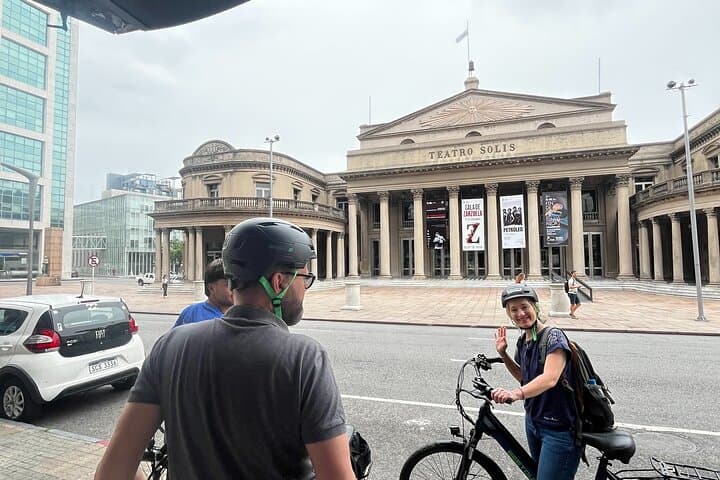
This 90-minute loop threads Montevideo’s layers of history and modern life. Guides stop at Teatro Solís and Plaza Matriz to outline colonial-era trade, the city’s 18th-century origins and the wave-built shoreline that shaped its port. Parque Rodó offers a taste of urban green — carnival murals, a small summer theatre and the Mercosur building — while Punta Carretas and Pocitos show how European influence and 20th-century expansion reoriented the coast.
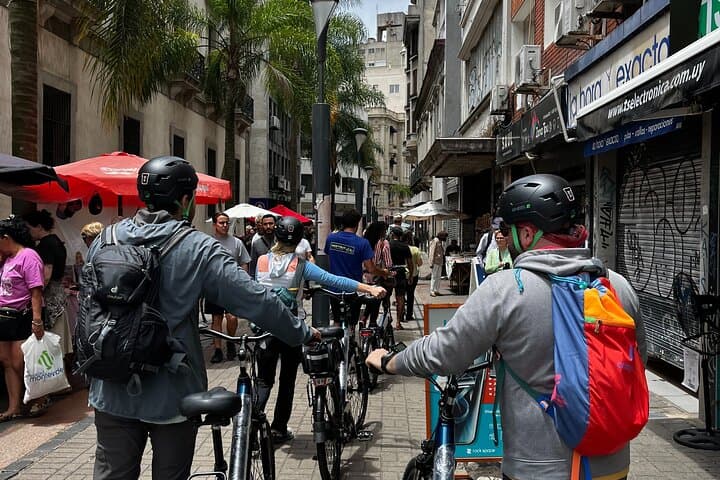
Culturally, the ride is as much about people as places: rambunctious vendors, afternoon mate-drinking, and shorefront joggers punctuate the route. Geologically the Rambla traces a shallow coastal plain and reclaimed promenades rather than steep cliffs, making it ideal for relaxed cycling.
Practical guidance: arrive 15 minutes early for a helmet fitting and e-bike demo, wear closed shoes and a wind layer, and aim for late afternoon light for photos. Expect paved streets, short stretches of cobbles, and a gentle, fitness-friendly pace — an efficient way to see Montevideo’s essentials without wearing yourself out.
moderate.
1.5 hours (90 minutes).
Suitable for people with a moderate level of fitness; includes short periods of pedaling and standing on uneven pavement.
No advanced cycling skills are required, but riders should be comfortable balancing on a bicycle and following city traffic rules.
Yes, helmets and a brief e-bike orientation are provided at the start of the tour.
Policies vary by operator; most tours require a minimum age and that children be tall enough to ride safely—check booking requirements before reserving.
Tours cancelable for a full refund if severe weather is expected; operators often reschedule or refund if conditions are unsafe.
Montevideo was formalized as a Spanish military outpost in the early 18th century; landmarks like Palacio Salvo and Teatro Solís reflect the city’s growth through trade and 19th–20th century architecture.
Respect the Rambla’s shoreline by avoiding littering and staying on paved paths; coastal areas suffer from erosion and human impact, so travel with minimal waste.
Beetour operates guided outdoor trips and adventures with an emphasis on safety, stewardship, and memorable experiences.
The hum of an electric motor replaces the city’s usual cadence as riders gather at Plaza Independencia — Palacio Salvo rising behind, the Puerta de la Ciudadela marking where old walls once held the port. On an e-bike the city opens quickly: cobbled colonial squares give way to the broad sweep of the Rambla, where wind off the Río de la Plata dares you to lean into it and the water pushes the light across the beaches of Pocitos.
The hum of an electric motor replaces the city’s usual cadence as riders gather at Plaza Independencia — Palacio Salvo rising behind, the Puerta de la Ciudadela marking where old walls once held the port. On an e-bike the city opens quickly: cobbled colonial squares give way to the broad sweep of the Rambla, where wind off the Río de la Plata dares you to lean into it and the water pushes the light across the beaches of Pocitos.
This 90-minute loop threads Montevideo’s layers of history and modern life. Guides stop at Teatro Solís and Plaza Matriz to outline colonial-era trade, the city’s 18th-century origins and the wave-built shoreline that shaped its port. Parque Rodó offers a taste of urban green — carnival murals, a small summer theatre and the Mercosur building — while Punta Carretas and Pocitos show how European influence and 20th-century expansion reoriented the coast.
Culturally, the ride is as much about people as places: rambunctious vendors, afternoon mate-drinking, and shorefront joggers punctuate the route. Geologically the Rambla traces a shallow coastal plain and reclaimed promenades rather than steep cliffs, making it ideal for relaxed cycling.
Practical guidance: arrive 15 minutes early for a helmet fitting and e-bike demo, wear closed shoes and a wind layer, and aim for late afternoon light for photos. Expect paved streets, short stretches of cobbles, and a gentle, fitness-friendly pace — an efficient way to see Montevideo’s essentials without wearing yourself out.