THE ADVENTURE COLLECTIVE® · Independent discovery and booking for outdoor travel

Step into Monteverde after dark on a two-hour small-group walk led by a local naturalist. Experience frogs, moths and other nocturnal life while learning how cloud forest ecology shifts from day to night.
Step into Monteverde after dark on a two-hour small-group walk led by a local naturalist. Experience frogs, moths and other nocturnal life while learning how cloud forest ecology shifts from day to night.
A humid breath of cloud forest meets you as dusk slips behind the ridgeline and the trail narrows into a ribbon of damp leaf litter. Headlamps pick out moth wings and glossy silhouettes; the guide’s spotlight turns trunks into stages where frogs, spiders and kinkajous perform in quick, bright scenes. You move deliberately—soft boots, softer voices—because here the forest wakes and the familiar daytime actors yield to nocturnal specialists.
Verified experiences and guided adventures in the surrounding area.
Operated by Spirits of green tours · Santa Elena, Puntarenas
A humid breath of cloud forest meets you as dusk slips behind the ridgeline and the trail narrows into a ribbon of damp leaf litter. Headlamps pick out moth wings and glossy silhouettes; the guide’s spotlight turns trunks into stages where frogs, spiders and kinkajous perform in quick, bright scenes. You move deliberately—soft boots, softer voices—because here the forest wakes and the familiar daytime actors yield to nocturnal specialists.
Monteverde’s cloud forest sits on an uplifted volcanic spine—steep slopes, deep humus layers and a climate that feeds moss-laden branches. The area’s modern conservation history dates to the 1970s, when settlers and scientists worked to protect a patch of high-elevation rainforest now famed for biodiversity and research. Culturally, local guides draw on a mix of campesino knowledge and academic natural history; expect an interpretation that blends folklore with field ID.
Practically: this is a two-hour guided walk on narrow, often uneven trails with occasional slick roots and steps. Guides bring quality optics and handheld lights; you’ll be asked to minimize light and movement to improve sightings. Species you’ll likely encounter include tree frogs, nocturnal birds and insects; rare mammal sightings are possible but not guaranteed.
Tips for planning—go early in the night season after sunset for the best activity, wear a light waterproof layer, and bring a headlamp with a red filter setting if you have one. The walk rewards patience: silence sharpens senses and the forest, awake, will start to tell its story.
moderate.
2 hours.
Moderate fitness—comfortable walking on uneven ground and negotiating short steep sections
The tour lasts about two hours with small groups—maximum six participants—so encounters are intimate and guides can focus on sightings.
Nocturnal mammals are possible but infrequent; expect frogs, insects and nocturnal birds more reliably than large mammals.
Infants must sit on an adult’s lap; older children can join but should be able to move quietly and follow the guide for safety.
Tours may be canceled in heavy rain for safety; check cancellation policies—full refunds are typically available with 24+ hours notice.
Monteverde’s protected forests grew from 20th-century conservation efforts that balanced local settlement with biological research, creating one of Costa Rica’s most studied cloud forests.
Stick to trails and follow guide instructions—soil erosion and light pollution are local concerns; small groups and no-flash policies reduce disturbance.
Spirits of green tours operates guided outdoor trips and adventures with an emphasis on safety, stewardship, and memorable experiences.
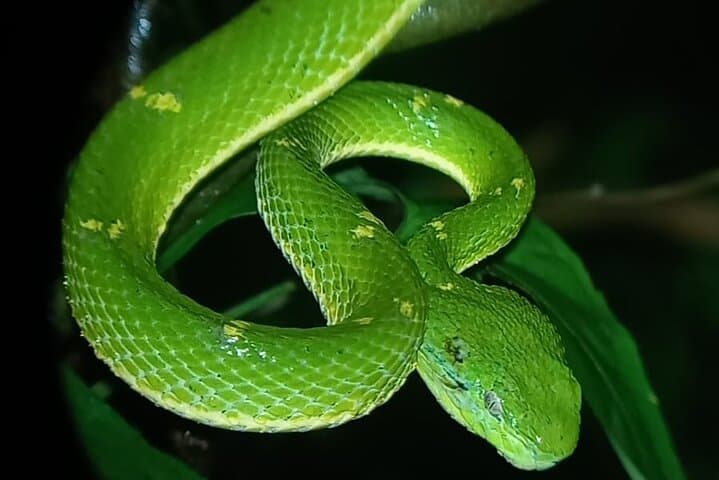
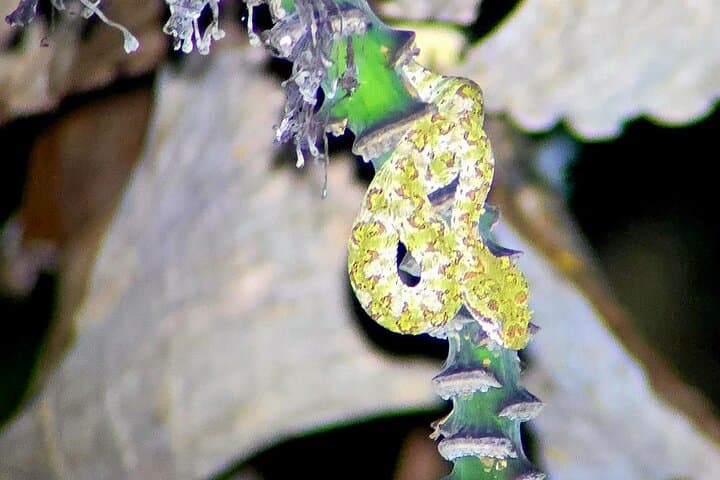
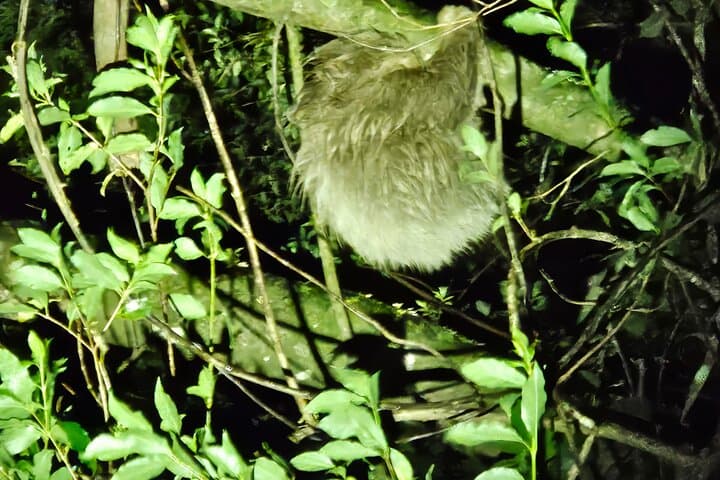
A humid breath of cloud forest meets you as dusk slips behind the ridgeline and the trail narrows into a ribbon of damp leaf litter. Headlamps pick out moth wings and glossy silhouettes; the guide’s spotlight turns trunks into stages where frogs, spiders and kinkajous perform in quick, bright scenes. You move deliberately—soft boots, softer voices—because here the forest wakes and the familiar daytime actors yield to nocturnal specialists.
A humid breath of cloud forest meets you as dusk slips behind the ridgeline and the trail narrows into a ribbon of damp leaf litter. Headlamps pick out moth wings and glossy silhouettes; the guide’s spotlight turns trunks into stages where frogs, spiders and kinkajous perform in quick, bright scenes. You move deliberately—soft boots, softer voices—because here the forest wakes and the familiar daytime actors yield to nocturnal specialists.
Monteverde’s cloud forest sits on an uplifted volcanic spine—steep slopes, deep humus layers and a climate that feeds moss-laden branches. The area’s modern conservation history dates to the 1970s, when settlers and scientists worked to protect a patch of high-elevation rainforest now famed for biodiversity and research. Culturally, local guides draw on a mix of campesino knowledge and academic natural history; expect an interpretation that blends folklore with field ID.
Practically: this is a two-hour guided walk on narrow, often uneven trails with occasional slick roots and steps. Guides bring quality optics and handheld lights; you’ll be asked to minimize light and movement to improve sightings. Species you’ll likely encounter include tree frogs, nocturnal birds and insects; rare mammal sightings are possible but not guaranteed.
Tips for planning—go early in the night season after sunset for the best activity, wear a light waterproof layer, and bring a headlamp with a red filter setting if you have one. The walk rewards patience: silence sharpens senses and the forest, awake, will start to tell its story.