THE ADVENTURE COLLECTIVE® · Independent discovery and booking for outdoor travel

Step into the cloud forest after dark with a local guide and watch Monteverde’s nocturnal world come alive. This two-hour guided night walk focuses on close-up wildlife sightings and quiet, observational exploration.
Step into the cloud forest after dark with a local guide and watch Monteverde’s nocturnal world come alive. This two-hour guided night walk focuses on close-up wildlife sightings and quiet, observational exploration.
Fog drips from the canopy and the trail narrows into a corridor of trunks and dripping leaves. Lantern light cuts through mist; every rustle and distant call sharpens into possibility. On a guided night walk through the Monteverde Wildlife Refuge you move slowly—eyes adjusting, ears prying—while a local guide points out glowing frog eyes, moths that ride the night like sails, and the slow, deliberate silhouette of a kinkajou swinging between branches.
Verified experiences and guided adventures in the surrounding area.
Operated by Con Rolando · Santa Elena (Monteverde), Puntarenas
Fog drips from the canopy and the trail narrows into a corridor of trunks and dripping leaves. Lantern light cuts through mist; every rustle and distant call sharpens into possibility. On a guided night walk through the Monteverde Wildlife Refuge you move slowly—eyes adjusting, ears prying—while a local guide points out glowing frog eyes, moths that ride the night like sails, and the slow, deliberate silhouette of a kinkajou swinging between branches.
The refuge occupies regenerating cloud forest on the continental divide in Puntarenas province, part of the same volcanic highlands that give Monteverde its persistent mist and rich biodiversity. Geology of uplifted volcanic soils and steep ridgelines created habitats for quetzals, tree frogs and a dense understory of ferns and bromeliads. The area’s conservation story is recent and human: local families and conservationists protected tracts of forest in the 1970s–80s, creating private reserves that today form wildlife corridors.
Expect short, sometimes muddy trails and low-light conditions; the experience is about observation rather than pace. Guides use red or dimmed lights and know where nocturnal mammals and amphibians shelter. Bring a headlamp with a red filter, quiet footwear, and patience—animals reveal themselves on their own time.
Timing after dusk improves chances of seeing frogs, owls and mammals; avoid loud gear and bright phone screens. The walk is suitable for most fitness levels and makes a compact two-hour window to encounter the rainforest at its most active.
easy.
2 hours.
Suitable for most fitness levels; short, slow-paced walking on uneven paths.
Tours typically start after dusk and last about two hours; the first 60–90 minutes after sunset are often the most active for amphibians and nocturnal birds.
The operator notes stroller access for infants, but uneven and muddy sections mean parents should evaluate comfort and mobility; small children may be better carried.
Large predators are rarely seen on short walks; expect higher chances for frogs, owls, small mammals like kinkajous and possums, and amphibians.
Optical equipment is listed as included, but a personal compact pair can speed up sightings and avoid sharing.
Local landowners and conservationists established private reserves in the late 20th century to protect cloud forest fragments that connect to larger protected areas.
Stick to trails, avoid flash photography, and follow guide instructions—these low-impact practices help protect sensitive nocturnal species and fragile understory plants.
Con Rolando operates guided outdoor trips and adventures with an emphasis on safety, stewardship, and memorable experiences.

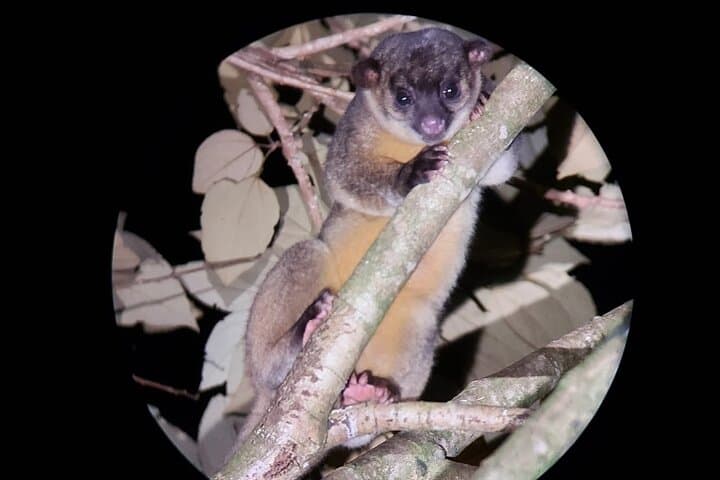
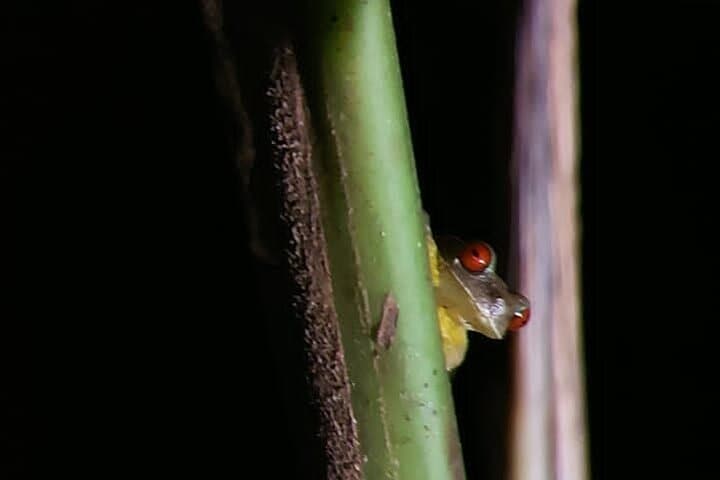
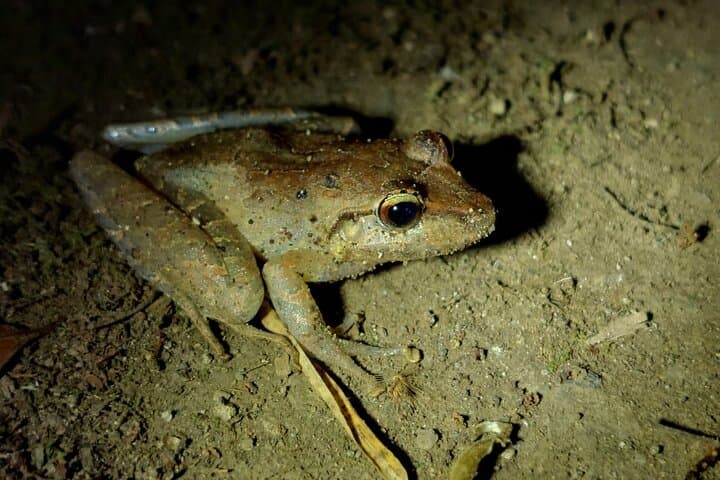
Fog drips from the canopy and the trail narrows into a corridor of trunks and dripping leaves. Lantern light cuts through mist; every rustle and distant call sharpens into possibility. On a guided night walk through the Monteverde Wildlife Refuge you move slowly—eyes adjusting, ears prying—while a local guide points out glowing frog eyes, moths that ride the night like sails, and the slow, deliberate silhouette of a kinkajou swinging between branches.
Fog drips from the canopy and the trail narrows into a corridor of trunks and dripping leaves. Lantern light cuts through mist; every rustle and distant call sharpens into possibility. On a guided night walk through the Monteverde Wildlife Refuge you move slowly—eyes adjusting, ears prying—while a local guide points out glowing frog eyes, moths that ride the night like sails, and the slow, deliberate silhouette of a kinkajou swinging between branches.
The refuge occupies regenerating cloud forest on the continental divide in Puntarenas province, part of the same volcanic highlands that give Monteverde its persistent mist and rich biodiversity. Geology of uplifted volcanic soils and steep ridgelines created habitats for quetzals, tree frogs and a dense understory of ferns and bromeliads. The area’s conservation story is recent and human: local families and conservationists protected tracts of forest in the 1970s–80s, creating private reserves that today form wildlife corridors.
Expect short, sometimes muddy trails and low-light conditions; the experience is about observation rather than pace. Guides use red or dimmed lights and know where nocturnal mammals and amphibians shelter. Bring a headlamp with a red filter, quiet footwear, and patience—animals reveal themselves on their own time.
Timing after dusk improves chances of seeing frogs, owls and mammals; avoid loud gear and bright phone screens. The walk is suitable for most fitness levels and makes a compact two-hour window to encounter the rainforest at its most active.