THE ADVENTURE COLLECTIVE® · Independent discovery and booking for outdoor travel

Head into the Monteverde cloud forest after dusk to catch the moment when daytime sleepers settle and nocturnal species awaken. This guided three-hour night hike from Santa Elena focuses on close-up wildlife observation with local naturalist guides.
Head into the Monteverde cloud forest after dusk to catch the moment when daytime sleepers settle and nocturnal species awaken. This guided three-hour night hike from Santa Elena focuses on close-up wildlife observation with local naturalist guides.
The path falls away beneath soft beam-light as the cloud forest exhales; damp leaves shiver and frogs answer like small, bright beacons. On this three-hour night hike out of Santa Elena, a naturalist guide leads small groups into the Monteverde cloud forest at sunset, when diurnal creatures tuck in and nocturnal life steps forward.
Verified experiences and guided adventures in the surrounding area.
Operated by Costa Rica Itinerary · Santa Elena, Puntarenas
The path falls away beneath soft beam-light as the cloud forest exhales; damp leaves shiver and frogs answer like small, bright beacons. On this three-hour night hike out of Santa Elena, a naturalist guide leads small groups into the Monteverde cloud forest at sunset, when diurnal creatures tuck in and nocturnal life steps forward.
Monteverde sits on a high ridge shaped by volcanic uplift and persistent trade winds, a place where orographic clouds condense around oak and cypress. The area’s human story runs from indigenous peoples to early settlers and the Quaker families who helped establish the modern Monteverde reserve—conservation and community remain closely linked here. At night the forest’s layered canopy takes on a different geology: mosses, ferns and epiphytes cling to trunks and outline the trail in three-dimensional texture.
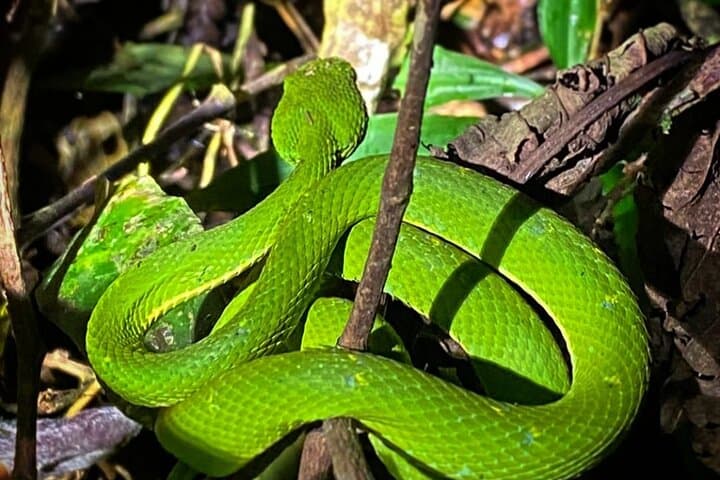
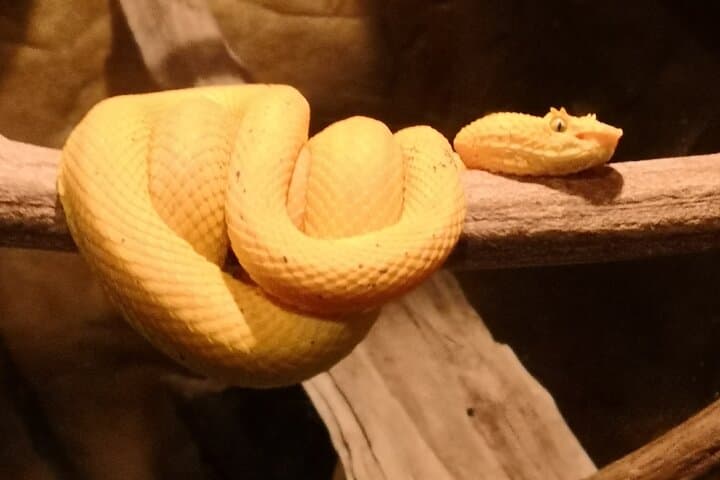
Expect to see sloths dozing in forks, coatis and agoutis foraging along the trail edges, frequent frogs, the occasional gray fox or porcupine, and tarantulas crossing the path. Guides point out calls, eye-shine and tracks while explaining species behavior and local cultural ties to the land.
Practicalities: the walk is rated easy, but trails are uneven and often muddy—sturdy footwear matters. Tours typically include pickup, transport, a professional guide and a flashlight; bring a rain jacket, headlamp (no bright flash photography), water and insect repellent. Plan for variable temperatures—layers are useful—and book during the dry window for easier footing and higher comfort. Quiet observation and following guide instructions make sightings both more likely and less disruptive to wildlife.
easy.
3 hours.
Suitable for most fitness levels; expect slow, exploratory walking over uneven terrain.
Tours begin around sunset—times shift with the season, so check local sunset and your confirmation; total duration is about three hours including transport.
Yes; children must be accompanied by an adult and the tour is suitable for a wide range of ages, though small kids may tire on the three-hour walk.
Guides focus on likely nocturnal and sleeping species—common sightings include sloths, frogs, coatis and tarantulas, but wildlife sightings cannot be guaranteed.
No—flash can harm animals and ruins night vision; guides typically ask visitors to use low red-light settings or dim headlamps instead.
Monteverde’s conservation movement grew from mid-20th-century settlement and later community-led reserve designations that preserved high-elevation cloud forest.
Local guides emphasize low-impact viewing—staying on trails, avoiding flashes, and not feeding wildlife—all crucial to protecting sensitive nocturnal species.
Costa Rica Itinerary operates guided outdoor trips and adventures with an emphasis on safety, stewardship, and memorable experiences.

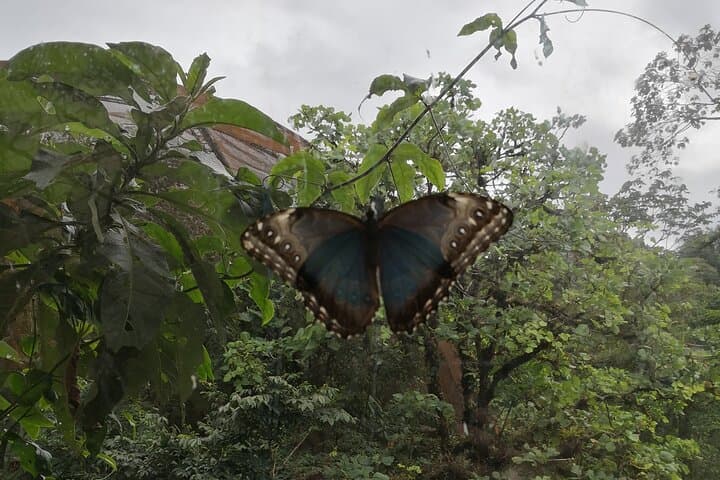
The path falls away beneath soft beam-light as the cloud forest exhales; damp leaves shiver and frogs answer like small, bright beacons. On this three-hour night hike out of Santa Elena, a naturalist guide leads small groups into the Monteverde cloud forest at sunset, when diurnal creatures tuck in and nocturnal life steps forward.
The path falls away beneath soft beam-light as the cloud forest exhales; damp leaves shiver and frogs answer like small, bright beacons. On this three-hour night hike out of Santa Elena, a naturalist guide leads small groups into the Monteverde cloud forest at sunset, when diurnal creatures tuck in and nocturnal life steps forward.
Monteverde sits on a high ridge shaped by volcanic uplift and persistent trade winds, a place where orographic clouds condense around oak and cypress. The area’s human story runs from indigenous peoples to early settlers and the Quaker families who helped establish the modern Monteverde reserve—conservation and community remain closely linked here. At night the forest’s layered canopy takes on a different geology: mosses, ferns and epiphytes cling to trunks and outline the trail in three-dimensional texture.
Expect to see sloths dozing in forks, coatis and agoutis foraging along the trail edges, frequent frogs, the occasional gray fox or porcupine, and tarantulas crossing the path. Guides point out calls, eye-shine and tracks while explaining species behavior and local cultural ties to the land.
Practicalities: the walk is rated easy, but trails are uneven and often muddy—sturdy footwear matters. Tours typically include pickup, transport, a professional guide and a flashlight; bring a rain jacket, headlamp (no bright flash photography), water and insect repellent. Plan for variable temperatures—layers are useful—and book during the dry window for easier footing and higher comfort. Quiet observation and following guide instructions make sightings both more likely and less disruptive to wildlife.