THE ADVENTURE COLLECTIVE® · Independent discovery and booking for outdoor travel

Walk a rare cloud-forest with a local naturalist and cross Selvatura’s hanging bridges to see the canopy up close. Expect moss-draped trees, active birdlife, and 2–2.5 hours of manageable, often wet trail.
Walk a rare cloud-forest with a local naturalist and cross Selvatura’s hanging bridges to see the canopy up close. Expect moss-draped trees, active birdlife, and 2–2.5 hours of manageable, often wet trail.
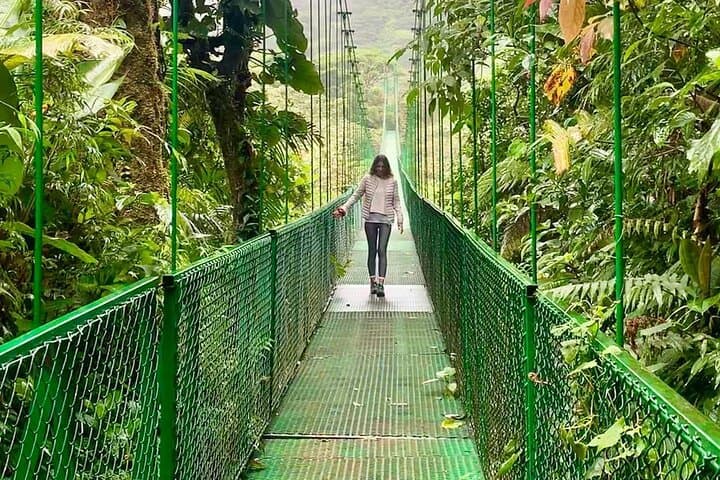
Fog threads through the canopy as you step past the reserve gate; moisture beads on ferns and each breath tastes like green. The guide points up — a tanager flashes, then vanishes into moss-heavy branches — and the trail pulls you along through moss-stiff trunks toward a series of suspended bridges that pry open the forest’s midstory.
Verified experiences and guided adventures in the surrounding area.
Operated by Ecotreks Monteverde · Santa Elena, Puntarenas
Fog threads through the canopy as you step past the reserve gate; moisture beads on ferns and each breath tastes like green. The guide points up — a tanager flashes, then vanishes into moss-heavy branches — and the trail pulls you along through moss-stiff trunks toward a series of suspended bridges that pry open the forest’s midstory.
This tour moves through one of the world’s rare cloud-forest ecosystems — a humid, cool band where moisture-laden air condenses on higher-elevation trees. The Monteverde area rose to conservation prominence in the mid-20th century as settlers and scientists worked to protect what became an international model for tropical biodiversity preservation. Geology here is young volcanic soil, steep ridges and narrow drainage lines that feed lowland rivers.
Culturally, Santa Elena’s small community has grown around eco-tourism and research; local guides often combine natural-history knowledge with practical trailcraft. Aside from birds and epiphytes, you’ll pass orchids, fern gardens and, at Selvatura, eight hanging bridges that give a rare window into the forest’s canopy layer.
Practical guidance: tours run about 2–2.5 hours on uneven, often wet trails — good footwear and a lightweight rain shell matter. Morning departures increase bird activity and lower crowds. Bring water, binoculars, and respect quiet viewing to improve wildlife sightings. Entrance fees support ongoing conservation; staying on marked trails reduces erosion and protects fragile moss beds. With modest fitness and wet-weather gear, this is an accessible, high-reward rainforest experience.
easy.
2–3 hours.
Suitable for people with basic fitness who can walk on uneven, sometimes steep and wet trails for up to 2.5 hours.
The guided tour price often excludes the reserve entrance fee; check your booking confirmation and be prepared to pay the park fee on arrival.
The reserve and many guided walks are family-friendly and listed as stroller-accessible in parts, but bridges and narrow trails can be challenging — inquire about child-friendly options when booking.
Some tour options include transportation; the booking form asks for pickup point details, so confirm pickup availability and location when you reserve.
Quetzals are seasonal and elusive; mornings during the breeding season increase chances, but sightings are never guaranteed — the guide’s knowledge improves odds.
The Monteverde region gained international attention in the mid-20th century as settlers and conservationists protected cloud-forest tracts, creating research stations and reserves that sparked ecotourism.
Reserve fees and guided protocols support habitat protection; stay on marked trails, avoid feeding or touching wildlife, and carry out any trash to minimize impact.
Ecotreks Monteverde operates guided outdoor trips and adventures with an emphasis on safety, stewardship, and memorable experiences.

Fog threads through the canopy as you step past the reserve gate; moisture beads on ferns and each breath tastes like green. The guide points up — a tanager flashes, then vanishes into moss-heavy branches — and the trail pulls you along through moss-stiff trunks toward a series of suspended bridges that pry open the forest’s midstory.
Fog threads through the canopy as you step past the reserve gate; moisture beads on ferns and each breath tastes like green. The guide points up — a tanager flashes, then vanishes into moss-heavy branches — and the trail pulls you along through moss-stiff trunks toward a series of suspended bridges that pry open the forest’s midstory.
This tour moves through one of the world’s rare cloud-forest ecosystems — a humid, cool band where moisture-laden air condenses on higher-elevation trees. The Monteverde area rose to conservation prominence in the mid-20th century as settlers and scientists worked to protect what became an international model for tropical biodiversity preservation. Geology here is young volcanic soil, steep ridges and narrow drainage lines that feed lowland rivers.
Culturally, Santa Elena’s small community has grown around eco-tourism and research; local guides often combine natural-history knowledge with practical trailcraft. Aside from birds and epiphytes, you’ll pass orchids, fern gardens and, at Selvatura, eight hanging bridges that give a rare window into the forest’s canopy layer.
Practical guidance: tours run about 2–2.5 hours on uneven, often wet trails — good footwear and a lightweight rain shell matter. Morning departures increase bird activity and lower crowds. Bring water, binoculars, and respect quiet viewing to improve wildlife sightings. Entrance fees support ongoing conservation; staying on marked trails reduces erosion and protects fragile moss beds. With modest fitness and wet-weather gear, this is an accessible, high-reward rainforest experience.