THE ADVENTURE COLLECTIVE® · Independent discovery and booking for outdoor travel

Head into Monteverde’s cloud forest after dark for a guided 2–3 hour walk where tarantulas, frogs, sleeping birds and nocturnal mammals reveal themselves under a headlamp. Practical tips on timing, gear, and trail conditions help you prepare for the humid, muddy trails.
Head into Monteverde’s cloud forest after dark for a guided 2–3 hour walk where tarantulas, frogs, sleeping birds and nocturnal mammals reveal themselves under a headlamp. Practical tips on timing, gear, and trail conditions help you prepare for the humid, muddy trails.
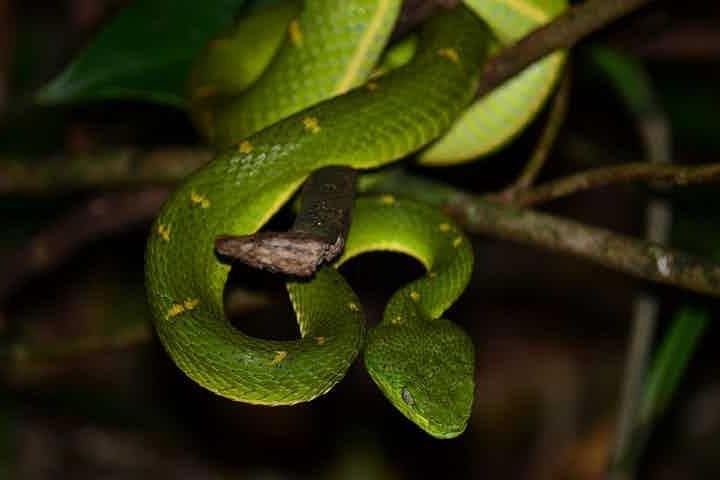
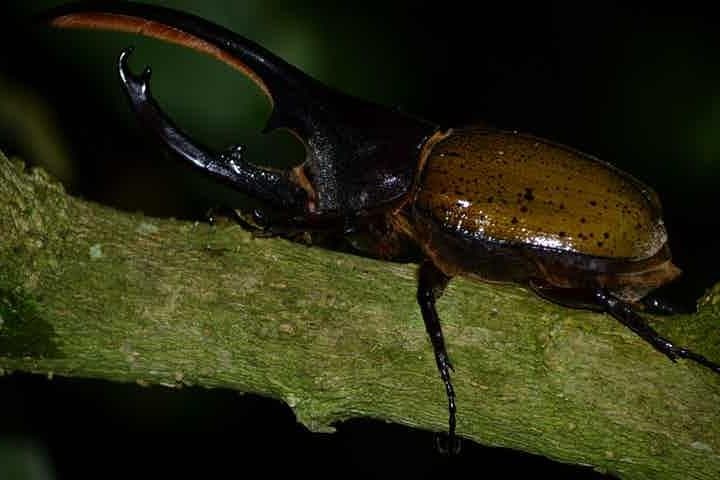
A humid hush falls over the Monteverde canopy as the sun drops behind the ridgeline and the cloud forest’s nocturnal cast begins to stir. Headlamps bob along a narrow trail, breath fogs the air briefly, and the guide’s beam pins a tarantula to a fern-stem like a tiny monument. In this two- to three-hour guided night walk you experience the cloud forest when it’s most alive — frogs calling from leaf axils, insects scraping out rhythms, and mammals moving like secret punctuation through the understory.
Verified experiences and guided adventures in the surrounding area.
Operated by Faro Travel Costa Rica · Santa Elena, Puntarenas
A humid hush falls over the Monteverde canopy as the sun drops behind the ridgeline and the cloud forest’s nocturnal cast begins to stir. Headlamps bob along a narrow trail, breath fogs the air briefly, and the guide’s beam pins a tarantula to a fern-stem like a tiny monument. In this two- to three-hour guided night walk you experience the cloud forest when it’s most alive — frogs calling from leaf axils, insects scraping out rhythms, and mammals moving like secret punctuation through the understory.
The Monteverde region sits on a volcanic spine where uplift and trapped moisture create persistent cloud cover; that geology and elevation (roughly 1,200–1,650 m) foster one of the most biodiverse montane forests in Central America. Culturally, Monteverde grew from Quaker settlers in the 1950s and now balances tourism with coffee farms and conservation. Your guide interprets tracks, points out sleeping birds, and explains local efforts to protect corridors between reserves.
Practical guidance: dress for damp, cool nights—layer a lightweight waterproof over a warm midlayer. The trails are uneven, often muddy, and can drop 200–300 m in places; expect slippery roots and short steep sections. Bring a reliable headlamp, waterproof footwear, and insect repellent; cameras with low-light capability work best but avoid flash near wildlife. Respect closed gates and soft-voiced viewing; many sights come from stillness and patience. The walk is suitable for most fitness levels, and guides tailor pace to the group. This is a sensory, sensory-forward way to meet the cloud forest when it’s awake in the dark.
easy.
2–3 hours.
Suitable for most fitness levels; you should be able to walk uneven ground for a couple hours with short inclines.
Typical tours run 2–3 hours; guides adjust the route and pace for group comfort.
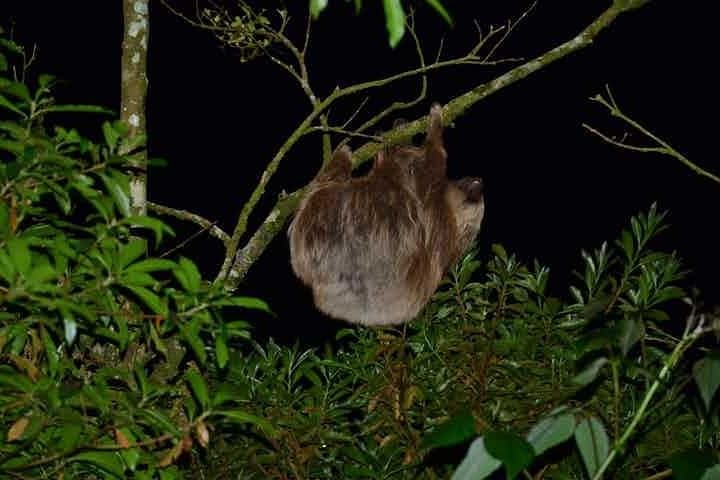
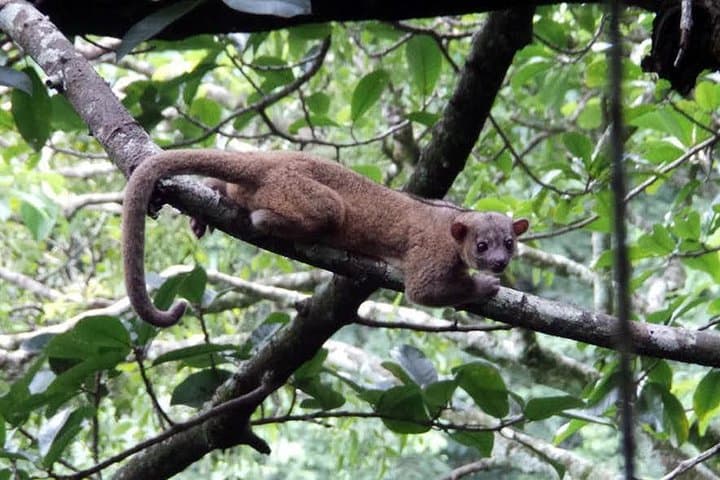
Large mammals are possible but rare; expect more consistent sightings of frogs, insects, sloths, rodents, and small nocturnal mammals like kinkajous and coatis.
Yes—routes are chosen for accessibility and the pace is moderate, but participants should be able to handle uneven, sometimes muddy trails.
No permits are required for guided commercial walks; guides typically provide basic equipment information but bring your own headlamp and appropriate clothing.
Monteverde’s modern history began with Quaker settlers in the 1950s who established farms; conservation efforts in the 1970s created reserves that now protect cloud forest remnants.
Local organizations focus on reforestation and biological corridors to connect isolated forest patches; visitors are asked to stick to trails and minimize light and noise to reduce disturbance.
Faro Travel Costa Rica operates guided outdoor trips and adventures with an emphasis on safety, stewardship, and memorable experiences.
A humid hush falls over the Monteverde canopy as the sun drops behind the ridgeline and the cloud forest’s nocturnal cast begins to stir. Headlamps bob along a narrow trail, breath fogs the air briefly, and the guide’s beam pins a tarantula to a fern-stem like a tiny monument. In this two- to three-hour guided night walk you experience the cloud forest when it’s most alive — frogs calling from leaf axils, insects scraping out rhythms, and mammals moving like secret punctuation through the understory.
A humid hush falls over the Monteverde canopy as the sun drops behind the ridgeline and the cloud forest’s nocturnal cast begins to stir. Headlamps bob along a narrow trail, breath fogs the air briefly, and the guide’s beam pins a tarantula to a fern-stem like a tiny monument. In this two- to three-hour guided night walk you experience the cloud forest when it’s most alive — frogs calling from leaf axils, insects scraping out rhythms, and mammals moving like secret punctuation through the understory.
The Monteverde region sits on a volcanic spine where uplift and trapped moisture create persistent cloud cover; that geology and elevation (roughly 1,200–1,650 m) foster one of the most biodiverse montane forests in Central America. Culturally, Monteverde grew from Quaker settlers in the 1950s and now balances tourism with coffee farms and conservation. Your guide interprets tracks, points out sleeping birds, and explains local efforts to protect corridors between reserves.
Practical guidance: dress for damp, cool nights—layer a lightweight waterproof over a warm midlayer. The trails are uneven, often muddy, and can drop 200–300 m in places; expect slippery roots and short steep sections. Bring a reliable headlamp, waterproof footwear, and insect repellent; cameras with low-light capability work best but avoid flash near wildlife. Respect closed gates and soft-voiced viewing; many sights come from stillness and patience. The walk is suitable for most fitness levels, and guides tailor pace to the group. This is a sensory, sensory-forward way to meet the cloud forest when it’s awake in the dark.