THE ADVENTURE COLLECTIVE® · Independent discovery and booking for outdoor travel

Walk beneath cloud and moss in Monteverde on a guided morning tour that hunts resin-green quetzals, bellbird calls and close-up hummingbird gardens. Expect misty trails, expert naturalist interpretation, and a 3–4 hour easy-paced exploration.
Walk beneath cloud and moss in Monteverde on a guided morning tour that hunts resin-green quetzals, bellbird calls and close-up hummingbird gardens. Expect misty trails, expert naturalist interpretation, and a 3–4 hour easy-paced exploration.
Dawn pours soft gray over the ridges as you meet your guide at the reserve reception; the cloud forest breathes, a living ceiling of mist that moves like a slow tide through the canopy. On this guided morning walk you follow narrow trails, cross occasional boardwalks and stand beneath moss-heavy branches while the forest stirs — bellbirds call from a distance and the resplendent quetzal sometimes appears like a flash of emerald.
Verified experiences and guided adventures in the surrounding area.
Operated by Monteverde Outdoors · Santa Elena, Puntarenas
Dawn pours soft gray over the ridges as you meet your guide at the reserve reception; the cloud forest breathes, a living ceiling of mist that moves like a slow tide through the canopy. On this guided morning walk you follow narrow trails, cross occasional boardwalks and stand beneath moss-heavy branches while the forest stirs — bellbirds call from a distance and the resplendent quetzal sometimes appears like a flash of emerald.
Monteverde sits on a volcanic spine where uplift and persistent moisture created one of the world’s most biodiverse montane cloud forests. The trails thread through high-elevation evergreen forest at roughly 1,300–1,600 meters, where epiphytes and bromeliads clutch branches and streams push downhill with urgency. Local guides explain the ecology: how cloud interception feeds the soil, why quetzals use specific fruiting trees, and how conservation shaped community economies in Santa Elena.
After the forest walk the tour visits a hummingbird garden where more than seven species can flutter inches away — a useful place to study flight mechanics and color variation up close. Practical notes: the reserve typically requires an entrance fee (paid on site), trails can be wet and slick, and wildlife is most active early morning.
Bring a light rain shell, quiet footwear, and binoculars (optical equipment may be provided). Move deliberately, give birds space, and expect three-plus hours on uneven ground. The experience is as much about listening as seeing — the forest will tell you where to look.
easy.
3–3.5 hours.
Suitable for most fitness levels; requires steady walking on uneven, sometimes steep terrain for several hours.
Reserve admission is typically not included and is paid on site at the reception prior to entering the trails; check your booking confirmation for specifics.
Quetzals are seasonal and not guaranteed; early-morning visits during fruiting seasons increase your chances, and experienced guides know where to look.
The tour listing notes wheelchair accessibility,
Wear layered clothing, waterproof outerwear, and sturdy shoes; temperatures are cool at elevation and conditions can change quickly.
The Monteverde area grew from mid-20th century settlement and coffee-farming; conservation efforts in the late 20th century helped establish the reserve and a local ecotourism economy.
Monteverde balances tourism and habitat protection through defined trails, entrance fees that fund management, and community education programs to reduce human-wildlife conflict.
Monteverde Outdoors operates guided outdoor trips and adventures with an emphasis on safety, stewardship, and memorable experiences.

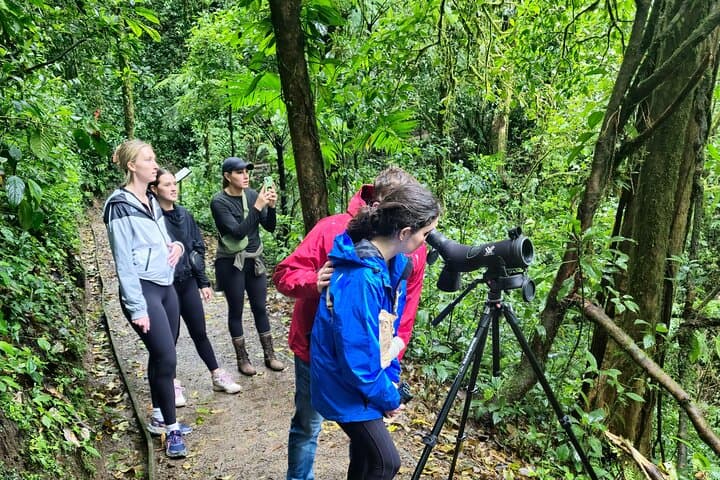
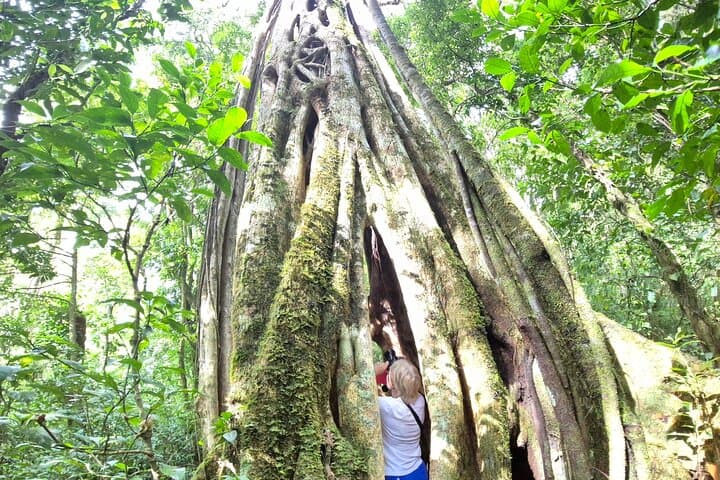

Dawn pours soft gray over the ridges as you meet your guide at the reserve reception; the cloud forest breathes, a living ceiling of mist that moves like a slow tide through the canopy. On this guided morning walk you follow narrow trails, cross occasional boardwalks and stand beneath moss-heavy branches while the forest stirs — bellbirds call from a distance and the resplendent quetzal sometimes appears like a flash of emerald.
Dawn pours soft gray over the ridges as you meet your guide at the reserve reception; the cloud forest breathes, a living ceiling of mist that moves like a slow tide through the canopy. On this guided morning walk you follow narrow trails, cross occasional boardwalks and stand beneath moss-heavy branches while the forest stirs — bellbirds call from a distance and the resplendent quetzal sometimes appears like a flash of emerald.
Monteverde sits on a volcanic spine where uplift and persistent moisture created one of the world’s most biodiverse montane cloud forests. The trails thread through high-elevation evergreen forest at roughly 1,300–1,600 meters, where epiphytes and bromeliads clutch branches and streams push downhill with urgency. Local guides explain the ecology: how cloud interception feeds the soil, why quetzals use specific fruiting trees, and how conservation shaped community economies in Santa Elena.
After the forest walk the tour visits a hummingbird garden where more than seven species can flutter inches away — a useful place to study flight mechanics and color variation up close. Practical notes: the reserve typically requires an entrance fee (paid on site), trails can be wet and slick, and wildlife is most active early morning.
Bring a light rain shell, quiet footwear, and binoculars (optical equipment may be provided). Move deliberately, give birds space, and expect three-plus hours on uneven ground. The experience is as much about listening as seeing — the forest will tell you where to look.