THE ADVENTURE COLLECTIVE® · Independent discovery and booking for outdoor travel

Traverse six hanging bridges through Monteverde’s misty cloud forest, then descend to a small coffee farm to learn how altitude and shade shape Costa Rican coffee. This full-day shore excursion pairs wildlife viewing with hands-on agricultural insight.
Traverse six hanging bridges through Monteverde’s misty cloud forest, then descend to a small coffee farm to learn how altitude and shade shape Costa Rican coffee. This full-day shore excursion pairs wildlife viewing with hands-on agricultural insight.
You step off the transfer bus into a cool, mist-scented forest where cloud and canopy meet. Moss-draped trunks loom overhead and a line of six swinging bridges threads the green, each sway announcing the presence of something alive — a toucan calling, a stream daring you downstream, a bromeliad holding morning like a tiny reservoir.
Verified experiences and guided adventures in the surrounding area.
Operated by GioTours · Santa Elena, Puntarenas
You step off the transfer bus into a cool, mist-scented forest where cloud and canopy meet. Moss-draped trunks loom overhead and a line of six swinging bridges threads the green, each sway announcing the presence of something alive — a toucan calling, a stream daring you downstream, a bromeliad holding morning like a tiny reservoir.
Monteverde’s elevations (about 1,300–1,600 m) trap moisture from the Pacific, producing the cloud cover that defines the reserve and nurtures high-elevation quetzal habitat and unique dwarf forests. The human story here is recent but influential: Quaker settlers in the 1950s chose to keep roads rough and development limited, protecting the area’s fragile soils and wildlife corridors.
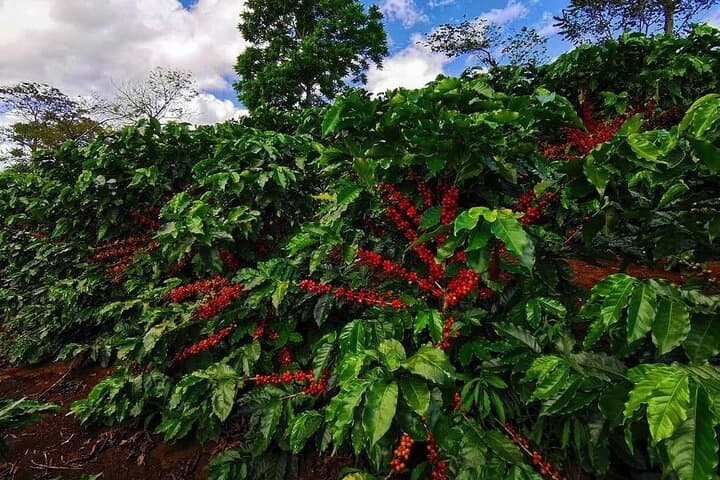
After the canopy walk, the itinerary drops you to a working coffee farm where small-batch methods and sugarcane-fed boilers demonstrate how altitude, shade, and volcanic soil shape Costa Rican coffee. Guides link ecology and culture — how cloud forest conservation supports clean water and the very crops you taste at lunch.
Practical: this is a full-day shore excursion (about 8 hours, including transit). Expect uneven, often muddy trails and short steep sections on the bridges; a moderate fitness level helps. Bring a light rain shell, grippy shoes, water, and a camera with a fast lens for low light under the canopy. Morning visits are quieter for birds; afternoons bring thicker mist and richer mushroom life.
Timing and footwear matter most — move deliberately, listen for movement in the leaves, and leave no trace: these forests rely on careful visitation.
moderate.
8 hours (including transit).
Suitable for travelers with moderate fitness; involves walking on uneven, sometimes steep and muddy trails
This is a full-day shore excursion (about 8 hours) and includes port pickup and drop-off as well as transfers to the cloud forest and coffee farm.
Children can participate but must be accompanied by an adult; the trails and bridges have uneven surfaces and are not recommended for travelers with major mobility limitations.
Wear closed-toe shoes with good traction, layered clothing for cool, damp conditions, a light rain jacket, sunscreen, and insect repellent; bring cash for souvenirs.
Wildlife sightings are common but not guaranteed; mornings improve birding windows and guides increase chances of spotting quetzals, toucans, and other canopy species.
Quaker settlers arriving in the 1950s influenced land-use choices that limited road development, helping preserve Monteverde’s cloud forest ecology.
Monteverde relies on a mix of protected reserves and community-based conservation; visitors help by staying on trails, avoiding single-use plastics, and supporting local sustainable farms.
GioTours operates guided outdoor trips and adventures with an emphasis on safety, stewardship, and memorable experiences.
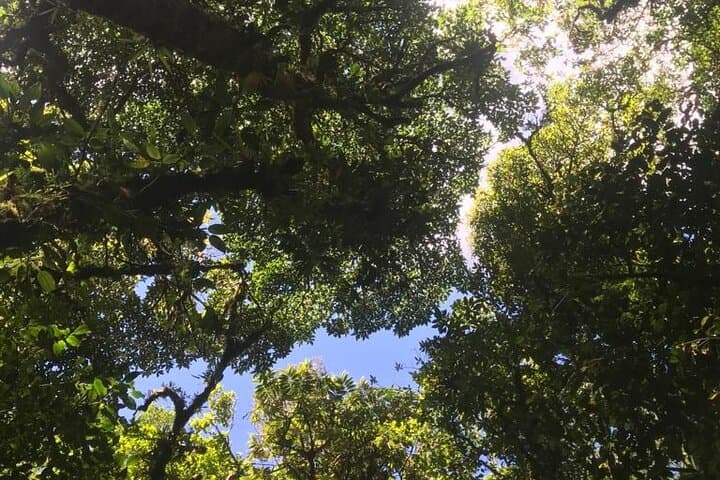
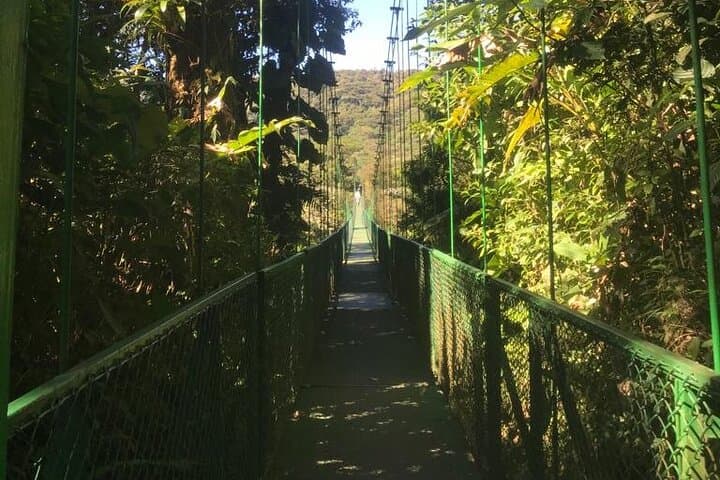
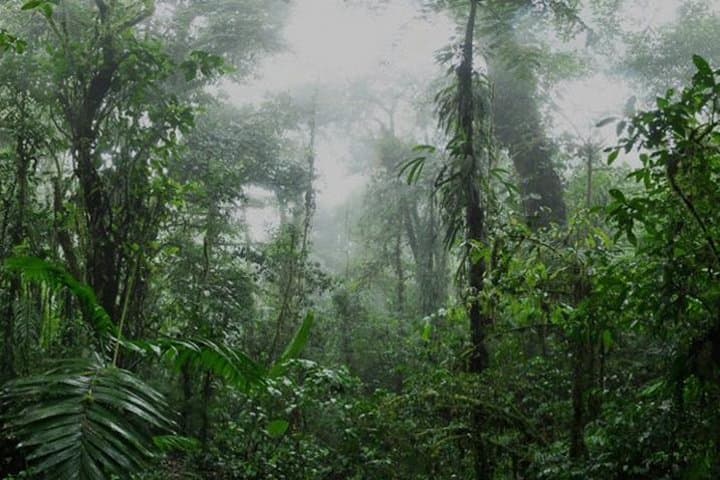
You step off the transfer bus into a cool, mist-scented forest where cloud and canopy meet. Moss-draped trunks loom overhead and a line of six swinging bridges threads the green, each sway announcing the presence of something alive — a toucan calling, a stream daring you downstream, a bromeliad holding morning like a tiny reservoir.
You step off the transfer bus into a cool, mist-scented forest where cloud and canopy meet. Moss-draped trunks loom overhead and a line of six swinging bridges threads the green, each sway announcing the presence of something alive — a toucan calling, a stream daring you downstream, a bromeliad holding morning like a tiny reservoir.
Monteverde’s elevations (about 1,300–1,600 m) trap moisture from the Pacific, producing the cloud cover that defines the reserve and nurtures high-elevation quetzal habitat and unique dwarf forests. The human story here is recent but influential: Quaker settlers in the 1950s chose to keep roads rough and development limited, protecting the area’s fragile soils and wildlife corridors.
After the canopy walk, the itinerary drops you to a working coffee farm where small-batch methods and sugarcane-fed boilers demonstrate how altitude, shade, and volcanic soil shape Costa Rican coffee. Guides link ecology and culture — how cloud forest conservation supports clean water and the very crops you taste at lunch.
Practical: this is a full-day shore excursion (about 8 hours, including transit). Expect uneven, often muddy trails and short steep sections on the bridges; a moderate fitness level helps. Bring a light rain shell, grippy shoes, water, and a camera with a fast lens for low light under the canopy. Morning visits are quieter for birds; afternoons bring thicker mist and richer mushroom life.
Timing and footwear matter most — move deliberately, listen for movement in the leaves, and leave no trace: these forests rely on careful visitation.