THE ADVENTURE COLLECTIVE® · Independent discovery and booking for outdoor travel

Experience Monteverde at dawn on a small-group birdwatching walk where guides seek quetzals, toucans and hummingbirds across cloud-forest trails. This three-hour morning tour blends natural history with practical fieldcraft—bring binoculars, layers, and quiet curiosity.
Experience Monteverde at dawn on a small-group birdwatching walk where guides seek quetzals, toucans and hummingbirds across cloud-forest trails. This three-hour morning tour blends natural history with practical fieldcraft—bring binoculars, layers, and quiet curiosity.
Dawn breaks over the Monteverde cloud forest and mist threads through the canopy like a slow-moving tide. Early light pulls birds into motion—toucans calling from a high bough, hummingbirds flashing like living beads, and the occasional silhouette of a resplendent quetzal forcing every head to tilt upward.
Verified experiences and guided adventures in the surrounding area.
Operated by Ficus Trails Night Tour Monteverde · Monteverde, Puntarenas
Dawn breaks over the Monteverde cloud forest and mist threads through the canopy like a slow-moving tide. Early light pulls birds into motion—toucans calling from a high bough, hummingbirds flashing like living beads, and the occasional silhouette of a resplendent quetzal forcing every head to tilt upward.
The cloud forest here sits between 1,200–1,800 meters elevation, formed where Pacific moisture meets the continental ridge. That steady condensation feeds a web of epiphytes, moss-draped oaks, and ferny understory that support more than 450 recorded bird species. Monteverde’s modern story is part conservation, part community: protected reserves established in the 1970s grew from local land purchases and long-standing efforts to balance tourism with habitat protection.
Culturally, the area blends Costa Rican mountain life with a small community of farmers and naturalists; guides often share both indigenous avian lore and scientific notes about migration and breeding. Geologically, the terrain is volcanic and steep in places, producing abrupt ridgelines and sheltered gullies where secretive species hide.
Practical guidance: tours run early (typical window 6–8am) and last about three hours; expect light to moderate walking on uneven, sometimes muddy trails. Small-group guides point out calls, nests, and behaviors—bring binoculars, a neutral-colored jacket, and a camera with a zoom lens. Because sightings aren’t guaranteed, patience and quiet are key: move slowly, listen, and let the forest offer its moments. Hotel pickup is commonly included; confirm pickup time at booking and dress in layers for quick shifts from cool mist to sunlit clearings.
easy.
3 hours.
Suitable for most fitness levels; requires steady walking for up to 2 miles on uneven terrain and short inclines.
Sightings of quetzals are possible but not guaranteed; guides know local hotspots and seasonality improves odds, but bird behavior is unpredictable.
Yes—hotel pickup and drop-off are typically included; confirm your preferred pickup time between 6am and 8am when booking.
Tours are small-group, generally capped at eight participants to minimize disturbance and improve viewing opportunities.
Yes—this tour is suitable for all ages, though children should be able to walk on uneven trails and remain quiet during sightings.
Monteverde’s protected areas grew from local conservation efforts in the 1970s, when residents and scientists collaborated to buy and safeguard forest parcels for research and ecotourism.
Responsible guiding and small groups help minimize disturbance; visitors are asked to remain on trails, avoid flash photography of nesting birds, and support local conservation fees when provided.
Ficus Trails Night Tour Monteverde operates guided outdoor trips and adventures with an emphasis on safety, stewardship, and memorable experiences.
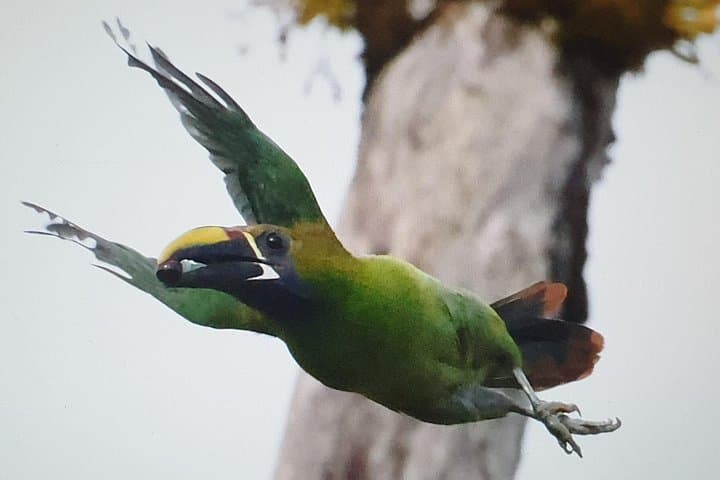
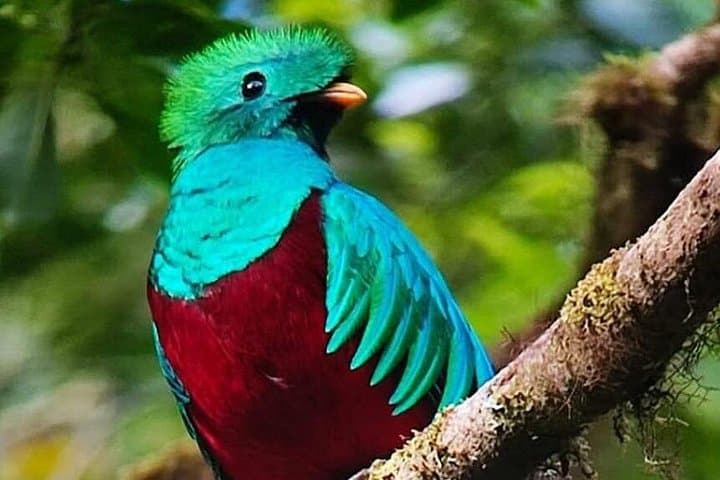
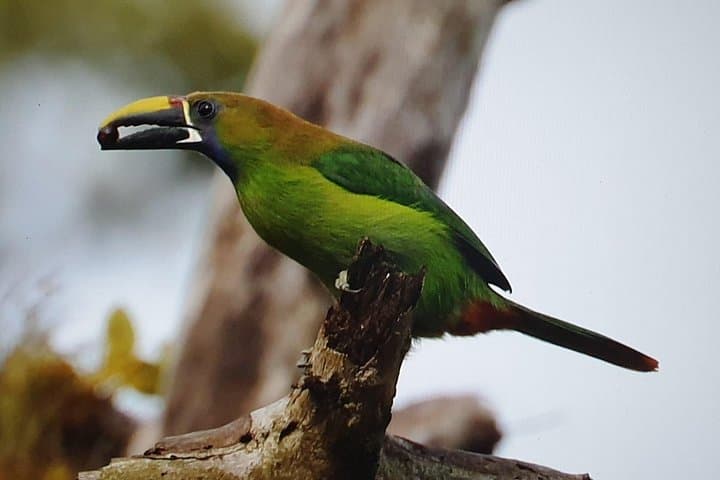
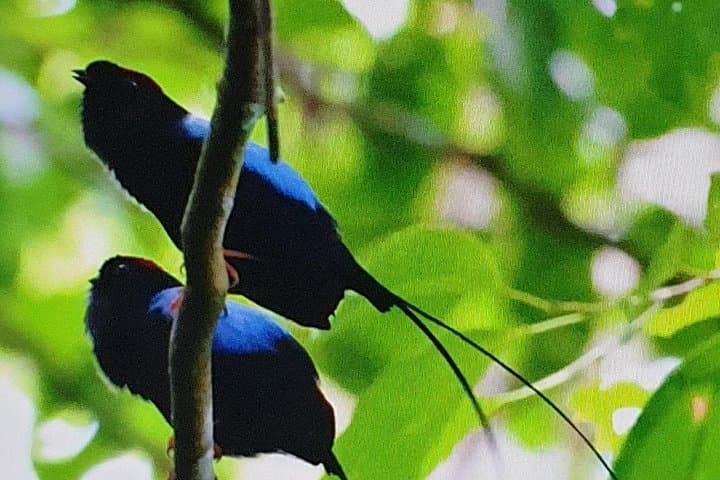
Dawn breaks over the Monteverde cloud forest and mist threads through the canopy like a slow-moving tide. Early light pulls birds into motion—toucans calling from a high bough, hummingbirds flashing like living beads, and the occasional silhouette of a resplendent quetzal forcing every head to tilt upward.
Dawn breaks over the Monteverde cloud forest and mist threads through the canopy like a slow-moving tide. Early light pulls birds into motion—toucans calling from a high bough, hummingbirds flashing like living beads, and the occasional silhouette of a resplendent quetzal forcing every head to tilt upward.
The cloud forest here sits between 1,200–1,800 meters elevation, formed where Pacific moisture meets the continental ridge. That steady condensation feeds a web of epiphytes, moss-draped oaks, and ferny understory that support more than 450 recorded bird species. Monteverde’s modern story is part conservation, part community: protected reserves established in the 1970s grew from local land purchases and long-standing efforts to balance tourism with habitat protection.
Culturally, the area blends Costa Rican mountain life with a small community of farmers and naturalists; guides often share both indigenous avian lore and scientific notes about migration and breeding. Geologically, the terrain is volcanic and steep in places, producing abrupt ridgelines and sheltered gullies where secretive species hide.
Practical guidance: tours run early (typical window 6–8am) and last about three hours; expect light to moderate walking on uneven, sometimes muddy trails. Small-group guides point out calls, nests, and behaviors—bring binoculars, a neutral-colored jacket, and a camera with a zoom lens. Because sightings aren’t guaranteed, patience and quiet are key: move slowly, listen, and let the forest offer its moments. Hotel pickup is commonly included; confirm pickup time at booking and dress in layers for quick shifts from cool mist to sunlit clearings.