THE ADVENTURE COLLECTIVE® · Independent discovery and booking for outdoor travel

A full-day drive through Montenegro’s spiritual highpoints—Cetinje, cave-chapel Dajbaba, and cliffside Ostrog—this tour blends cultural history with striking karst scenery. Expect short walks, steep stairways, and powerful vistas.
A full-day drive through Montenegro’s spiritual highpoints—Cetinje, cave-chapel Dajbaba, and cliffside Ostrog—this tour blends cultural history with striking karst scenery. Expect short walks, steep stairways, and powerful vistas.
You step out of an air-conditioned van and the limestone cliff seems to inhale—the stone pulling centuries of prayer into its seams. The road climbs from the Adriatic coast through scrub and pine; by the time you reach Ostrog, sheer rock faces loom like pages of history pressed upright, and the monastery’s white façade is a human mark on geological time.
Verified experiences and guided adventures in the surrounding area.
Operated by Transfers-Montenegro.me · Ostrog, Danilovgrad Municipality
You step out of an air-conditioned van and the limestone cliff seems to inhale—the stone pulling centuries of prayer into its seams. The road climbs from the Adriatic coast through scrub and pine; by the time you reach Ostrog, sheer rock faces loom like pages of history pressed upright, and the monastery’s white façade is a human mark on geological time.
Cetinje was Montenegro’s royal and cultural capital; its 15th-century monastery holds relics and manuscripts that shaped Balkan literacy. Dajbaba, carved into a hill near Podgorica, shows a different relationship between faith and rock—an almost conversational integration of chapel and cave. Ostrog, perched at roughly 900 meters, became a pilgrimage magnet in the 17th century after Saint Vasilije, whose relics are said to inspire healings.
Geology here is active in plain view: karst plateaus, steep limestone cliffs and narrow valleys that channel wind and pilgrims alike. Culture moves between Orthodox ritual, simple village hospitality and coastal influences brought by centuries of Adriatic trade. Local kitchens favor slow-roasted meats and polenta; Koliba restaurant offers a practical taste of that tradition mid-ride.
Practical guidance: the tour is largely vehicle-based with short, often-stepped walks at each site—expect uneven stone floors and stairways. Dress modestly for chapels (shoulders/knees covered) and bring layers for sudden temperature shifts between coast and mountain. Hydrate before the hardest uphill steps, keep voices low inside sacred spaces, and allow extra time for photo stops on the return drive toward the sea.
easy.
7 hours.
Suitable for most fitness levels; you should be comfortable standing and climbing short flights of stairs and walking on uneven stone.
Walking is short at each monastery—typically 10–30 minute visits—but expect stairs and uneven floors, not long hikes.
Yes; Ostrog, Cetinje and Dajbaba welcome visitors of all faiths, but some inner relic areas may restrict access or photography.
Lunch at Koliba restaurant is included in the itinerary description; expect traditional Montenegrin dishes and a sea-view photo stop on the return.
The tour involves steep approaches and steps at Ostrog and Dajbaba; travelers with limited mobility should check specifics with the operator before booking.
Cetinje served as Montenegro’s royal and cultural capital; monasteries here preserved religious relics and manuscripts that shaped regional identity across Ottoman and Adriatic eras.
Respect marked paths and refrain from touching relics or frescoes; visitor impacts are managed by limited access and local conservation rules to protect fragile interiors.
Transfers-Montenegro.me operates guided outdoor trips and adventures with an emphasis on safety, stewardship, and memorable experiences.

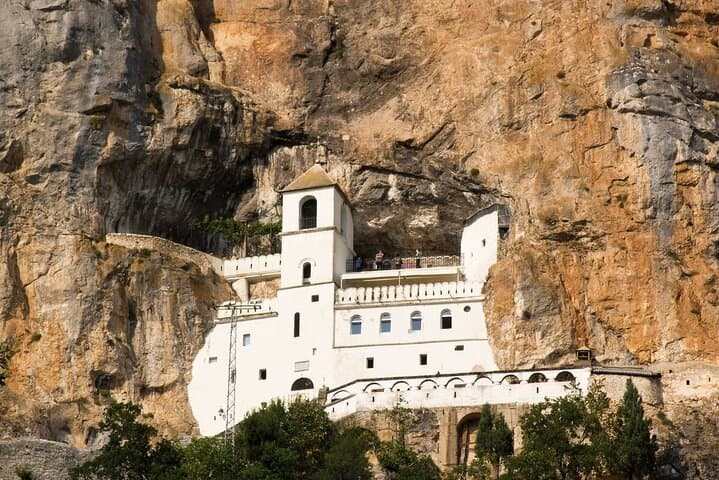


You step out of an air-conditioned van and the limestone cliff seems to inhale—the stone pulling centuries of prayer into its seams. The road climbs from the Adriatic coast through scrub and pine; by the time you reach Ostrog, sheer rock faces loom like pages of history pressed upright, and the monastery’s white façade is a human mark on geological time.
You step out of an air-conditioned van and the limestone cliff seems to inhale—the stone pulling centuries of prayer into its seams. The road climbs from the Adriatic coast through scrub and pine; by the time you reach Ostrog, sheer rock faces loom like pages of history pressed upright, and the monastery’s white façade is a human mark on geological time.
Cetinje was Montenegro’s royal and cultural capital; its 15th-century monastery holds relics and manuscripts that shaped Balkan literacy. Dajbaba, carved into a hill near Podgorica, shows a different relationship between faith and rock—an almost conversational integration of chapel and cave. Ostrog, perched at roughly 900 meters, became a pilgrimage magnet in the 17th century after Saint Vasilije, whose relics are said to inspire healings.
Geology here is active in plain view: karst plateaus, steep limestone cliffs and narrow valleys that channel wind and pilgrims alike. Culture moves between Orthodox ritual, simple village hospitality and coastal influences brought by centuries of Adriatic trade. Local kitchens favor slow-roasted meats and polenta; Koliba restaurant offers a practical taste of that tradition mid-ride.
Practical guidance: the tour is largely vehicle-based with short, often-stepped walks at each site—expect uneven stone floors and stairways. Dress modestly for chapels (shoulders/knees covered) and bring layers for sudden temperature shifts between coast and mountain. Hydrate before the hardest uphill steps, keep voices low inside sacred spaces, and allow extra time for photo stops on the return drive toward the sea.