THE ADVENTURE COLLECTIVE® · Independent discovery and booking for outdoor travel

Move from glacier-sculpted Durmitor to the blue green of the Adriatic on this guided eight-day trek. Expect alpine lakes, a 2,160 m high pass, Ostrog Monastery, and Kotor’s fortified old town—plus practical advice for packing and pacing the route.
Move from glacier-sculpted Durmitor to the blue green of the Adriatic on this guided eight-day trek. Expect alpine lakes, a 2,160 m high pass, Ostrog Monastery, and Kotor’s fortified old town—plus practical advice for packing and pacing the route.
By dawn the pines on Durmitor exhale mist into a bowl of air above Black Lake; you strap on boots while the guide loads sandwiches into a pack and the first shafts of light unroll over serrated limestone. The week begins high—Žabljak sits at roughly 1,450 m—and moves southward, trading alpine glaciers and spruce-dark forests for stone ramparts and the sudden blue of the Adriatic.
Verified experiences and guided adventures in the surrounding area.
Operated by A.C.E. Adventure · Žabljak, Žabljak Municipality
By dawn the pines on Durmitor exhale mist into a bowl of air above Black Lake; you strap on boots while the guide loads sandwiches into a pack and the first shafts of light unroll over serrated limestone. The week begins high—Žabljak sits at roughly 1,450 m—and moves southward, trading alpine glaciers and spruce-dark forests for stone ramparts and the sudden blue of the Adriatic.
Durmitor is older than most tourists’ expectations. Carved by ice and river, its peaks and plateaus are compacted limestone and black moraine; the Tara River has gouged Europe’s deepest canyon below, a raw scar revealing million-year geologic time. Cultural layers are as obvious: Orthodox devotion gathers at Ostrog Monastery clinging to vertical walls, while Kotor’s medieval ramparts and Venetian facades tell a thousand years of coastal trade and fortification.
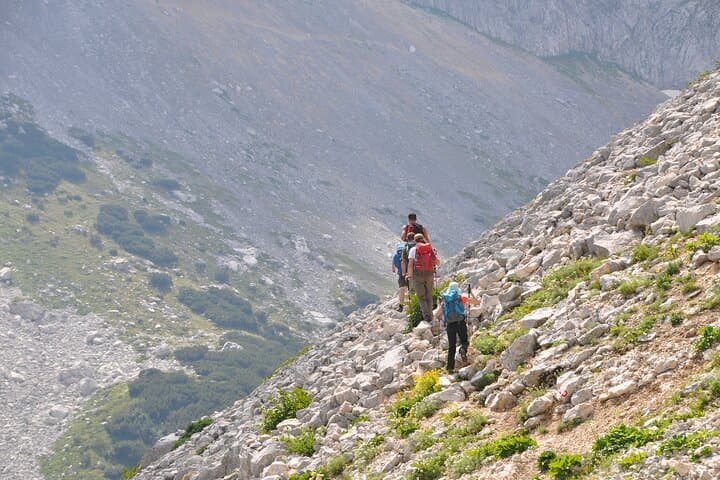
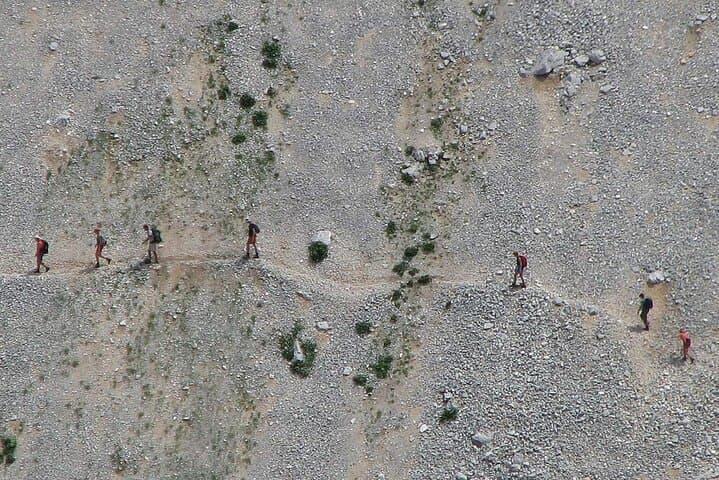
On the ground the trip balances short, repetitive loops—Black Lake’s 3.5 km figure-eight shoreline and quiet ponds like Zminje and Barno—with full-day climbs. Day three ascends to the vicinity of Međed (Bear Peak) at 2,160 m, a net gain of roughly 700–750 m from Žabljak, before circling around exposed ridgelines to a high pass. Coastal days trade altitude for heat: Vrmac and Paštrovačka Gora offer ridgewalking with sweepingly close views of the Bay of Kotor and Budva Riviera; expect rocky steps, dry shrubs, and old Austro-Hungarian stone roads.
This is a guided route—trail finding is straightforward—but it’s not low-effort. Some sections above the tree line are exposed and waterless; guides schedule picnic lunches and transfers to sit-proof rest points like Perast and the man-made island, Our Lady of the Rocks. Evenings are generous: four nights in Perast by the water let you swap hardscrabble peaks for fresh seafood and the slow, tactile architecture of Kotor’s old town.
Practical edge: prepare for variety. Hike-ready boots with ankle support and 700–900 ml of carried water for mountain days will matter more than style. Pack sun protection for coastal days and a waterproof layer for sudden Durmitor squalls. If you’re prone to altitude or long descents, bring trekking poles; the itinerary includes steep stone staircases and loose scree. Transfers shorten long approach roads but plan for two-hour drives between mountains and coast.
For photographers, dawn at Black Lake and late afternoon on Kotor’s ramparts reward patience. For planners, the trip runs eight days with a moderate-to-challenging effort level—suitable for hikers who can manage sustained ascents of 600–800 m and multiple 4–7 hour walking days. Follow Leave No Trace on fragile alpine meadows and be ready to trade peak solitude for the cultural intensity of coastal pilgrimage and fortified towns.
challenging.
8 days (7 nights), multiple 4–7 hour hiking days.
Suitable for hikers with good aerobic fitness who can handle sustained ascents of 600–800 m and full days on rocky terrain
The tour is rated moderate to challenging—expect several full-day hikes and one ascent to around 2,160 m with 700–800 m elevation gain; regular walkers who do hill training will be comfortable.
Not reliably—Durmitor’s upper ridges are dry. The operator provides snacks and some drinks during hikes, but carry your own water supply for full-day walks.
Sturdy, broken-in hiking boots with ankle support and a lugged sole are recommended due to rocky terrain and stone steps.
The itinerary includes breakfast every day, several lunches and dinners as listed, national park fees, and transfers between sites including airport transfers as specified.
Yes—the itinerary includes a stop and a 30-minute climb to the upper monastery; modest dress and respectful behavior are expected at this active pilgrimage site.
Yes—solo travelers are welcome; the tour operates as a shared guided group with single room supplement available for those who prefer private accommodation.
Kotor’s walls were built and expanded between the 9th and 19th centuries under Venetian and Austro-Hungarian influence; Ostrog Monastery dates to the 17th century and remains a major Orthodox pilgrimage site.
Durmitor is a protected national park (established 1952) and fragile alpine meadows are vulnerable—stay on marked trails and avoid disturbing pasturelands and endemic plants.
A.C.E. Adventure operates guided outdoor trips and adventures with an emphasis on safety, stewardship, and memorable experiences.
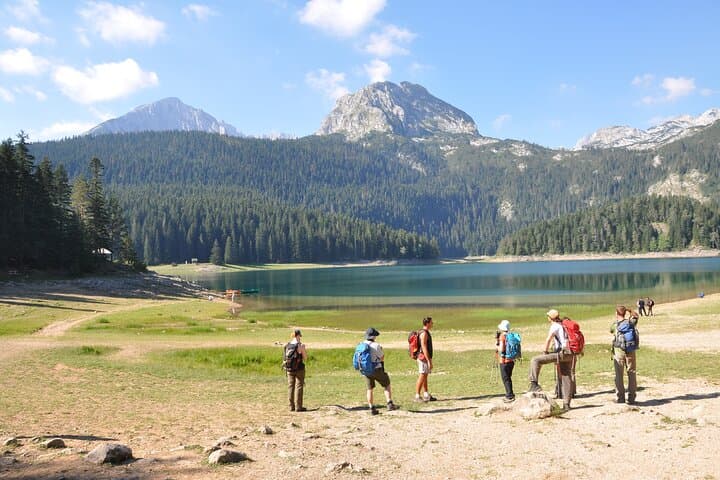
By dawn the pines on Durmitor exhale mist into a bowl of air above Black Lake; you strap on boots while the guide loads sandwiches into a pack and the first shafts of light unroll over serrated limestone. The week begins high—Žabljak sits at roughly 1,450 m—and moves southward, trading alpine glaciers and spruce-dark forests for stone ramparts and the sudden blue of the Adriatic.
By dawn the pines on Durmitor exhale mist into a bowl of air above Black Lake; you strap on boots while the guide loads sandwiches into a pack and the first shafts of light unroll over serrated limestone. The week begins high—Žabljak sits at roughly 1,450 m—and moves southward, trading alpine glaciers and spruce-dark forests for stone ramparts and the sudden blue of the Adriatic.
Durmitor is older than most tourists’ expectations. Carved by ice and river, its peaks and plateaus are compacted limestone and black moraine; the Tara River has gouged Europe’s deepest canyon below, a raw scar revealing million-year geologic time. Cultural layers are as obvious: Orthodox devotion gathers at Ostrog Monastery clinging to vertical walls, while Kotor’s medieval ramparts and Venetian facades tell a thousand years of coastal trade and fortification.
On the ground the trip balances short, repetitive loops—Black Lake’s 3.5 km figure-eight shoreline and quiet ponds like Zminje and Barno—with full-day climbs. Day three ascends to the vicinity of Međed (Bear Peak) at 2,160 m, a net gain of roughly 700–750 m from Žabljak, before circling around exposed ridgelines to a high pass. Coastal days trade altitude for heat: Vrmac and Paštrovačka Gora offer ridgewalking with sweepingly close views of the Bay of Kotor and Budva Riviera; expect rocky steps, dry shrubs, and old Austro-Hungarian stone roads.
This is a guided route—trail finding is straightforward—but it’s not low-effort. Some sections above the tree line are exposed and waterless; guides schedule picnic lunches and transfers to sit-proof rest points like Perast and the man-made island, Our Lady of the Rocks. Evenings are generous: four nights in Perast by the water let you swap hardscrabble peaks for fresh seafood and the slow, tactile architecture of Kotor’s old town.
Practical edge: prepare for variety. Hike-ready boots with ankle support and 700–900 ml of carried water for mountain days will matter more than style. Pack sun protection for coastal days and a waterproof layer for sudden Durmitor squalls. If you’re prone to altitude or long descents, bring trekking poles; the itinerary includes steep stone staircases and loose scree. Transfers shorten long approach roads but plan for two-hour drives between mountains and coast.
For photographers, dawn at Black Lake and late afternoon on Kotor’s ramparts reward patience. For planners, the trip runs eight days with a moderate-to-challenging effort level—suitable for hikers who can manage sustained ascents of 600–800 m and multiple 4–7 hour walking days. Follow Leave No Trace on fragile alpine meadows and be ready to trade peak solitude for the cultural intensity of coastal pilgrimage and fortified towns.