THE ADVENTURE COLLECTIVE® · Independent discovery and booking for outdoor travel

Lift off from the Montego Bay marina and hover above turquoise reefs and white sand—parasailing here is a brief but revealing way to see Jamaica’s coast. This guide covers what to expect, safety notes, and practical tips to make the most of a 10–15 minute flight.
Lift off from the Montego Bay marina and hover above turquoise reefs and white sand—parasailing here is a brief but revealing way to see Jamaica’s coast. This guide covers what to expect, safety notes, and practical tips to make the most of a 10–15 minute flight.
You step off the marina ladder into a salt-sliced wind that seems to dare you skyward. The boat revs, the harness is clipped, and in minutes the shoreline recedes: white sand, low coral ridges, and the town’s low-rise roofs shrink beneath a blue that feels almost liquid. The ride is short—ten to fifteen minutes of slow, steady lift—but the perspective is immediate: the reef patterns read like ridged maps and currents push the boat’s wake like a marked line across the sea.
Verified experiences and guided adventures in the surrounding area.
Operated by Express Travel Jamaica · Montego Bay, St. James
You step off the marina ladder into a salt-sliced wind that seems to dare you skyward. The boat revs, the harness is clipped, and in minutes the shoreline recedes: white sand, low coral ridges, and the town’s low-rise roofs shrink beneath a blue that feels almost liquid. The ride is short—ten to fifteen minutes of slow, steady lift—but the perspective is immediate: the reef patterns read like ridged maps and currents push the boat’s wake like a marked line across the sea.
Montego Bay developed as a colonial port and fishing hub; the coastline you’ll fly above sits on a limestone shelf rimmed by coral growth shaped over millennia. Local culture is woven into the waterfront—fishermen, beach vendors, and the rhythms of reggae and market talk are as much part of the scene as the ocean itself.
Practically: expect a full briefing before boarding, lifejackets and harnesses supplied, and a 280 lb weight limit. Flights commonly reach roughly 600 feet; wind and boat speed control ascent and descent. Parasailing here is accessible for most people but requires comfortable boat boarding and basic mobility.
Timing matters—early morning or late afternoon yields calmer seas and softer light. Bring reef-safe sunscreen, a dry bag, and a light layer for the return ride. If you’re prone to motion sickness, take precautions before you go.
Combining parasailing with a snorkel or tubing session is common; operators often offer multi-activity packages. Respect marine rules, listen to crew instructions, and the brief flight becomes a compact, high-reward window into Jamaica’s coastal geology and seafaring life.
moderate.
15 minutes (flight) — allow 1–2 hours total including transfers and briefing.
Suitable for most fitness levels; requires ability to board a boat and follow safety instructions
Individual flights usually last 10–15 minutes in the air; total experience including briefing and boat time is 1–2 hours.
Yes—operators provide harnesses, lifejackets and crew briefings; participants must be able to board a boat and follow directions.
Children must be accompanied by an adult and most operations set a maximum single-person weight around 280 lbs; check with the operator when booking.
Operators may delay or cancel for high winds or storms; cancel at least 24 hours in many cases for a refund—confirm the provider’s policy.
Montego Bay grew as a colonial shipping and sugar port; the shoreline mixes fishing traditions with tourism services that evolved in the 20th century.
Much of the nearshore reef falls inside protected marine zones—use reef-safe products, avoid touching coral, and follow crew directions to minimize impact.
Express Travel Jamaica operates guided outdoor trips and adventures with an emphasis on safety, stewardship, and memorable experiences.
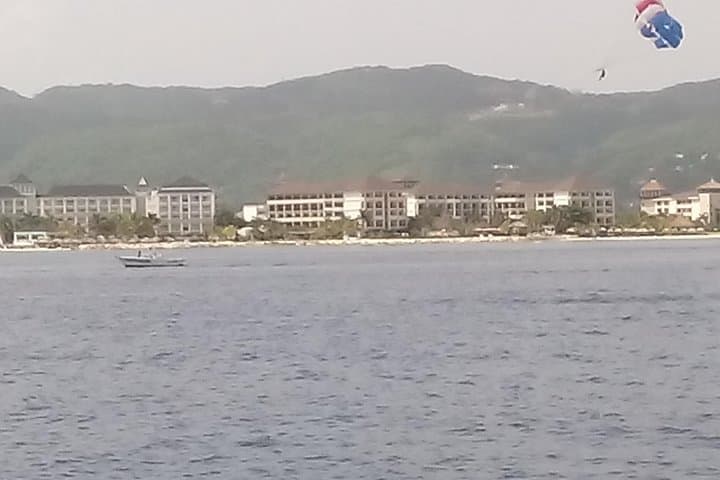
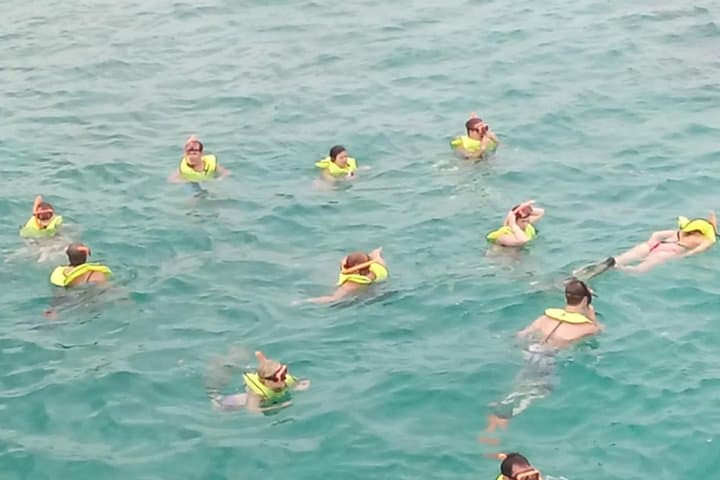
You step off the marina ladder into a salt-sliced wind that seems to dare you skyward. The boat revs, the harness is clipped, and in minutes the shoreline recedes: white sand, low coral ridges, and the town’s low-rise roofs shrink beneath a blue that feels almost liquid. The ride is short—ten to fifteen minutes of slow, steady lift—but the perspective is immediate: the reef patterns read like ridged maps and currents push the boat’s wake like a marked line across the sea.
You step off the marina ladder into a salt-sliced wind that seems to dare you skyward. The boat revs, the harness is clipped, and in minutes the shoreline recedes: white sand, low coral ridges, and the town’s low-rise roofs shrink beneath a blue that feels almost liquid. The ride is short—ten to fifteen minutes of slow, steady lift—but the perspective is immediate: the reef patterns read like ridged maps and currents push the boat’s wake like a marked line across the sea.
Montego Bay developed as a colonial port and fishing hub; the coastline you’ll fly above sits on a limestone shelf rimmed by coral growth shaped over millennia. Local culture is woven into the waterfront—fishermen, beach vendors, and the rhythms of reggae and market talk are as much part of the scene as the ocean itself.
Practically: expect a full briefing before boarding, lifejackets and harnesses supplied, and a 280 lb weight limit. Flights commonly reach roughly 600 feet; wind and boat speed control ascent and descent. Parasailing here is accessible for most people but requires comfortable boat boarding and basic mobility.
Timing matters—early morning or late afternoon yields calmer seas and softer light. Bring reef-safe sunscreen, a dry bag, and a light layer for the return ride. If you’re prone to motion sickness, take precautions before you go.
Combining parasailing with a snorkel or tubing session is common; operators often offer multi-activity packages. Respect marine rules, listen to crew instructions, and the brief flight becomes a compact, high-reward window into Jamaica’s coastal geology and seafaring life.