THE ADVENTURE COLLECTIVE® · Independent discovery and booking for outdoor travel

Ride along Montego Bay’s sandy shore and swim with well-trained horses in warm Caribbean waters. This 45-minute guided experience blends easy horseback riding, coastal scenery, and photo-friendly moments for riders of most fitness levels.
Ride along Montego Bay’s sandy shore and swim with well-trained horses in warm Caribbean waters. This 45-minute guided experience blends easy horseback riding, coastal scenery, and photo-friendly moments for riders of most fitness levels.
The sea calls first: a warm Atlantic swell, the crunch of sand under horses’ hooves, and a guide’s steady voice as riders ease into a gentle canter along Montego Bay’s shoreline. The horses move with practiced calm, water daring them forward until the herd slips into the surf and riders feel the unexpected buoyancy of a horse swimming in warm blue water.
Verified experiences and guided adventures in the surrounding area.
Operated by Pryceless Jamaican Tours LLC. · Montego Bay, St. James
The sea calls first: a warm Atlantic swell, the crunch of sand under horses’ hooves, and a guide’s steady voice as riders ease into a gentle canter along Montego Bay’s shoreline. The horses move with practiced calm, water daring them forward until the herd slips into the surf and riders feel the unexpected buoyancy of a horse swimming in warm blue water.
This stretch of Jamaica grew from sugar-era plantations into a tourism corridor; the coastline itself is limestone and shale carved by currents that shape shallow sandbars and pockets of seagrass. Local riding operations grew alongside beach hotels, blending equestrian tradition with coastal recreation—guides often share brief histories of nearby sites and point out markers of the island’s colonial past and Afro-Jamaican culture.
Expect a 30–60 minute guided loop that emphasizes safety and photos: trained horses, step-on mounting, and shallow water entry points chosen to protect fragile seagrass beds. The experience is sensory—salt spray, the rasp of tack, and the horse’s breath—but practical details matter: arrive with swimwear under clothing, shoes that can get wet, and a waterproof camera or phone case for shoreline shots.
Timing is important—early morning light reduces heat and wind, while mid-day brings stronger sun. Guides will brief guests on mounting, signals, and how to handle the horse in surf; follow their directions to keep both rider and animal comfortable. This is a low-impact way to connect with coastal Jamaica: active, accessible, and vivid without requiring advanced riding skills.
easy.
45 minutes.
Suitable for most adults and older children in general good health; no advanced riding fitness required
Yes—this experience is designed for riders of most skill levels; guides place guests on well-trained horses and provide basic handling instruction.
Operators use calm entry points and trained horses; riders follow guides’ directions and typically hold a lead or stay in shallow water for safety.
Operators may offer private transport options—confirm during booking.
Not recommended for pregnant travelers or guests with spinal/serious heart conditions; infants must sit on a lap and operators require disclosure of any mobility limits.
Montego Bay evolved from plantation economy to a 20th-century tourism hub; beach horse rides grew as part of coastal hospitality tied to local equestrian traditions.
Operators usually avoid seagrass beds and shallow reefs—follow guides to minimize disturbance, and avoid using sunscreens with oxybenzone to protect marine life.
Pryceless Jamaican Tours LLC. operates guided outdoor trips and adventures with an emphasis on safety, stewardship, and memorable experiences.
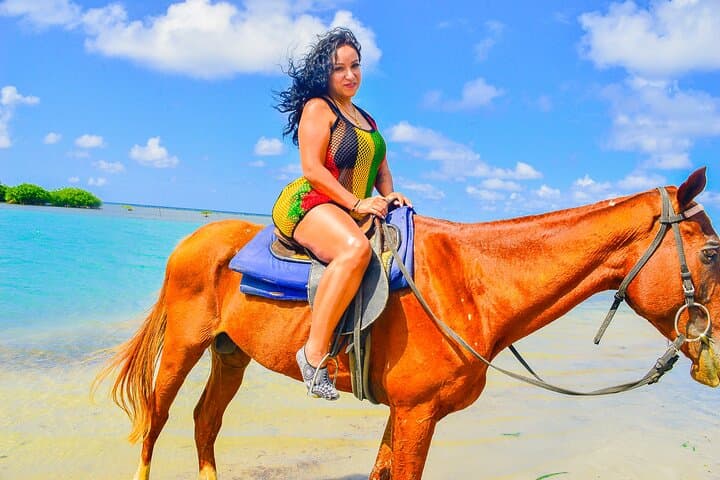
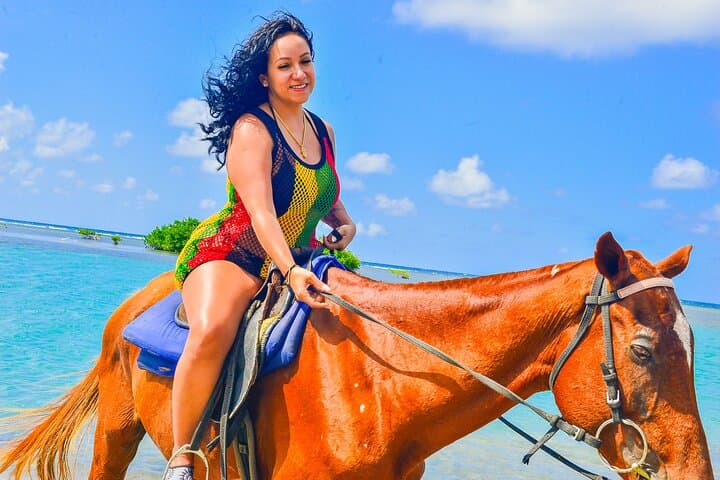
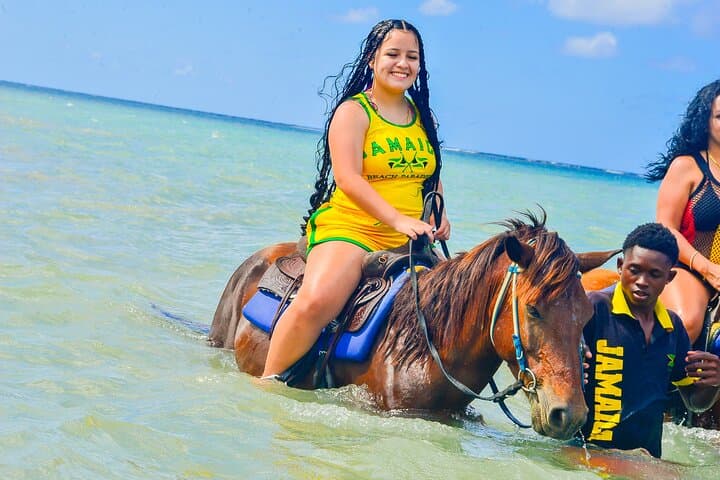
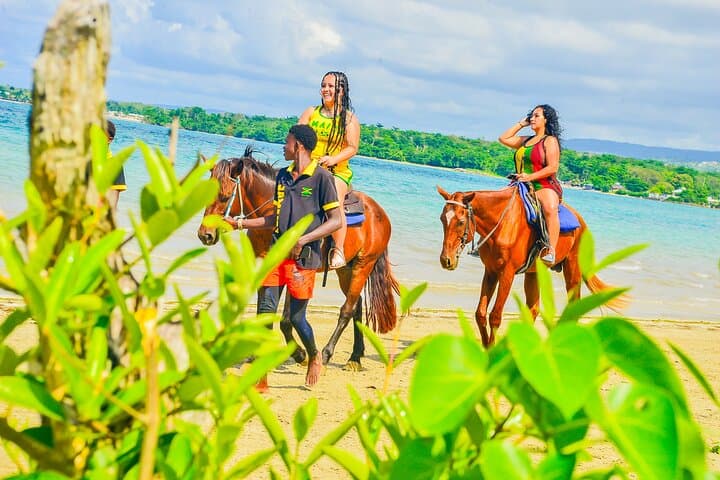
The sea calls first: a warm Atlantic swell, the crunch of sand under horses’ hooves, and a guide’s steady voice as riders ease into a gentle canter along Montego Bay’s shoreline. The horses move with practiced calm, water daring them forward until the herd slips into the surf and riders feel the unexpected buoyancy of a horse swimming in warm blue water.
The sea calls first: a warm Atlantic swell, the crunch of sand under horses’ hooves, and a guide’s steady voice as riders ease into a gentle canter along Montego Bay’s shoreline. The horses move with practiced calm, water daring them forward until the herd slips into the surf and riders feel the unexpected buoyancy of a horse swimming in warm blue water.
This stretch of Jamaica grew from sugar-era plantations into a tourism corridor; the coastline itself is limestone and shale carved by currents that shape shallow sandbars and pockets of seagrass. Local riding operations grew alongside beach hotels, blending equestrian tradition with coastal recreation—guides often share brief histories of nearby sites and point out markers of the island’s colonial past and Afro-Jamaican culture.
Expect a 30–60 minute guided loop that emphasizes safety and photos: trained horses, step-on mounting, and shallow water entry points chosen to protect fragile seagrass beds. The experience is sensory—salt spray, the rasp of tack, and the horse’s breath—but practical details matter: arrive with swimwear under clothing, shoes that can get wet, and a waterproof camera or phone case for shoreline shots.
Timing is important—early morning light reduces heat and wind, while mid-day brings stronger sun. Guides will brief guests on mounting, signals, and how to handle the horse in surf; follow their directions to keep both rider and animal comfortable. This is a low-impact way to connect with coastal Jamaica: active, accessible, and vivid without requiring advanced riding skills.