THE ADVENTURE COLLECTIVE® · Independent discovery and booking for outdoor travel

Get up close with scarlet macaws, parrots, and other tropical birds in a three-hour Montego Bay farm tour that blends hands-on feeding and photo opportunities with conservation insights. Flat paths and guided handling make it family-friendly; bottled water and private transport options are included.
Get up close with scarlet macaws, parrots, and other tropical birds in a three-hour Montego Bay farm tour that blends hands-on feeding and photo opportunities with conservation insights. Flat paths and guided handling make it family-friendly; bottled water and private transport options are included.
You step through a gate and the air changes—salt-breeze from the Caribbean mingled with the sharp, citrus calls of macaws. Feathered voices thread through open aviaries as staff lay out handfuls of seed; a scarlet parrot tilts its head and accepts the treat from your palm. The farm sits on gently rolling land just inland from Montego Bay’s limestone coast, where coral-built cliffs meet sugarcane flats and the Caribbean horizon.
Verified experiences and guided adventures in the surrounding area.
Operated by Thomas Explora Tours · Montego Bay, Saint James
You step through a gate and the air changes—salt-breeze from the Caribbean mingled with the sharp, citrus calls of macaws. Feathered voices thread through open aviaries as staff lay out handfuls of seed; a scarlet parrot tilts its head and accepts the treat from your palm. The farm sits on gently rolling land just inland from Montego Bay’s limestone coast, where coral-built cliffs meet sugarcane flats and the Caribbean horizon.
Bird-keeping and aviculture have a long history in the Caribbean, evolving from private collections to sanctuaries focused on education and captive-breeding. Geologically, Montego Bay’s low coastal plain is underlain by reef-derived limestone; the farm’s flat, well-drained paths reflect that terrain and make the experience accessible to most visitors. Local guides often weave cultural notes into the tour—how parrots and hummingbirds appear in folk tales and how eco-tourism supports local livelihoods.
Practical guidance: tours last about three hours with roughly an hour inside the aviary for feeding and photo ops. Paths are flat gravel or hard-packed dirt; expect light walking and shaded rest areas. The tour includes bottled water, private air‑conditioned transfers on some bookings, and a short souvenir-shop stop. Not recommended for pregnant guests or those with serious heart conditions; children are welcome but must be supervised. Arrive early for cooler light and calmer birds, keep movements slow when holding birds, and use an unintrusive camera flash or none at all.
This is a hands-on wildlife encounter designed for photographers, families, and anyone interested in tropical bird care and conservation.
easy.
3 hours.
Suitable for most fitness levels; involves light standing and walking on flat surfaces
Yes — the guided tour includes supervised opportunities to feed and hold select species; staff will instruct you on safe handling.
Children are welcome but must be supervised; staff determine which species are appropriate for young visitors.
Full refund available if you cancel at least 24 hours before the scheduled departure time.
Photography is encouraged, but flash should be avoided or used sparingly to prevent stressing the birds.
Aviculture in Jamaica moved from private collecting to public-facing farms and sanctuaries in recent decades, supporting education and breeding programs.
Many small farms participate in captive-breeding and public education; visitors should follow staff guidance to minimize stress on birds and avoid feeding outside designated times.
Thomas Explora Tours operates guided outdoor trips and adventures with an emphasis on safety, stewardship, and memorable experiences.
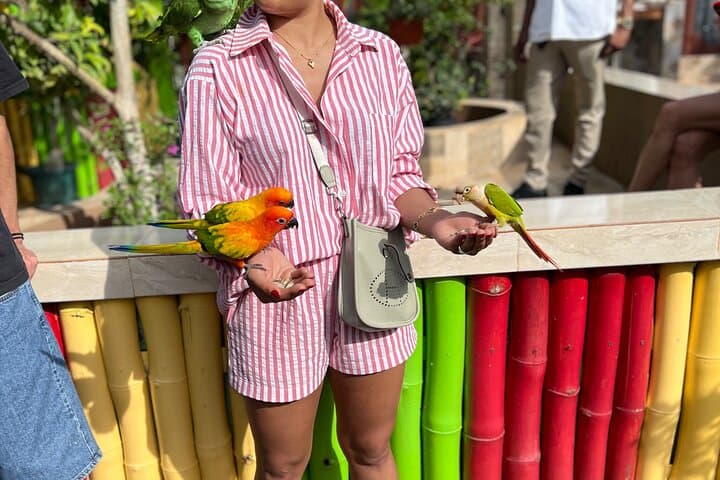
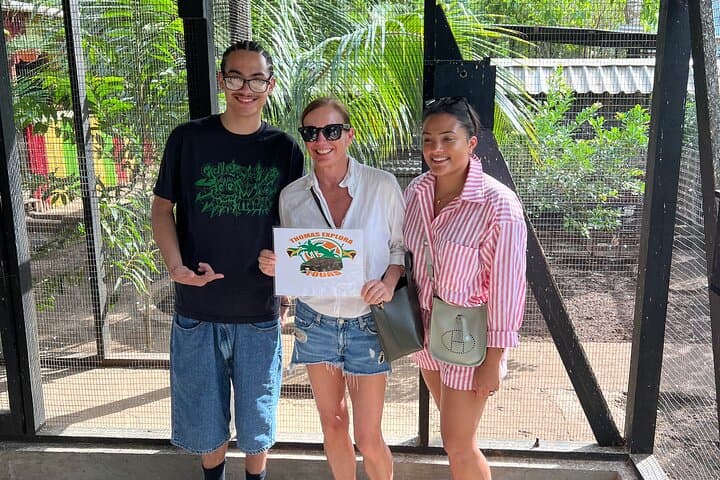
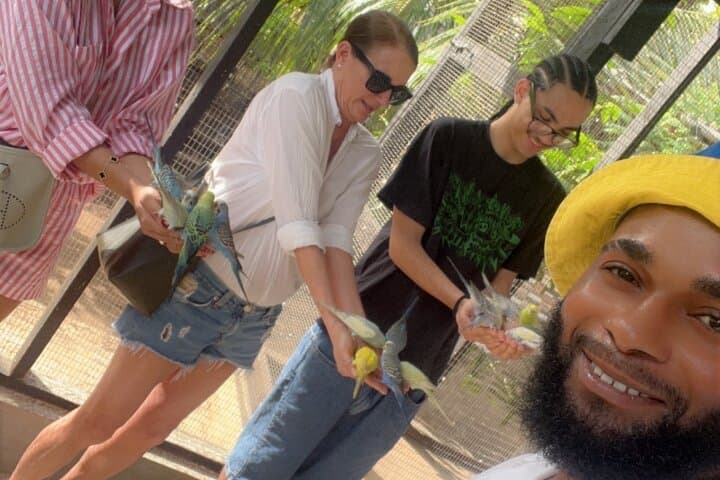
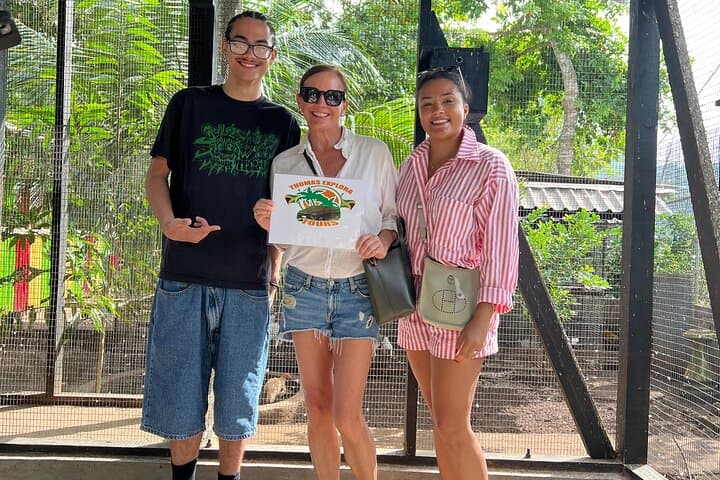
You step through a gate and the air changes—salt-breeze from the Caribbean mingled with the sharp, citrus calls of macaws. Feathered voices thread through open aviaries as staff lay out handfuls of seed; a scarlet parrot tilts its head and accepts the treat from your palm. The farm sits on gently rolling land just inland from Montego Bay’s limestone coast, where coral-built cliffs meet sugarcane flats and the Caribbean horizon.
You step through a gate and the air changes—salt-breeze from the Caribbean mingled with the sharp, citrus calls of macaws. Feathered voices thread through open aviaries as staff lay out handfuls of seed; a scarlet parrot tilts its head and accepts the treat from your palm. The farm sits on gently rolling land just inland from Montego Bay’s limestone coast, where coral-built cliffs meet sugarcane flats and the Caribbean horizon.
Bird-keeping and aviculture have a long history in the Caribbean, evolving from private collections to sanctuaries focused on education and captive-breeding. Geologically, Montego Bay’s low coastal plain is underlain by reef-derived limestone; the farm’s flat, well-drained paths reflect that terrain and make the experience accessible to most visitors. Local guides often weave cultural notes into the tour—how parrots and hummingbirds appear in folk tales and how eco-tourism supports local livelihoods.
Practical guidance: tours last about three hours with roughly an hour inside the aviary for feeding and photo ops. Paths are flat gravel or hard-packed dirt; expect light walking and shaded rest areas. The tour includes bottled water, private air‑conditioned transfers on some bookings, and a short souvenir-shop stop. Not recommended for pregnant guests or those with serious heart conditions; children are welcome but must be supervised. Arrive early for cooler light and calmer birds, keep movements slow when holding birds, and use an unintrusive camera flash or none at all.
This is a hands-on wildlife encounter designed for photographers, families, and anyone interested in tropical bird care and conservation.