THE ADVENTURE COLLECTIVE® · Independent discovery and booking for outdoor travel

Walk the terraces of Monte Albán with a certified guide and stand where Zapotec leaders once surveyed the Oaxaca Valley. This half-day tour delivers archaeological insight, sweeping viewpoints, and practical guidance for first-time visitors.
Walk the terraces of Monte Albán with a certified guide and stand where Zapotec leaders once surveyed the Oaxaca Valley. This half-day tour delivers archaeological insight, sweeping viewpoints, and practical guidance for first-time visitors.
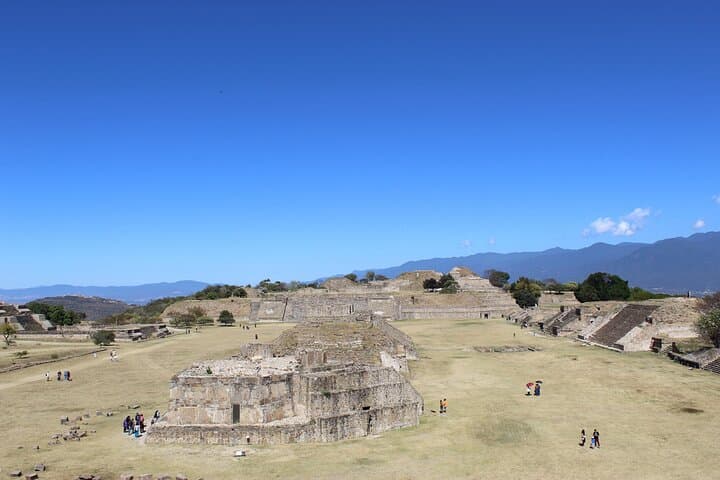
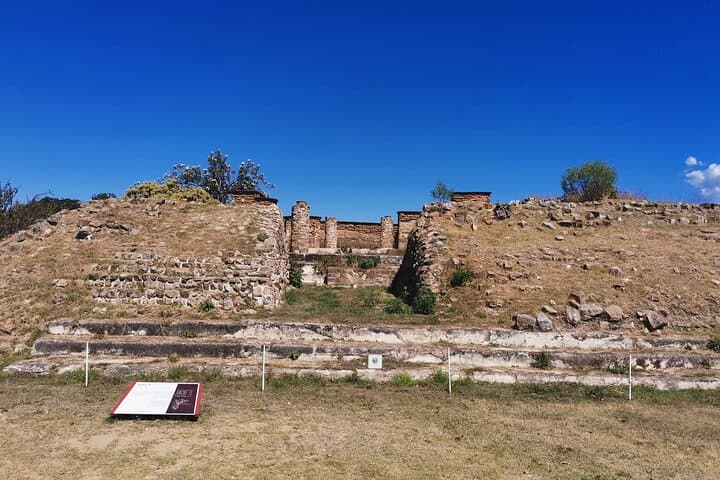
A cool mountain wind cuts across the high plaza as your guide points toward a row of low, weathered platforms. You stand on a flattened peak 6 km west of Oaxaca de Juárez, where stone stairways and broad terraces open onto sweeping views of the Oaxaca Valley — fog-filled ravines in the morning, golden fields by noon. Monte Albán demands a slow, curious pace: the carved stones and stepped pyramids reveal layers of human ambition and astronomical observation that still shape the skyline.
Verified experiences and guided adventures in the surrounding area.
Operated by Continental Istmo · Oaxaca de Juárez, Oaxaca
A cool mountain wind cuts across the high plaza as your guide points toward a row of low, weathered platforms. You stand on a flattened peak 6 km west of Oaxaca de Juárez, where stone stairways and broad terraces open onto sweeping views of the Oaxaca Valley — fog-filled ravines in the morning, golden fields by noon. Monte Albán demands a slow, curious pace: the carved stones and stepped pyramids reveal layers of human ambition and astronomical observation that still shape the skyline.
Founded by the Zapotecs around 500 BCE and peaking between 200–700 CE, Monte Albán was a political and ritual center built atop a leveled hill. Its plazas, ball courts, and carved stelae reflect regional alliances and elite display; the site sits on uplifted limestone with visible terraces cut into the hill. Local culture remains present in nearby Oaxaca City — artisans, mezcaleros, and markets that continue centuries-old traditions.
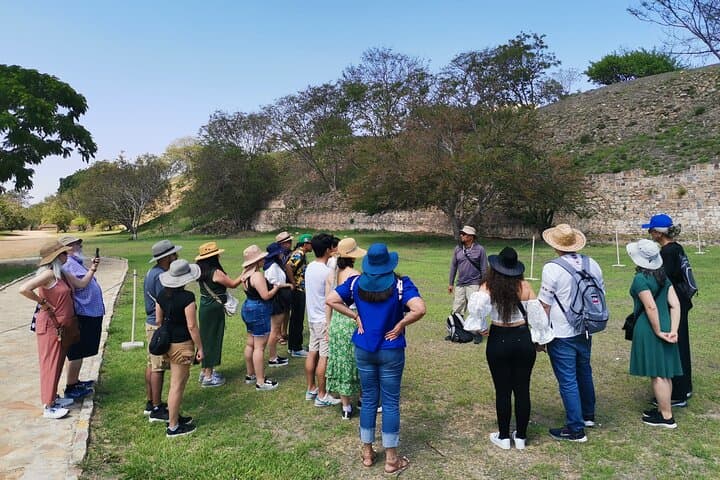
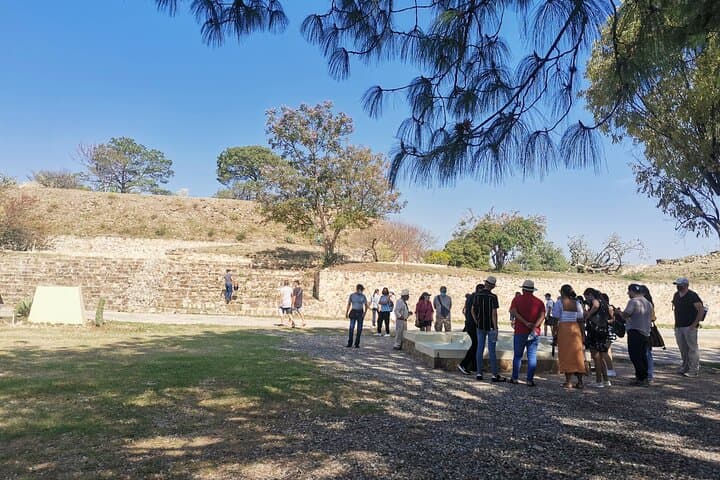
On a guided half-day visit expect roughly 2 hours touring the core archaeological zones plus transit time; paths are uneven and include stone steps and packed dirt. Photography is excellent from the eastern viewpoint; morning light softens the valley while afternoons can be hot and windy. Bring water, sun protection, and a respectful attitude toward fragile monuments. Guides will explain the chronology, iconography, and how the site's builders used the landscape. Plan for 3–4 hours total from central Oaxaca, and consider pairing the visit with the nearby ethnobotanical garden or a craft workshop back in town.
easy.
3–4 hours.
Suitable for most fitness levels; requires ability to walk on uneven stone steps and short inclines.
The guided portion at Monte Albán is about 2 hours; total door-to-door time from central Oaxaca is typically 3–4 hours depending on pickup and traffic.
The site has uneven stone surfaces and steps; some viewpoints may be difficult — contact the operator in advance to discuss accommodations or alternative routing.
Tours often include guide services but not archaeological admission; book a guided tour early during peak season and confirm whether entrance fees are covered.
Guides commonly offer Spanish and English; larger groups or peak days may have bilingual guides — request language preference when booking.
Monte Albán served as the Zapotec capital for centuries and features plazas, tombs, and carved stelae that reflect its role as a regional political and ceremonial center from around 500 BCE to 800 CE.
Visitor impact is managed through marked paths and local site regulations; stay on trails, avoid touching sculptures, and support certified guides to reduce erosion and preserve fragile stonework.
Continental Istmo operates guided outdoor trips and adventures with an emphasis on safety, stewardship, and memorable experiences.
A cool mountain wind cuts across the high plaza as your guide points toward a row of low, weathered platforms. You stand on a flattened peak 6 km west of Oaxaca de Juárez, where stone stairways and broad terraces open onto sweeping views of the Oaxaca Valley — fog-filled ravines in the morning, golden fields by noon. Monte Albán demands a slow, curious pace: the carved stones and stepped pyramids reveal layers of human ambition and astronomical observation that still shape the skyline.
A cool mountain wind cuts across the high plaza as your guide points toward a row of low, weathered platforms. You stand on a flattened peak 6 km west of Oaxaca de Juárez, where stone stairways and broad terraces open onto sweeping views of the Oaxaca Valley — fog-filled ravines in the morning, golden fields by noon. Monte Albán demands a slow, curious pace: the carved stones and stepped pyramids reveal layers of human ambition and astronomical observation that still shape the skyline.
Founded by the Zapotecs around 500 BCE and peaking between 200–700 CE, Monte Albán was a political and ritual center built atop a leveled hill. Its plazas, ball courts, and carved stelae reflect regional alliances and elite display; the site sits on uplifted limestone with visible terraces cut into the hill. Local culture remains present in nearby Oaxaca City — artisans, mezcaleros, and markets that continue centuries-old traditions.
On a guided half-day visit expect roughly 2 hours touring the core archaeological zones plus transit time; paths are uneven and include stone steps and packed dirt. Photography is excellent from the eastern viewpoint; morning light softens the valley while afternoons can be hot and windy. Bring water, sun protection, and a respectful attitude toward fragile monuments. Guides will explain the chronology, iconography, and how the site's builders used the landscape. Plan for 3–4 hours total from central Oaxaca, and consider pairing the visit with the nearby ethnobotanical garden or a craft workshop back in town.