THE ADVENTURE COLLECTIVE® · Independent discovery and booking for outdoor travel

Visit the soaring Abbaye du Mont‑Saint‑Michel and the dramatic tidal bay on a guided tour with transfers. This practical guide explains what to expect—terrain, timing, and essential tips for a smooth visit.
Visit the soaring Abbaye du Mont‑Saint‑Michel and the dramatic tidal bay on a guided tour with transfers. This practical guide explains what to expect—terrain, timing, and essential tips for a smooth visit.
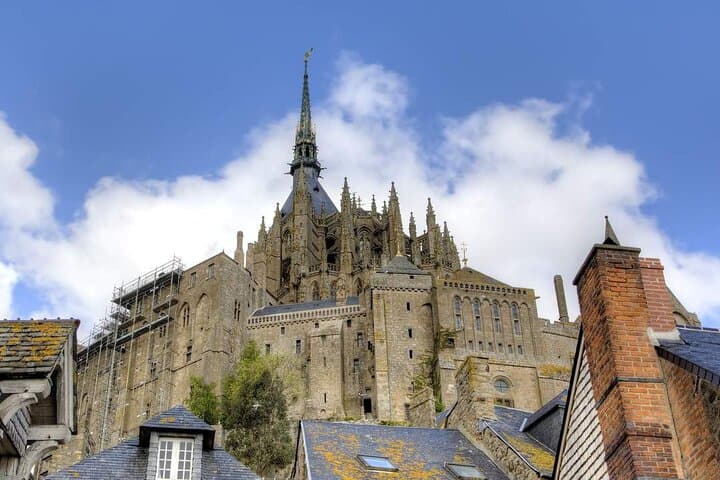
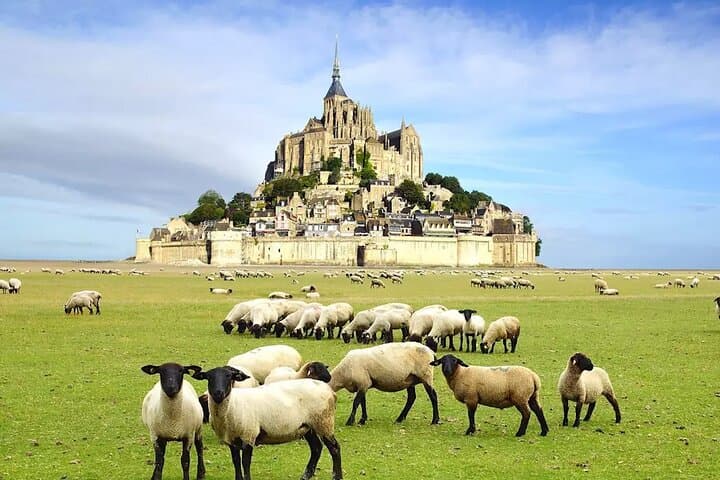
Grey salt air cuts across the bay as the abbey of Mont Saint-Michel rises like a stone crown above braided mudflats. Visitors arrive by bus or shuttle and move from flat coastal marshes into a narrow medieval village where cobbled lanes pull you uphill toward the abbey terraces.
Verified experiences and guided adventures in the surrounding area.
Operated by TREVOPEDIA · Mont-Saint-Michel, Normandy
Grey salt air cuts across the bay as the abbey of Mont Saint-Michel rises like a stone crown above braided mudflats. Visitors arrive by bus or shuttle and move from flat coastal marshes into a narrow medieval village where cobbled lanes pull you uphill toward the abbey terraces.
The site has been a place of pilgrimage and fortress for more than a millennium; its Gothic abbey was built on a granite outcrop that resisted the softer sediments of the bay. Geology and tides shaped the experience—the island sits roughly 80–90 m above the surrounding flats and was once isolated daily by one of Europe’s fastest tides. Local culture still orients around pilgrimage routes, artisanal shops, and seafood harvested from the bay.
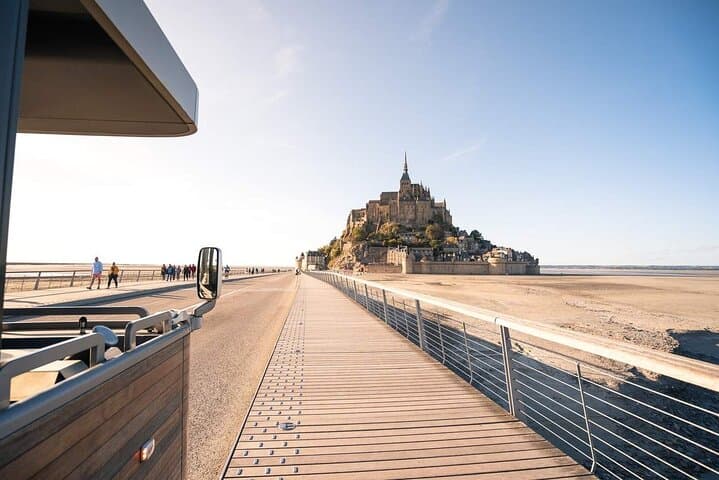
Expect steep, uneven stone steps within the abbey, tight galleries, and broad viewpoints over the tidal expanse. The walk from the mainland approach across the causeway and bridge leads you from flat salt marsh into the vertical sequence of ramparts and terraces; the bridge spans the tidal channel and protects natural flow of the sands below.
Practically: tours typically include round-trip transfer, 3–4 hours on-site for independent exploration, and guided access to the abbey’s main spaces. Time your visit around tide tables and early-morning or late-afternoon light for photography. Wear sturdy, closed shoes for cobbles and staircases, carry water and a compact rain layer, and allow flexibility—weather and tides dictate both safety and scenery. Mont Saint-Michel rewards patience: the bay insists on its own schedule, and the best views come to those who move with it.
easy.
12–13 hours.
Suitable for most fitness levels; expect uphill walking on cobbles and multiple staircases inside the abbey
Yes—most tours include abbey admission; if visiting independently, buy tickets in advance to avoid queues.
Tours that include round-trip transfers from a nearby city usually last about 12–13 hours total, with around 3–4 hours free time on the island.
There are shuttle and accessible paths to the island approach; however, the abbey itself has staircases and narrow passages that limit full access.
Early morning or late afternoon provides softer light and smaller crowds; tide timing determines the most dramatic views of the island.
Mont Saint‑Michel developed from a 8th‑century sanctuary into a fortified abbey and medieval pilgrimage site, its architecture layered across centuries.
Tide management and the 2014 bridge project were designed to restore natural water flow and reduce sedimentation; visitors are asked to stay on marked paths to protect sensitive marshes.
TREVOPEDIA operates guided outdoor trips and adventures with an emphasis on safety, stewardship, and memorable experiences.

Grey salt air cuts across the bay as the abbey of Mont Saint-Michel rises like a stone crown above braided mudflats. Visitors arrive by bus or shuttle and move from flat coastal marshes into a narrow medieval village where cobbled lanes pull you uphill toward the abbey terraces.
Grey salt air cuts across the bay as the abbey of Mont Saint-Michel rises like a stone crown above braided mudflats. Visitors arrive by bus or shuttle and move from flat coastal marshes into a narrow medieval village where cobbled lanes pull you uphill toward the abbey terraces.
The site has been a place of pilgrimage and fortress for more than a millennium; its Gothic abbey was built on a granite outcrop that resisted the softer sediments of the bay. Geology and tides shaped the experience—the island sits roughly 80–90 m above the surrounding flats and was once isolated daily by one of Europe’s fastest tides. Local culture still orients around pilgrimage routes, artisanal shops, and seafood harvested from the bay.
Expect steep, uneven stone steps within the abbey, tight galleries, and broad viewpoints over the tidal expanse. The walk from the mainland approach across the causeway and bridge leads you from flat salt marsh into the vertical sequence of ramparts and terraces; the bridge spans the tidal channel and protects natural flow of the sands below.
Practically: tours typically include round-trip transfer, 3–4 hours on-site for independent exploration, and guided access to the abbey’s main spaces. Time your visit around tide tables and early-morning or late-afternoon light for photography. Wear sturdy, closed shoes for cobbles and staircases, carry water and a compact rain layer, and allow flexibility—weather and tides dictate both safety and scenery. Mont Saint-Michel rewards patience: the bay insists on its own schedule, and the best views come to those who move with it.