THE ADVENTURE COLLECTIVE® · Independent discovery and booking for outdoor travel

Clip in and cross summits: Mont-Catherine’s guided zipline tour sends you across four mega cables—including a 3,200-foot flight—over maple forests and rocky ridgelines. This 2.5-hour outing blends a short hike with high-speed canopy runs and clear safety protocols.
Clip in and cross summits: Mont-Catherine’s guided zipline tour sends you across four mega cables—including a 3,200-foot flight—over maple forests and rocky ridgelines. This 2.5-hour outing blends a short hike with high-speed canopy runs and clear safety protocols.
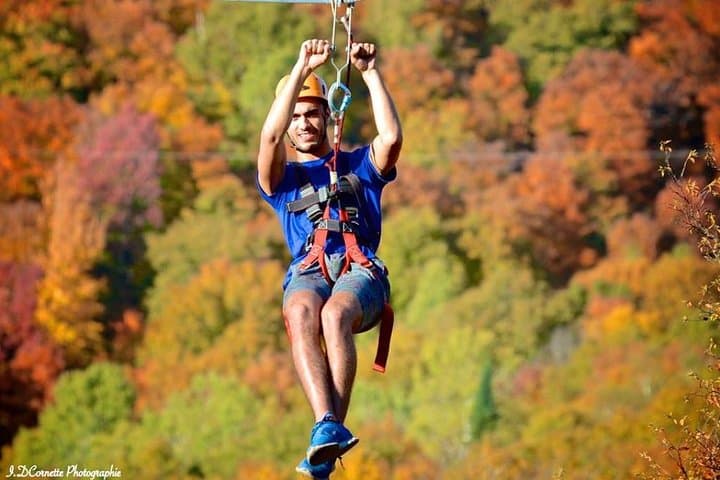
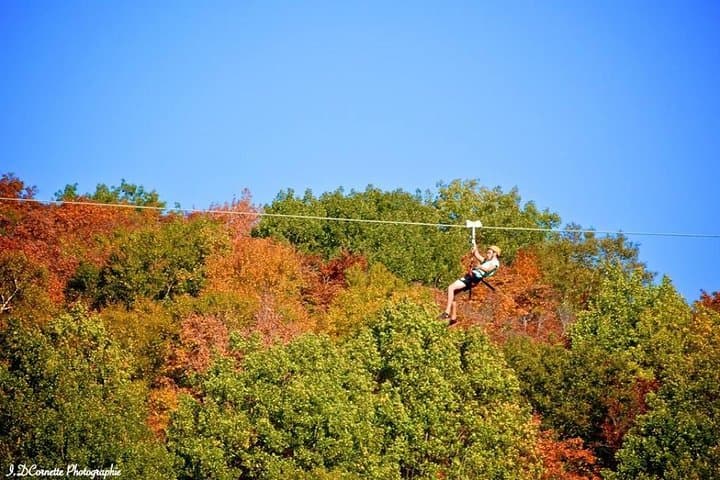
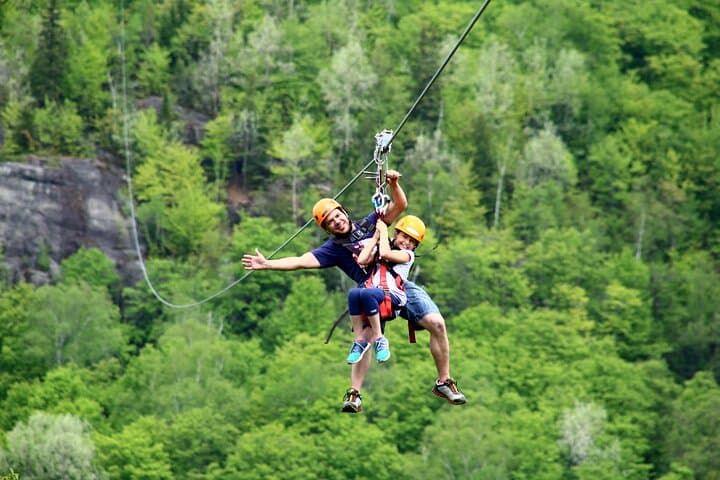
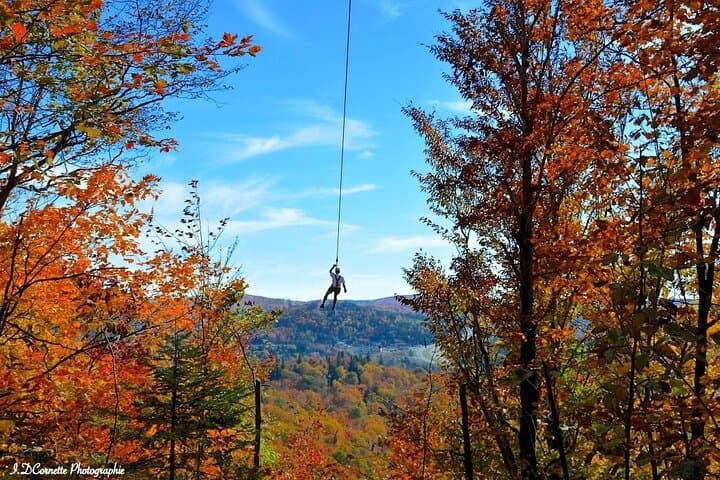
You climb away from the parking lot through a maple-and-spruce understory, the trail crunching underfoot as the Laurentian ridgeline opens above. The first summit lets you catch your breath—then you clip in. The wind takes you, low above the canopy, and the mountain that felt steady a moment ago seems to lean toward you. Four cables, each with a different speed and view, stitch a vivid line across the valley: 2,100 feet, 1,800 feet, a minute-long flight across 3,200 feet, and a final 2,100-foot sweep back to base. You are, simply, flying across the Laurentians.
Verified experiences and guided adventures in the surrounding area.
Operated by The Tremblant Activity Centre · Sainte-Agathe-des-Monts, Quebec
You climb away from the parking lot through a maple-and-spruce understory, the trail crunching underfoot as the Laurentian ridgeline opens above. The first summit lets you catch your breath—then you clip in. The wind takes you, low above the canopy, and the mountain that felt steady a moment ago seems to lean toward you. Four cables, each with a different speed and view, stitch a vivid line across the valley: 2,100 feet, 1,800 feet, a minute-long flight across 3,200 feet, and a final 2,100-foot sweep back to base. You are, simply, flying across the Laurentians.
Mont-Catherine sits in the cultural shadow of Sainte-Agathe-des-Monts and the larger Tremblant resort, but its geology is older and quieter—ancient Grenville-age bedrock folded into rounded peaks and shallow valleys. Winter-split rock faces and glacial polish give way in summer to a dense mixed forest, where beech and sugar maple sit alongside balsam fir. The area’s logging and outdoor tourism history is visible in old forest roads and dispersed cabins; today the ziplines repurpose those access lines into a modern overhead trail that makes the region’s verticality accessible to non-climbers.
Locals treat the ridgeline as a seasonal playground: snowshoeing and cross-country skis in winter, trail runs in spring, and bright fall foliage that turns the canopy into a moving map. Guides here are bilingual and safety-focused—harnesses and helmets are provided, and participants walk a modest 1.5 km and ascend to launch platforms built into natural ledges. Expect up to 380 feet of clearance above treetops on the longest run and speeds that will quiet talk and sharpen attention.
Practical info: the tour is 2.5 hours total, suitable for ages 5 and up, with a 50 lb (23 kg) minimum and a 308 lb (140 kg) maximum. Closed-toe athletic shoes and long pants are required; harnesses fit over clothing. The operation is about 1 hour 10 minutes north of Montreal and roughly 35 minutes from Mont-Tremblant resort. All sales are final and weather can force cancellations, so plan buffer time in your itinerary.
Tips for planning: arrive hydrated and with a small daypack (locked down at platforms), dress in layers—winds can be sharp above the canopy—and time your visit for early morning or late afternoon to avoid peak groups and get the best light. For first-time zip-liners the guide’s steady voice and redundancy in safety systems make this an excellent introduction to high-adrenaline aerial routes. When you step back onto solid ground at the end, the forest seems to exhale around you—quiet, but changed by the passage overhead.
moderate.
2–3 hours.
Moderate fitness — able to manage a short uphill hike (~1.5 km) and be comfortable with heights.
Minimum age is 5 years; minimum weight 50 lb (23 kg); maximum weight 308 lb (140 kg). Children must be accompanied by an adult.
The guided experience lasts about 2.5 hours and includes roughly 1.5 km of walking on forest trails and to launch platforms.
No prior experience is required—guides provide instruction, harnesses, and helmets; basic comfort with heights is helpful.
Wear long pants and closed-toe sport shoes; bring a water bottle, sun protection, and a light jacket. Loose items should be left in your vehicle.
No; the activity involves hiking to launch points and climbing stairs/ladders to platforms, so it is not wheelchair accessible.
All sales are final; tours may be canceled for bad weather and you would be offered an alternative or refund in that case.
The Laurentian ridges are part of some of North America’s oldest bedrock—Grenville-age formations—shaped by repeated glaciations and historical logging routes that later became recreation corridors.
Operators emphasize minimal impact practices—stay on marked trails, avoid feeding wildlife, and pack out trash; seasonal limits help reduce overcrowding and vegetation damage.
The Tremblant Activity Centre operates guided outdoor trips and adventures with an emphasis on safety, stewardship, and memorable experiences.
You climb away from the parking lot through a maple-and-spruce understory, the trail crunching underfoot as the Laurentian ridgeline opens above. The first summit lets you catch your breath—then you clip in. The wind takes you, low above the canopy, and the mountain that felt steady a moment ago seems to lean toward you. Four cables, each with a different speed and view, stitch a vivid line across the valley: 2,100 feet, 1,800 feet, a minute-long flight across 3,200 feet, and a final 2,100-foot sweep back to base. You are, simply, flying across the Laurentians.
You climb away from the parking lot through a maple-and-spruce understory, the trail crunching underfoot as the Laurentian ridgeline opens above. The first summit lets you catch your breath—then you clip in. The wind takes you, low above the canopy, and the mountain that felt steady a moment ago seems to lean toward you. Four cables, each with a different speed and view, stitch a vivid line across the valley: 2,100 feet, 1,800 feet, a minute-long flight across 3,200 feet, and a final 2,100-foot sweep back to base. You are, simply, flying across the Laurentians.
Mont-Catherine sits in the cultural shadow of Sainte-Agathe-des-Monts and the larger Tremblant resort, but its geology is older and quieter—ancient Grenville-age bedrock folded into rounded peaks and shallow valleys. Winter-split rock faces and glacial polish give way in summer to a dense mixed forest, where beech and sugar maple sit alongside balsam fir. The area’s logging and outdoor tourism history is visible in old forest roads and dispersed cabins; today the ziplines repurpose those access lines into a modern overhead trail that makes the region’s verticality accessible to non-climbers.
Locals treat the ridgeline as a seasonal playground: snowshoeing and cross-country skis in winter, trail runs in spring, and bright fall foliage that turns the canopy into a moving map. Guides here are bilingual and safety-focused—harnesses and helmets are provided, and participants walk a modest 1.5 km and ascend to launch platforms built into natural ledges. Expect up to 380 feet of clearance above treetops on the longest run and speeds that will quiet talk and sharpen attention.
Practical info: the tour is 2.5 hours total, suitable for ages 5 and up, with a 50 lb (23 kg) minimum and a 308 lb (140 kg) maximum. Closed-toe athletic shoes and long pants are required; harnesses fit over clothing. The operation is about 1 hour 10 minutes north of Montreal and roughly 35 minutes from Mont-Tremblant resort. All sales are final and weather can force cancellations, so plan buffer time in your itinerary.
Tips for planning: arrive hydrated and with a small daypack (locked down at platforms), dress in layers—winds can be sharp above the canopy—and time your visit for early morning or late afternoon to avoid peak groups and get the best light. For first-time zip-liners the guide’s steady voice and redundancy in safety systems make this an excellent introduction to high-adrenaline aerial routes. When you step back onto solid ground at the end, the forest seems to exhale around you—quiet, but changed by the passage overhead.