THE ADVENTURE COLLECTIVE® · Independent discovery and booking for outdoor travel

Experience two festival seasons in one trip: Khuvsgul’s ice festival on a crystal lake and the Gobi’s camel festival amid dunes and Flaming Cliffs. This 13-day route pairs monumental landscapes with hands-on cultural encounters and nomadic hospitality.
Experience two festival seasons in one trip: Khuvsgul’s ice festival on a crystal lake and the Gobi’s camel festival amid dunes and Flaming Cliffs. This 13-day route pairs monumental landscapes with hands-on cultural encounters and nomadic hospitality.
The wind on Khuvsgul’s frozen surface isn’t just cold—it pushes and teases as you walk, shaping the ice into ridges that glitter like hammered steel. Daylight here is a hard, clear line; the festival on the western shore gathers locals and nomads where ice carving, ankle-bone shooting and shaman rites meet bonfires under a wide, pale sky.
Verified experiences and guided adventures in the surrounding area.
Operated by Mongolian Vision Tours · Ulaanbaatar, Ulaanbaatar
The wind on Khuvsgul’s frozen surface isn’t just cold—it pushes and teases as you walk, shaping the ice into ridges that glitter like hammered steel. Daylight here is a hard, clear line; the festival on the western shore gathers locals and nomads where ice carving, ankle-bone shooting and shaman rites meet bonfires under a wide, pale sky.
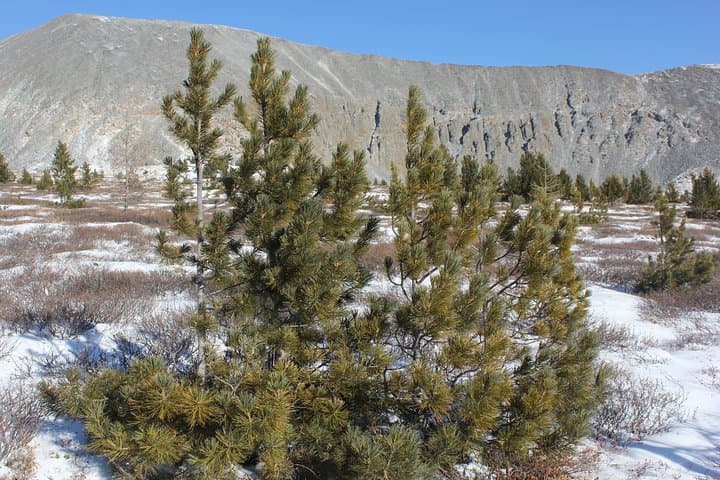
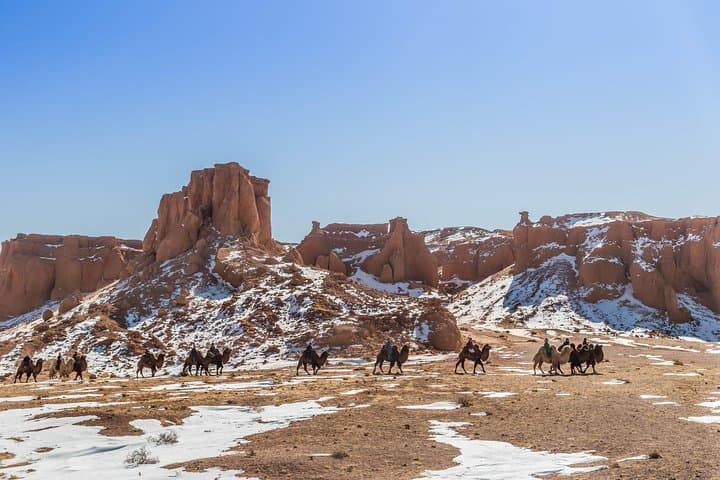
This 13-day loop moves from Ulaanbaatar north to Khuvsgul’s “Blue Pearl,” then swings south through the steppe and Gobi, threading through World Heritage-era Kharhorin, the Flaming Cliffs where dinosaur bones first came to light, and the roaring Khongor dunes. Geology alternates fast: glacial-fed freshwater lakes at 1,650 m, wind-sculpted sandstone and white stuparock, then granite tors and lunar salt flats—each landscape with a different sense of weather and scale.
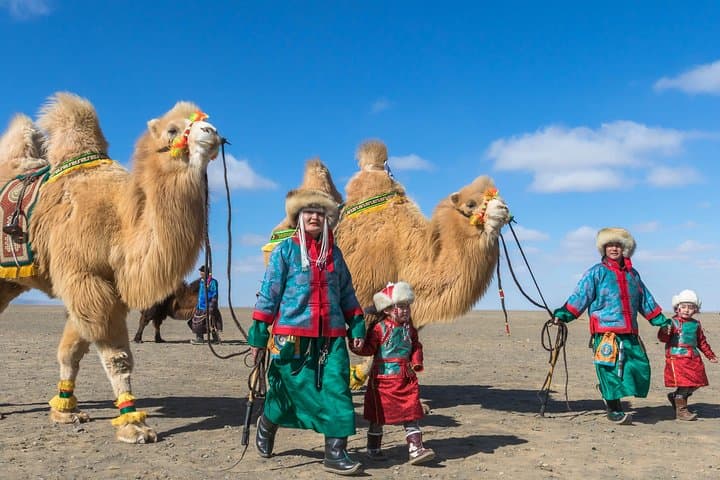
Culturally this is festival travel: families open gers, camel herders parade and schools stage art contests; Erdene Zuu and medieval museum rooms remind you Mongolian identity has both nomadic and Buddhist roots. Expect communal meals—simple, hearty—and nights in ger camps or family guesthouses.
Practical edge: pack insulated layers, windproof outerwear and footwear that grips frozen surfaces; temperatures vary from frigid at Khuvsgul to brisk, wind-dry cold in the Gobi. Travel is by road—long drives are part of the rhythm—so bring motion remedies, plenty of water and a small daypack for short hikes, camel rides or canyon walks. Respect local customs: ask before photographing people or rituals, and leave no trace of campfires or litter when camping near fragile dunes and ancient sites.
moderate.
13 days.
Suitable for travelers in good general health who can handle long vehicle transfers, short hikes, camel or horse rides and basic ger-camp overnighting.
The Ice Festival typically occurs the first weekend of March at Lake Khuvsgul; the Camel Festival usually runs around March 7–8 in Gobi villages—dates can shift year to year.
Moderate fitness is sufficient: activities include short hikes, camel or horse rides, and long overland drives; most accommodation nights are in ger camps with basic amenities.
Nights are a mix of ger camps, homestays with nomadic families and basic guesthouses in small towns—expect communal meals and simple facilities.
Bring a basic first-aid kit, necessary prescription meds, and altitude isn't extreme; road conditions can be rough so motion sickness meds and travel insurance are advisable.
Routes visit Kharhorin and Erdene Zuu—the 13th-century Mongol Empire’s heart—and Bayanzag (Flaming Cliffs), where 1920s expeditions uncovered dinosaur fossils.
These ecosystems are fragile: the Gobi’s saxual and dune habitats recover slowly from disturbance—minimize campfire impact, pack out waste and follow local guidelines for sacred sites.
Mongolian Vision Tours operates guided outdoor trips and adventures with an emphasis on safety, stewardship, and memorable experiences.
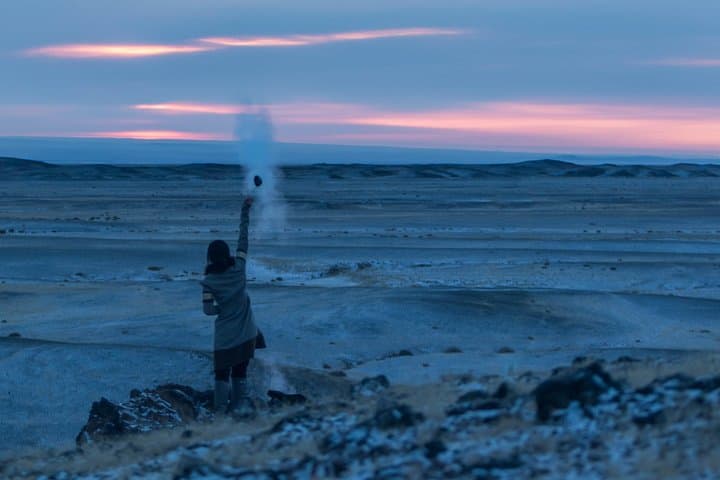
The wind on Khuvsgul’s frozen surface isn’t just cold—it pushes and teases as you walk, shaping the ice into ridges that glitter like hammered steel. Daylight here is a hard, clear line; the festival on the western shore gathers locals and nomads where ice carving, ankle-bone shooting and shaman rites meet bonfires under a wide, pale sky.
The wind on Khuvsgul’s frozen surface isn’t just cold—it pushes and teases as you walk, shaping the ice into ridges that glitter like hammered steel. Daylight here is a hard, clear line; the festival on the western shore gathers locals and nomads where ice carving, ankle-bone shooting and shaman rites meet bonfires under a wide, pale sky.
This 13-day loop moves from Ulaanbaatar north to Khuvsgul’s “Blue Pearl,” then swings south through the steppe and Gobi, threading through World Heritage-era Kharhorin, the Flaming Cliffs where dinosaur bones first came to light, and the roaring Khongor dunes. Geology alternates fast: glacial-fed freshwater lakes at 1,650 m, wind-sculpted sandstone and white stuparock, then granite tors and lunar salt flats—each landscape with a different sense of weather and scale.
Culturally this is festival travel: families open gers, camel herders parade and schools stage art contests; Erdene Zuu and medieval museum rooms remind you Mongolian identity has both nomadic and Buddhist roots. Expect communal meals—simple, hearty—and nights in ger camps or family guesthouses.
Practical edge: pack insulated layers, windproof outerwear and footwear that grips frozen surfaces; temperatures vary from frigid at Khuvsgul to brisk, wind-dry cold in the Gobi. Travel is by road—long drives are part of the rhythm—so bring motion remedies, plenty of water and a small daypack for short hikes, camel rides or canyon walks. Respect local customs: ask before photographing people or rituals, and leave no trace of campfires or litter when camping near fragile dunes and ancient sites.