THE ADVENTURE COLLECTIVE® · Independent discovery and booking for outdoor travel

Board a 54-foot catamaran from Ma'alaea for an intimate snorkel at Molokini Crater and nearby turtle reefs. This small-group eco-adventure focuses on clear-water snorkel time, responsible reef access, and close-but-respectful wildlife viewing.
Board a 54-foot catamaran from Ma'alaea for an intimate snorkel at Molokini Crater and nearby turtle reefs. This small-group eco-adventure focuses on clear-water snorkel time, responsible reef access, and close-but-respectful wildlife viewing.
The catamaran eases out of Ma'alaea Harbor before sunrise, the harbor lights sliding off the water like a trailing constellation. By the time Ocean Explorer clears the channel, the hull settles and the island of Molokini rises as a dark crescent on the horizon — a volcanic rim that dares you to come closer. Sea spray pats the deck, and on a good morning the ocean feels like another living thing, pushing and testing the boat as the crew radios a check on conditions.
Verified experiences and guided adventures in the surrounding area.
Operated by Pacific Whale Foundation · Ma'alaea, Hawaii
The catamaran eases out of Ma'alaea Harbor before sunrise, the harbor lights sliding off the water like a trailing constellation. By the time Ocean Explorer clears the channel, the hull settles and the island of Molokini rises as a dark crescent on the horizon — a volcanic rim that dares you to come closer. Sea spray pats the deck, and on a good morning the ocean feels like another living thing, pushing and testing the boat as the crew radios a check on conditions.
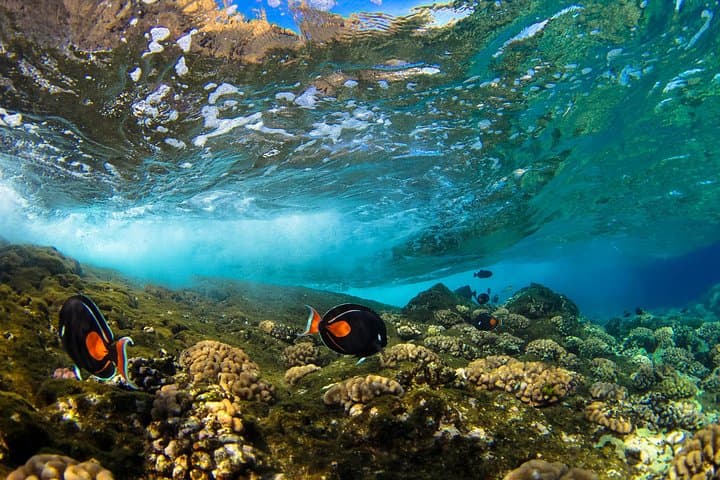
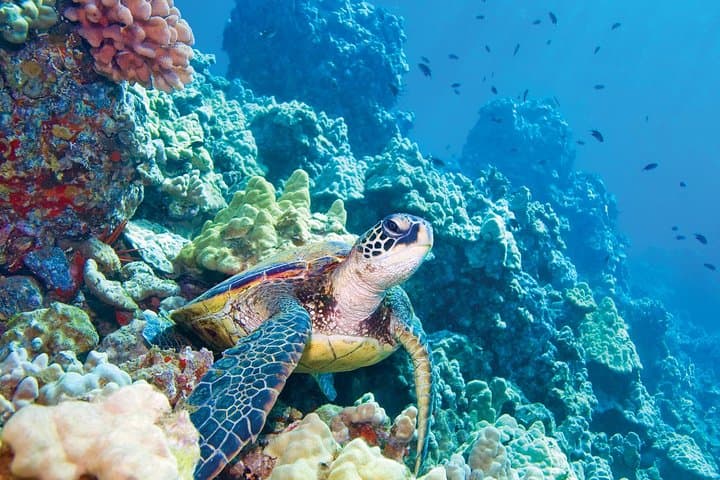
Molokini is the eroded caldera of a submerged volcano; from above it reads as a jagged bowl with a shallow inner lagoon that traps light and nourishes coral. The islet and surrounding reefs host hard corals, fish schools, and, most reliably for this trip, green sea turtles that cruise the reef edges in slow, deliberate arcs. The story of the place mixes geology and Hawaiian fishing traditions: the crater once provided protected shallow water, and today it’s managed as a marine life conservation district, where visitors must respect the reef and its residents.
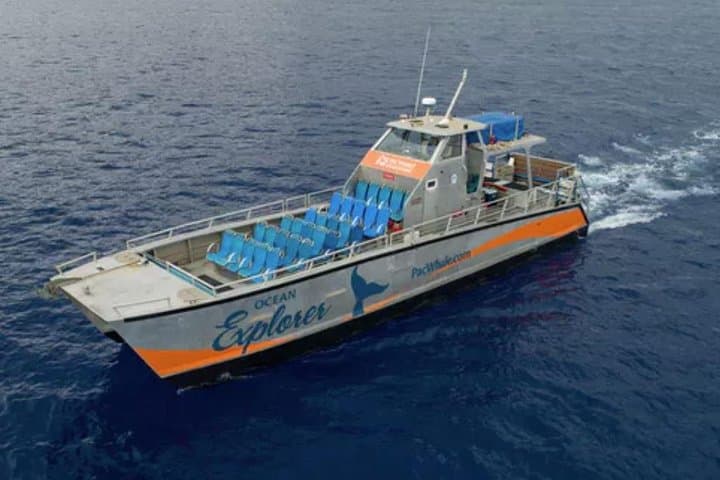
On this five-hour small-group cruise you get two main acts: a well-supported snorkel at Molokini Crater, then a visit to one or more outer reefs where turtles gather. The Ocean Explorer — a 54-foot catamaran built for visibility and stability — lowers ladders, hands out high-quality snorkel gear, and guides you toward calmer patches. Water depth can range from a few feet on the reef crest to 30+ feet in the drop-off; currents vary, so the crew places swimmers where conditions and skill levels match.
Practical details matter: check-in at the Pacific Whale Foundation shop in Ma'alaea at least 45–60 minutes early for continental breakfast and a safety briefing. The tour provides snorkel equipment, flotation if you need it, and a buffet lunch; reef-safe sunscreen is enforced — bring none that’s not approved. The operator restricts full-face masks for safety and limits passengers to ages seven and up.
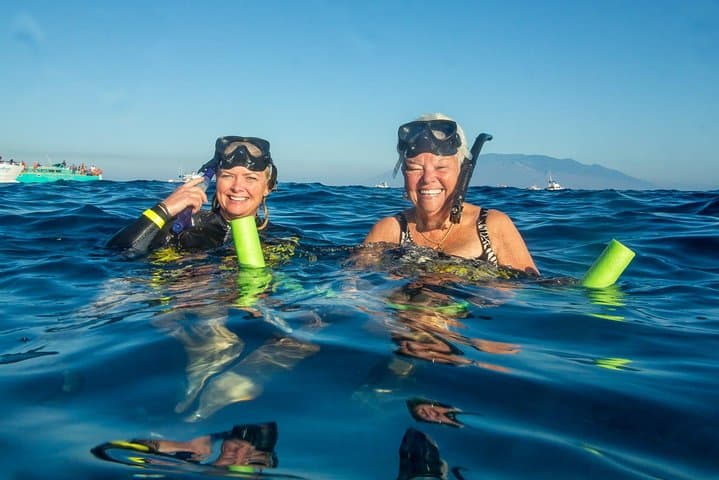
To make the most of the day, time your breathing and relax your legs in the water; turtles approach when you’re still and respectful. Early departures usually mean calmer seas and clearer visibility; late mornings can be busier but warmer on the surface. Bring a tight-fitting mask, reef-safe sunscreen, and a waterproof camera or housing — the light over the crater can produce glassy, luminous photos.
This is an ecotour first and a thrill second: observe quietly, avoid touching coral, and follow crew directions to protect the reef. When you climb back aboard, a warm lunch and a cold beverage make an easy debrief while the coastline slides past — tired, salt-stung, and a little closer to the sea than when you left.
moderate.
5 hours.
Moderate fitness; comfortable swimming ability and ability to climb a ladder on/off the boat.
The tour lasts about 5 hours from check-in to return to Ma'alaea Harbor.
Yes — high-quality snorkel equipment, a continental breakfast before boarding, and a buffet lunch are included.
You can observe turtles from the surface; approach slowly and avoid touching or crowding them to comply with marine protection rules.
Children 7 and older are allowed; beginners are welcome but should be comfortable in open water and follow crew instructions.
Only reef-safe sunscreen is permitted; non-compliant products are banned. The operator sells approved 4oz bottles on board.
The tour follows safety protocols; refunds are possible per the operator’s cancellation policy if you cancel at least 24 hours prior, but trips may run unless conditions are unsafe.
Molokini is a crescent-shaped remnant of a volcanic crater; the site has been protected to preserve coral and marine ecosystems and is a significant spot for local fisheries and conservation.
Tours operate under marine conservation rules—no touching reef or wildlife, and reef-safe sunscreen is required to limit coral damage.
Pacific Whale Foundation operates guided outdoor trips and adventures with an emphasis on safety, stewardship, and memorable experiences.
The catamaran eases out of Ma'alaea Harbor before sunrise, the harbor lights sliding off the water like a trailing constellation. By the time Ocean Explorer clears the channel, the hull settles and the island of Molokini rises as a dark crescent on the horizon — a volcanic rim that dares you to come closer. Sea spray pats the deck, and on a good morning the ocean feels like another living thing, pushing and testing the boat as the crew radios a check on conditions.
The catamaran eases out of Ma'alaea Harbor before sunrise, the harbor lights sliding off the water like a trailing constellation. By the time Ocean Explorer clears the channel, the hull settles and the island of Molokini rises as a dark crescent on the horizon — a volcanic rim that dares you to come closer. Sea spray pats the deck, and on a good morning the ocean feels like another living thing, pushing and testing the boat as the crew radios a check on conditions.
Molokini is the eroded caldera of a submerged volcano; from above it reads as a jagged bowl with a shallow inner lagoon that traps light and nourishes coral. The islet and surrounding reefs host hard corals, fish schools, and, most reliably for this trip, green sea turtles that cruise the reef edges in slow, deliberate arcs. The story of the place mixes geology and Hawaiian fishing traditions: the crater once provided protected shallow water, and today it’s managed as a marine life conservation district, where visitors must respect the reef and its residents.
On this five-hour small-group cruise you get two main acts: a well-supported snorkel at Molokini Crater, then a visit to one or more outer reefs where turtles gather. The Ocean Explorer — a 54-foot catamaran built for visibility and stability — lowers ladders, hands out high-quality snorkel gear, and guides you toward calmer patches. Water depth can range from a few feet on the reef crest to 30+ feet in the drop-off; currents vary, so the crew places swimmers where conditions and skill levels match.
Practical details matter: check-in at the Pacific Whale Foundation shop in Ma'alaea at least 45–60 minutes early for continental breakfast and a safety briefing. The tour provides snorkel equipment, flotation if you need it, and a buffet lunch; reef-safe sunscreen is enforced — bring none that’s not approved. The operator restricts full-face masks for safety and limits passengers to ages seven and up.
To make the most of the day, time your breathing and relax your legs in the water; turtles approach when you’re still and respectful. Early departures usually mean calmer seas and clearer visibility; late mornings can be busier but warmer on the surface. Bring a tight-fitting mask, reef-safe sunscreen, and a waterproof camera or housing — the light over the crater can produce glassy, luminous photos.
This is an ecotour first and a thrill second: observe quietly, avoid touching coral, and follow crew directions to protect the reef. When you climb back aboard, a warm lunch and a cold beverage make an easy debrief while the coastline slides past — tired, salt-stung, and a little closer to the sea than when you left.