THE ADVENTURE COLLECTIVE® · Independent discovery and booking for outdoor travel

Board a Pro‑Diver boat at dawn for a three‑tank, advanced dive day that explores Molokini’s back wall, deep pinnacles, and occasional wrecks. Small groups and long bottom times deliver encounters with rays, reef sharks, and seasonal humpbacks—if you’re certified and current, this is a high‑value, high‑commitment day on Maui.
Board a Pro‑Diver boat at dawn for a three‑tank, advanced dive day that explores Molokini’s back wall, deep pinnacles, and occasional wrecks. Small groups and long bottom times deliver encounters with rays, reef sharks, and seasonal humpbacks—if you’re certified and current, this is a high‑value, high‑commitment day on Maui.
The ramp at Kihei wakes before sunrise: diesel hums, crews slide tanks into racks, and the Pacific ahead is a steel ribbon that promises depth. By 6:15 a.m. you’re standing beside the big blue Pro‑Diver boat with your logbook in hand, watching the harbor shrink as the shoreline houses and sugar‑white beaches fall away. Within 20–25 minutes the crescent of Molokini appears on the horizon — a sheer, volcanic lip rising from the blue — and the day becomes about drop points and currents rather than islands.
Verified experiences and guided adventures in the surrounding area.
Operated by Yonegan Pro-Diver Maui · Kihei, Hawaii
The ramp at Kihei wakes before sunrise: diesel hums, crews slide tanks into racks, and the Pacific ahead is a steel ribbon that promises depth. By 6:15 a.m. you’re standing beside the big blue Pro‑Diver boat with your logbook in hand, watching the harbor shrink as the shoreline houses and sugar‑white beaches fall away. Within 20–25 minutes the crescent of Molokini appears on the horizon — a sheer, volcanic lip rising from the blue — and the day becomes about drop points and currents rather than islands.
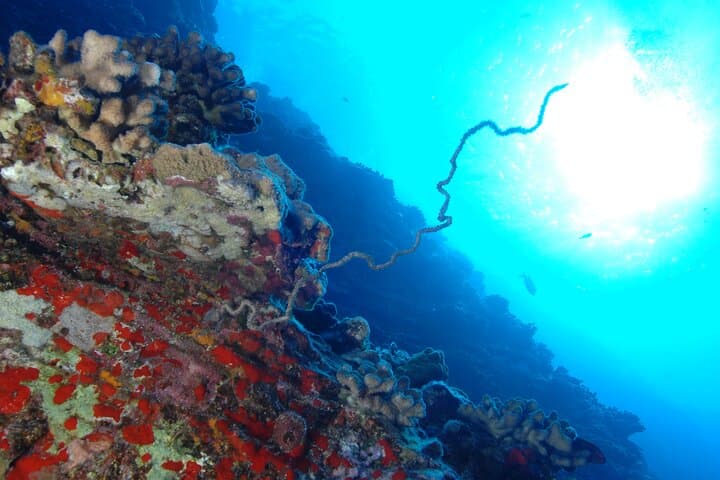
This is not a beginner’s outing. The three‑tank itinerary pushes past the comfortable shallows into the Back Wall drift, the steep pinnacles called the Wasteland at 85–110 feet, and occasional wreck dives like the St. Anthony. Visibility here is reliably high; the crater’s protected bowl funnels light deep, turning corals and schools of fish into bright swathes against black rock. Pelagics—eagle rays, white‑tip reef sharks, barracuda—cruise with purpose, and in winter months the sea can host migrating humpback whales that sound like a bass drum through the hull.
Geology and human history are close at hand. Molokini is a crescent‑shaped tuff cone formed by explosive volcanic activity; its steep walls are the eroded rim of that eruption and the dramatic vertical relief is why currents create such productive feeding zones. The crater and surrounding reef are managed as protected ocean areas, which is why the dive experience focuses on observation and low‑impact behavior.
Pro‑Diver runs small groups—no more than 12 divers, split into teams of 6–8—so the day feels individualized even while you’re on a commercial boat. Expect a full morning and early afternoon: check‑in and equipment shakedown, three purposeful descents, surface intervals on the boat with light snacks, and a return to Kihei around 1:30 p.m. The operator requires advanced experience—plan to have logged dozens of dives and to have dived within the last six months—so be ready to show certification and dive history.
Practical advice: confirm your last dive date and lifetime dives with the operator when you book, and email measurements for fitment if renting gear. Hydrate the day before, attach a surface marker buoy if you use one, and consider a thicker wetsuit for longer bottom times. Bring reef‑safe sunscreen, anti‑nausea medication if you’re prone to seasickness, and a charged dive computer with fresh batteries. The operator enforces a 24‑hour cancellation policy and will cancel in inclement weather or if minimum diver counts aren’t met.
A 3‑tank Molokini trip is equal parts choreography and curiosity—deep topography, fast drifts, and prioritized marine encounters. If you’re certified, current‑ready, and eager for extended dives into some of Hawaii’s clearest water, it’s one of Maui’s most concentrated encounters with the open ocean.
challenging.
4–5 hours.
Should have strong cardiovascular fitness, comfortable equalization at depth, and experience managing longer dives and surface intervals.
This is an advanced three‑tank dive that requires an advanced certification or equivalent plus substantial logged dives; operators ask for 25–30+ lifetime dives and proof of a dive within the last six months.
Meet at Kihei Boat Ramp by 6:15 a.m. for check‑in; expect to return to port around 1:30 p.m. for the three‑tank itinerary.
Common encounters include eagle rays, manta and reef rays, white‑tip reef sharks, schooling jacks and occasionally migrating humpback whales in season.
Yes—Pro‑Diver supplies rental gear but asks you to email your age, height, weight and shoe size ahead of time to size equipment properly.
Full refunds are available if you cancel at least 24 hours before departure; the operator may cancel for bad weather or insufficient divers.
Open ocean crossings and surface intervals can be bumpy; bring medication or non‑pharmaceutical remedies and avoid heavy meals the morning of the trip.
Molokini is a crescent‑shaped volcanic tuff cone whose steep walls create the vertical habitat prized by divers; the area is managed to protect reef communities.
This is a protected marine area—avoid touching reef, use mooring buoys when provided, and use reef‑safe sunscreen to reduce coral stress.
Yonegan Pro-Diver Maui operates guided outdoor trips and adventures with an emphasis on safety, stewardship, and memorable experiences.
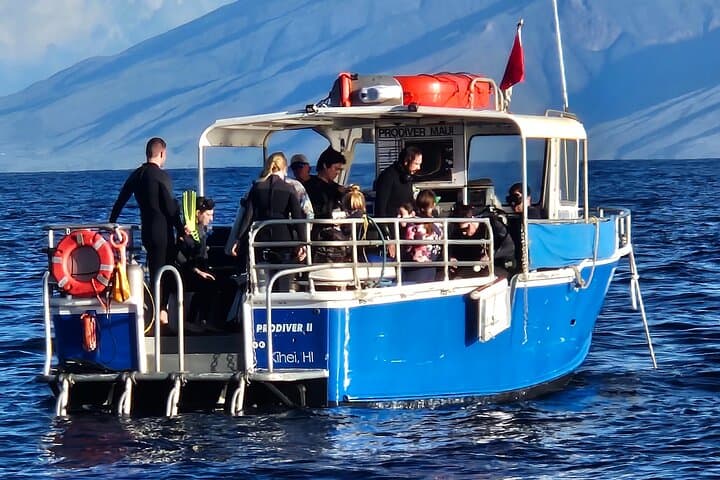
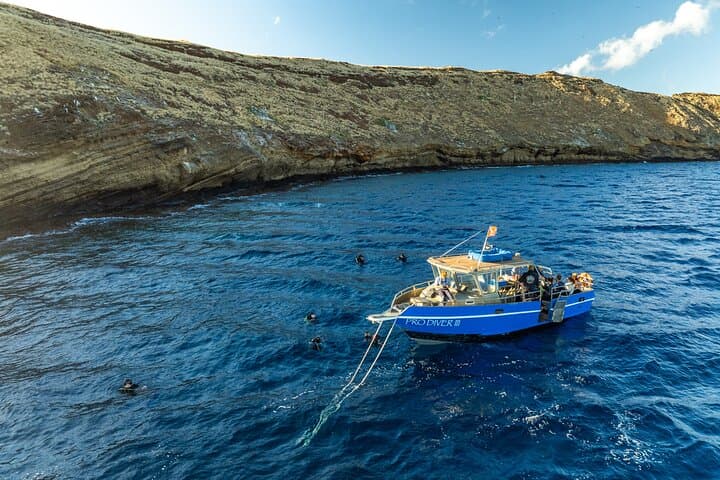
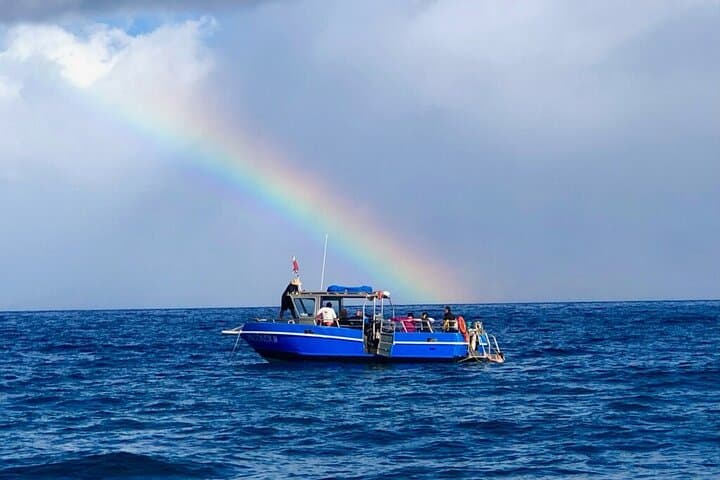
The ramp at Kihei wakes before sunrise: diesel hums, crews slide tanks into racks, and the Pacific ahead is a steel ribbon that promises depth. By 6:15 a.m. you’re standing beside the big blue Pro‑Diver boat with your logbook in hand, watching the harbor shrink as the shoreline houses and sugar‑white beaches fall away. Within 20–25 minutes the crescent of Molokini appears on the horizon — a sheer, volcanic lip rising from the blue — and the day becomes about drop points and currents rather than islands.
The ramp at Kihei wakes before sunrise: diesel hums, crews slide tanks into racks, and the Pacific ahead is a steel ribbon that promises depth. By 6:15 a.m. you’re standing beside the big blue Pro‑Diver boat with your logbook in hand, watching the harbor shrink as the shoreline houses and sugar‑white beaches fall away. Within 20–25 minutes the crescent of Molokini appears on the horizon — a sheer, volcanic lip rising from the blue — and the day becomes about drop points and currents rather than islands.
This is not a beginner’s outing. The three‑tank itinerary pushes past the comfortable shallows into the Back Wall drift, the steep pinnacles called the Wasteland at 85–110 feet, and occasional wreck dives like the St. Anthony. Visibility here is reliably high; the crater’s protected bowl funnels light deep, turning corals and schools of fish into bright swathes against black rock. Pelagics—eagle rays, white‑tip reef sharks, barracuda—cruise with purpose, and in winter months the sea can host migrating humpback whales that sound like a bass drum through the hull.
Geology and human history are close at hand. Molokini is a crescent‑shaped tuff cone formed by explosive volcanic activity; its steep walls are the eroded rim of that eruption and the dramatic vertical relief is why currents create such productive feeding zones. The crater and surrounding reef are managed as protected ocean areas, which is why the dive experience focuses on observation and low‑impact behavior.
Pro‑Diver runs small groups—no more than 12 divers, split into teams of 6–8—so the day feels individualized even while you’re on a commercial boat. Expect a full morning and early afternoon: check‑in and equipment shakedown, three purposeful descents, surface intervals on the boat with light snacks, and a return to Kihei around 1:30 p.m. The operator requires advanced experience—plan to have logged dozens of dives and to have dived within the last six months—so be ready to show certification and dive history.
Practical advice: confirm your last dive date and lifetime dives with the operator when you book, and email measurements for fitment if renting gear. Hydrate the day before, attach a surface marker buoy if you use one, and consider a thicker wetsuit for longer bottom times. Bring reef‑safe sunscreen, anti‑nausea medication if you’re prone to seasickness, and a charged dive computer with fresh batteries. The operator enforces a 24‑hour cancellation policy and will cancel in inclement weather or if minimum diver counts aren’t met.
A 3‑tank Molokini trip is equal parts choreography and curiosity—deep topography, fast drifts, and prioritized marine encounters. If you’re certified, current‑ready, and eager for extended dives into some of Hawaii’s clearest water, it’s one of Maui’s most concentrated encounters with the open ocean.