THE ADVENTURE COLLECTIVE® · Independent discovery and booking for outdoor travel

Follow a coastal engineering marvel from Molde across the Atlantic Road’s eight bridges to the Varden viewpoint. This 3–4 hour audio tour blends driving panoramas with short photo walks and local stories of marble, clipfish and sea-scarred reefs.
Follow a coastal engineering marvel from Molde across the Atlantic Road’s eight bridges to the Varden viewpoint. This 3–4 hour audio tour blends driving panoramas with short photo walks and local stories of marble, clipfish and sea-scarred reefs.
A cold wind from the Norwegian Sea lunges at the bus as it pulls away from Molde’s harbor, the city folding behind—rows of low buildings, the sail-shaped Hotel Seilet, and a fjord fringed by 222 jagged peaks. The audio guide eases you into the landscape: marble cliffs, ski slopes passed at speed, and then the road itself—an engineered ribbon skimming the ocean over a chain of eight bridges.
Verified experiences and guided adventures in the surrounding area.
Operated by West Norway Travel · Molde, Møre og Romsdal
A cold wind from the Norwegian Sea lunges at the bus as it pulls away from Molde’s harbor, the city folding behind—rows of low buildings, the sail-shaped Hotel Seilet, and a fjord fringed by 222 jagged peaks. The audio guide eases you into the landscape: marble cliffs, ski slopes passed at speed, and then the road itself—an engineered ribbon skimming the ocean over a chain of eight bridges.
The Atlantic Ocean Road (Atlanterhavsveien), an 8 km coastal stretch named Norway’s Building of the Century, was built to tame a wild seam of sea and islands. The coastline here bears a geological signature of limestone and high-quality marble; mining in the area began in 1938 and left cave systems carved into bedrock. Seafarers know Hustadvika for its reefs and sandbanks—the current and waves here can push a small vessel off course.
Culturally, the route threads fishing history, clipfish drying at Håholmen, and local industry—Elnesvågen claims ties to Jarlsberg cheese. A planned photo stop on Eldhusøya and the 407 m Varden viewpoint bookend open-ocean drama with alpine panoramas.
Practical guidance: the full excursion runs about 3–4 hours and is low-impact physically; dress windproof and waterproof, and bring headphones for the app-based audio guide. Photo stops are brief—expect 20–30 minute walks on rocky, sometimes wet surfaces. If weather closes coastal roads, operators reroute inland. For best light, aim for morning or late-afternoon visits when the sea sharpens into cold, reflective blues and the mountains’ faces gain depth.
easy.
3–4 hours.
Low exertion; suitable for travelers with basic mobility; short walks on uneven ground expected
The excursion lasts about 3–4 hours total with two main stops: a ~30 minute photo walk near the Atlantic Road and ~15 minutes at Varden viewpoint.
The itinerary depends on weather and road conditions; in strong winds or road restrictions the operator will modify the route or provide alternatives.
Yes—infants can ride in strollers but must sit on an adult’s lap; bring child seats if required by your cruise or vehicle policy.
Light snacks and a refillable water bottle are recommended; the tour includes transportation but not meals, and stops have limited facilities.
The area’s marble and limestone industry dates to the 20th century; marble mining began around 1938 and subterranean caves were later used for events.
Coastal ecosystems here are sensitive—stick to marked paths at dunes and shorelines, and avoid disturbing nesting birds during spring and early summer.
West Norway Travel operates guided outdoor trips and adventures with an emphasis on safety, stewardship, and memorable experiences.
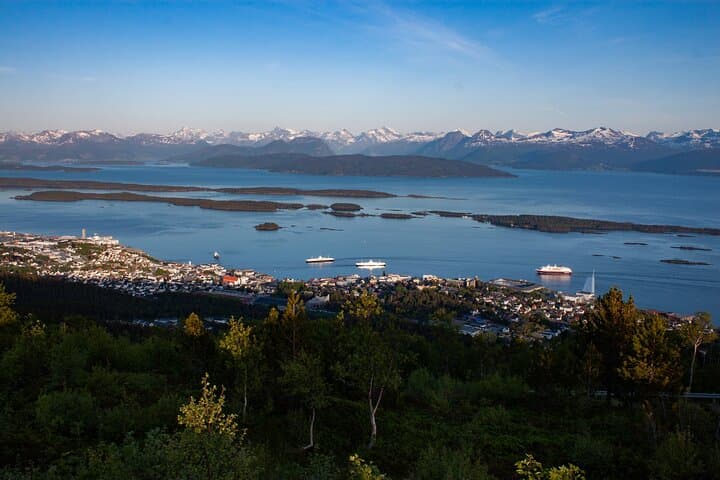
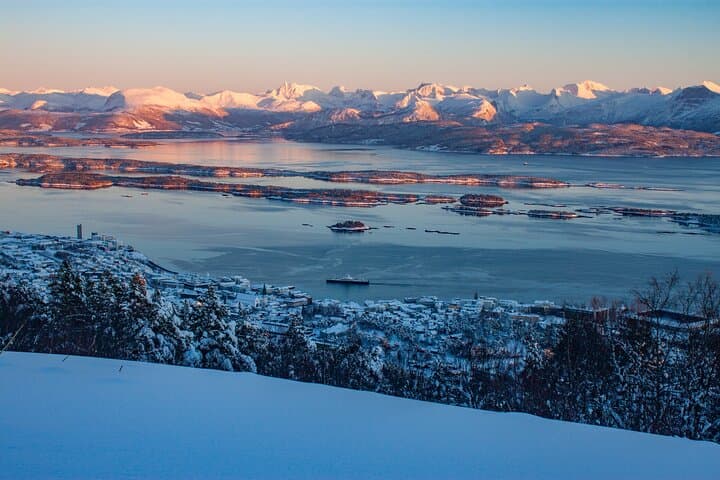
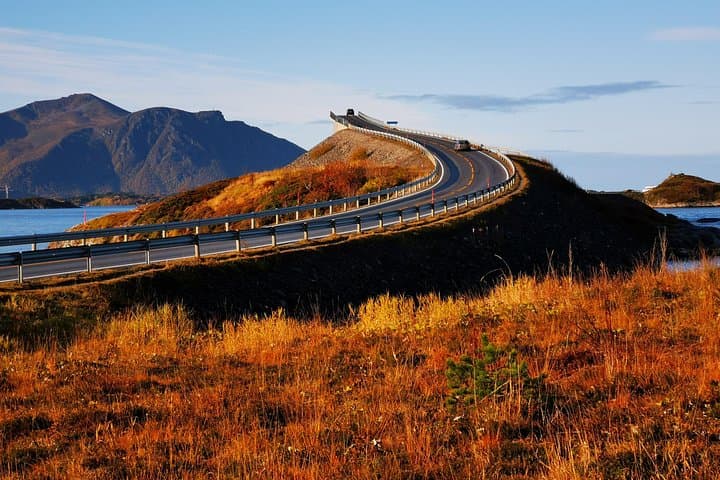
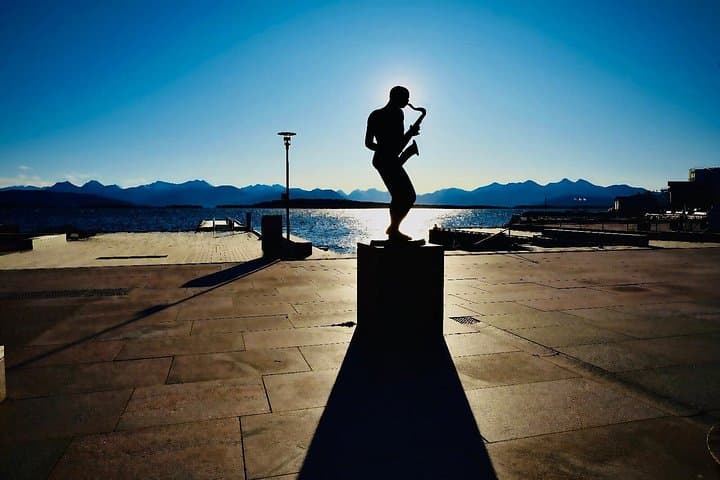
A cold wind from the Norwegian Sea lunges at the bus as it pulls away from Molde’s harbor, the city folding behind—rows of low buildings, the sail-shaped Hotel Seilet, and a fjord fringed by 222 jagged peaks. The audio guide eases you into the landscape: marble cliffs, ski slopes passed at speed, and then the road itself—an engineered ribbon skimming the ocean over a chain of eight bridges.
A cold wind from the Norwegian Sea lunges at the bus as it pulls away from Molde’s harbor, the city folding behind—rows of low buildings, the sail-shaped Hotel Seilet, and a fjord fringed by 222 jagged peaks. The audio guide eases you into the landscape: marble cliffs, ski slopes passed at speed, and then the road itself—an engineered ribbon skimming the ocean over a chain of eight bridges.
The Atlantic Ocean Road (Atlanterhavsveien), an 8 km coastal stretch named Norway’s Building of the Century, was built to tame a wild seam of sea and islands. The coastline here bears a geological signature of limestone and high-quality marble; mining in the area began in 1938 and left cave systems carved into bedrock. Seafarers know Hustadvika for its reefs and sandbanks—the current and waves here can push a small vessel off course.
Culturally, the route threads fishing history, clipfish drying at Håholmen, and local industry—Elnesvågen claims ties to Jarlsberg cheese. A planned photo stop on Eldhusøya and the 407 m Varden viewpoint bookend open-ocean drama with alpine panoramas.
Practical guidance: the full excursion runs about 3–4 hours and is low-impact physically; dress windproof and waterproof, and bring headphones for the app-based audio guide. Photo stops are brief—expect 20–30 minute walks on rocky, sometimes wet surfaces. If weather closes coastal roads, operators reroute inland. For best light, aim for morning or late-afternoon visits when the sea sharpens into cold, reflective blues and the mountains’ faces gain depth.