THE ADVENTURE COLLECTIVE® · Independent discovery and booking for outdoor travel

Glide braided waterways in a dugout canoe, sleep on private island camps, and track wildlife on foot and from water level. This 3-night mokoro safari from Maun offers close, quiet encounters with the Okavango’s flooded heart.
Glide braided waterways in a dugout canoe, sleep on private island camps, and track wildlife on foot and from water level. This 3-night mokoro safari from Maun offers close, quiet encounters with the Okavango’s flooded heart.
Dawn finds the delta in motion: thin mist lifts from channels like fingers, and a mokoro slips forward, poler balanced at the stern. The canoe parts mirror-still water, reeds whispering as hippos rearrange their midday baths. This 3-night, 4-day mokoro safari launches from Maun and trades roads for water—gliding the Okavango’s braids, sleeping on chosen islands, and walking the floodplain under an enormous sky.
Verified experiences and guided adventures in the surrounding area.
Operated by Marvelous Mobile Safari · Maun, North-West District
Dawn finds the delta in motion: thin mist lifts from channels like fingers, and a mokoro slips forward, poler balanced at the stern. The canoe parts mirror-still water, reeds whispering as hippos rearrange their midday baths. This 3-night, 4-day mokoro safari launches from Maun and trades roads for water—gliding the Okavango’s braids, sleeping on chosen islands, and walking the floodplain under an enormous sky.
Geologically, the Okavango is an inland delta fed by the Okavango River; seasonal floods fan across sand and peat, creating shifting lagoons that concentrate life. Culturally the area has long supported Tswana and San communities; today's guides often combine wildlife tracking with stories of traditional plant use and poling techniques passed down through generations.
The core experience is simple and low-slung: travel by dugout canoe (mokoro), short guided bushwalks, and nights in small dome tents with bedrolls on island camps. Expect close-up birding, occasional elephant and hippo sightings from water level, and the unhurried cadence of a place that sets its own timetable.
Practical notes: pack sun protection, quick-dry clothing, and a lightweight sleeping layer—temperatures swing between hot days and cool nights. There are no permanent facilities on camp islands; meals are provided and prepared on site. Mobility is gentle but you should be comfortable stepping in and out of boats and on uneven ground. With quiet guides and minimal motorboat traffic, the mokoro trip is one of the best ways to experience the Okavango’s intimate channels and stellar night sky.
easy.
4 days (3 nights).
Suitable for travelers in regular physical condition; able to board low canoes and walk short bush trails.
The trip is generally gentle—most travel is seated in a canoe with short guided walks; you should be comfortable getting in/out of a low boat and walking on soft or uneven ground.
Yes—camp islands have canvas or dome tents, simple bedding, and communal dining around a fire; there are no permanent toilets or showers on many island camps.
Expect abundant birds, hippos in channels, and elephants near water; sightings of predators are less common but possible depending on season and location.
Mokoros are stable when stationary; polers (guides) handle most navigation—guests can learn to pole, but guides do the majority of propulsion for safety.
The Okavango Delta is an inland floodplain formed by sediments from the Angolan highlands; local Tswana and San communities have long adapted poling and tracking skills for living with seasonal floods.
Low-impact, small-group mokoro travel helps protect fragile waterways—visitors are asked to pack out waste, minimize campfire impact, and follow guides’ instructions to avoid disturbing wildlife.
Marvelous Mobile Safari operates guided outdoor trips and adventures with an emphasis on safety, stewardship, and memorable experiences.
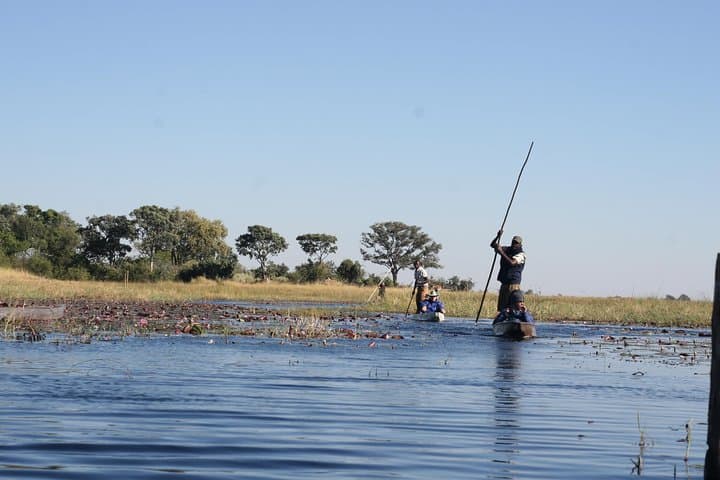


Dawn finds the delta in motion: thin mist lifts from channels like fingers, and a mokoro slips forward, poler balanced at the stern. The canoe parts mirror-still water, reeds whispering as hippos rearrange their midday baths. This 3-night, 4-day mokoro safari launches from Maun and trades roads for water—gliding the Okavango’s braids, sleeping on chosen islands, and walking the floodplain under an enormous sky.
Dawn finds the delta in motion: thin mist lifts from channels like fingers, and a mokoro slips forward, poler balanced at the stern. The canoe parts mirror-still water, reeds whispering as hippos rearrange their midday baths. This 3-night, 4-day mokoro safari launches from Maun and trades roads for water—gliding the Okavango’s braids, sleeping on chosen islands, and walking the floodplain under an enormous sky.
Geologically, the Okavango is an inland delta fed by the Okavango River; seasonal floods fan across sand and peat, creating shifting lagoons that concentrate life. Culturally the area has long supported Tswana and San communities; today's guides often combine wildlife tracking with stories of traditional plant use and poling techniques passed down through generations.
The core experience is simple and low-slung: travel by dugout canoe (mokoro), short guided bushwalks, and nights in small dome tents with bedrolls on island camps. Expect close-up birding, occasional elephant and hippo sightings from water level, and the unhurried cadence of a place that sets its own timetable.
Practical notes: pack sun protection, quick-dry clothing, and a lightweight sleeping layer—temperatures swing between hot days and cool nights. There are no permanent facilities on camp islands; meals are provided and prepared on site. Mobility is gentle but you should be comfortable stepping in and out of boats and on uneven ground. With quiet guides and minimal motorboat traffic, the mokoro trip is one of the best ways to experience the Okavango’s intimate channels and stellar night sky.