THE ADVENTURE COLLECTIVE® · Independent discovery and booking for outdoor travel

This short community-based trek in the Annapurna region offers fingertip views of Annapurna I, Dhaulagiri and Machhapuchhre with nights in eco-lodges and teahouses. Perfect for travelers seeking dramatic mountain panoramas, village culture and manageable daily hikes.
This short community-based trek in the Annapurna region offers fingertip views of Annapurna I, Dhaulagiri and Machhapuchhre with nights in eco-lodges and teahouses. Perfect for travelers seeking dramatic mountain panoramas, village culture and manageable daily hikes.
The trail crests a wind-swept ridge and the Annapurna massif opens like pages in a field guide — Annapurna I, Dhaulagiri, Machhapuchhre and Nilgiri stacked along a clean horizon. Early light skates along serrated cornices; rhododendron pockets and oak stands shade the climb as village smoke threads through terraces.
Verified experiences and guided adventures in the surrounding area.
Operated by himalayan sanctuary adventure private limited · Pokhara, Gandaki Province
The trail crests a wind-swept ridge and the Annapurna massif opens like pages in a field guide — Annapurna I, Dhaulagiri, Machhapuchhre and Nilgiri stacked along a clean horizon. Early light skates along serrated cornices; rhododendron pockets and oak stands shade the climb as village smoke threads through terraces.
Mohare Danda is a compact, community-run eco-trek that delivers high-mountain panoramas without weeks on the trail. The route runs through Myagdi and Kaski districts, historically used by Magar and Gurung communities whose villages and festivals still mark the seasons. Geologically, you’re crossing the Lesser Himalaya toward the high, glaciated 8,000m giants of the Greater Himalaya — a visible climb in rock type and slope angle that frames every clearing with distant, fluted peaks.
Culturally the trek gives regular contact with teahouse life and community lodges that invest earnings back into trail maintenance and schools. Bird life and orchids spike in spring; terraced fields and suspension bridges map the corridor of the Kali Gandaki and Modi Khola valleys.
Practical planning: expect daily walks of 3–7 hours on stone paths and forest tracks, altitude up to about 3,000m on Mohare Danda, and basic teahouse lodging. Pack layered clothing for cold mornings, waterproofs for monsoon months, sturdy boots for uneven stone steps, and a small daypack for water and sunscreen. Allow extra time for sunrise and sunset viewpoints — they are the trip’s raison d’être and worth the early wake-up.
moderate.
10–11 days.
Moderate aerobic fitness; comfortable walking 4–6 hours on uneven terrain and managing short steep sections is sufficient.
Yes — Annapurna Conservation Area Project (ACAP) permits and a TIMS card are required and typically arranged before or at the trailhead.
Community-run teahouses and eco-lodges provide basic private rooms with shared bathrooms and three meals; expect simple but comfortable local hospitality.
Local guides are highly recommended for navigation, cultural interpretation and safety; porters are commonly available to carry heavy bags.
Late autumn (October–November) and spring (March–April) offer the clearest skies and best visibility for sunrise and sunset mountain panoramas.
These trails have long linked Magar and Gurung villages to trade routes along the Kali Gandaki; many lodges are now community-run to support local livelihoods.
The route lies within ACAP, which manages permits and promotes low-impact trekking; stick to trails, avoid single-use plastics and support community lodges.
himalayan sanctuary adventure private limited operates guided outdoor trips and adventures with an emphasis on safety, stewardship, and memorable experiences.
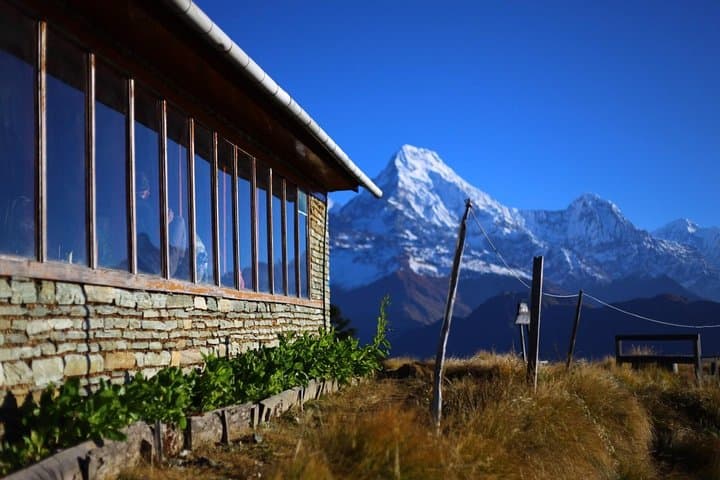
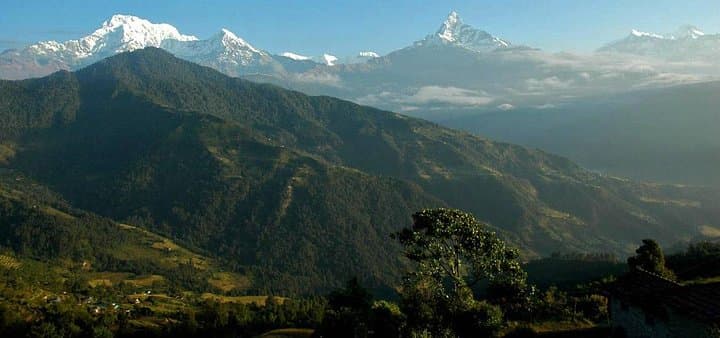
The trail crests a wind-swept ridge and the Annapurna massif opens like pages in a field guide — Annapurna I, Dhaulagiri, Machhapuchhre and Nilgiri stacked along a clean horizon. Early light skates along serrated cornices; rhododendron pockets and oak stands shade the climb as village smoke threads through terraces.
The trail crests a wind-swept ridge and the Annapurna massif opens like pages in a field guide — Annapurna I, Dhaulagiri, Machhapuchhre and Nilgiri stacked along a clean horizon. Early light skates along serrated cornices; rhododendron pockets and oak stands shade the climb as village smoke threads through terraces.
Mohare Danda is a compact, community-run eco-trek that delivers high-mountain panoramas without weeks on the trail. The route runs through Myagdi and Kaski districts, historically used by Magar and Gurung communities whose villages and festivals still mark the seasons. Geologically, you’re crossing the Lesser Himalaya toward the high, glaciated 8,000m giants of the Greater Himalaya — a visible climb in rock type and slope angle that frames every clearing with distant, fluted peaks.
Culturally the trek gives regular contact with teahouse life and community lodges that invest earnings back into trail maintenance and schools. Bird life and orchids spike in spring; terraced fields and suspension bridges map the corridor of the Kali Gandaki and Modi Khola valleys.
Practical planning: expect daily walks of 3–7 hours on stone paths and forest tracks, altitude up to about 3,000m on Mohare Danda, and basic teahouse lodging. Pack layered clothing for cold mornings, waterproofs for monsoon months, sturdy boots for uneven stone steps, and a small daypack for water and sunscreen. Allow extra time for sunrise and sunset viewpoints — they are the trip’s raison d’être and worth the early wake-up.