THE ADVENTURE COLLECTIVE® · Independent discovery and booking for outdoor travel

A compact multi-day trek in the Annapurna foothills, Mohare Danda offers sunrise views over Annapurna and Dhaulagiri, community-run eco‑lodges and forested ridge walking. Ideal for travelers who want dramatic panoramas with responsible tourism.
A compact multi-day trek in the Annapurna foothills, Mohare Danda offers sunrise views over Annapurna and Dhaulagiri, community-run eco‑lodges and forested ridge walking. Ideal for travelers who want dramatic panoramas with responsible tourism.
A low, cold wind pushes across Mohare Danda at dusk and the ridge seems to hold its breath as the last light carves the Annapurna massif into sharp planes. Walkers arrive from terraced villages and forest tracks, trading chatter for the hush of fir and rhododendron. From the 3,300 m hill station the horizon tilts with Dhaulagiri to the west and Annapurna’s southern flanks close enough to read like a geological ledger.
Verified experiences and guided adventures in the surrounding area.
Operated by Asian Heritage Treks and Travels · Mohare Danda (hill station), Gandaki Province
A low, cold wind pushes across Mohare Danda at dusk and the ridge seems to hold its breath as the last light carves the Annapurna massif into sharp planes. Walkers arrive from terraced villages and forest tracks, trading chatter for the hush of fir and rhododendron. From the 3,300 m hill station the horizon tilts with Dhaulagiri to the west and Annapurna’s southern flanks close enough to read like a geological ledger.
This route threads local Magar and Gurung settlements and is part of community-driven ecotourism tied to ACAP principles—small lodges, shared porter services and income that stays in villages. Geologically the views narrate the Himalaya’s collision: stratified ridgelines, glacial cirques visible on distant flanks, and river-cut gorges feeding the Kali Gandaki below. Culturally, guests pass organic farm schools and seasonal herding areas where traditional festivals still mark planting and harvest.
Practical guidance is straightforward: expect multi-day walking with several 6–7 hour days, single-track trails and unpaved mule tracks, and basic eco-lodges on full board. Altitude reaches 3,300 m so pace for acclimatization and carry layers for strong sun and freezing nights. Footwear with good traction and a light rain shell are essential; trekking poles ease steep ascents. Start early to catch sunrise panoramas and leave no trace—water treatment and waste disposal matter in fragile highland ecosystems.
For planners short on time, Mohare Danda delivers raw mountain scenery, close community contact and a compact Annapurna ridge experience that rewards simple preparation.
moderate.
6–7 hours per day; total 9–12 days (multi‑day itinerary).
Moderate fitness required: regular walkers who can handle sustained uphill days and basic altitude exposure.
Mohare Danda sits around 3,300 m; altitude can affect some visitors—allow time for acclimatization and watch for symptoms of AMS.
Community eco‑lodges are basic; many have limited hot water and communal charging times—expect simple comforts rather than full hotel services.
Yes—trekkers generally require ACAP/Annapurna permits and TIMS; most operators include these in the package.
Spring (March–May) and autumn (September–November) offer the clearest mountain views and stable weather; monsoon months are wet and winter brings snow at higher passes.
The trail passes traditional Magar and Gurung settlements and is part of community ecotourism efforts supported by the Annapurna Conservation Area governance.
Mohare Danda is promoted as an eco‑community trek—support local lodges, carry out waste, and follow established trails to reduce erosion and protect water sources.
Asian Heritage Treks and Travels operates guided outdoor trips and adventures with an emphasis on safety, stewardship, and memorable experiences.
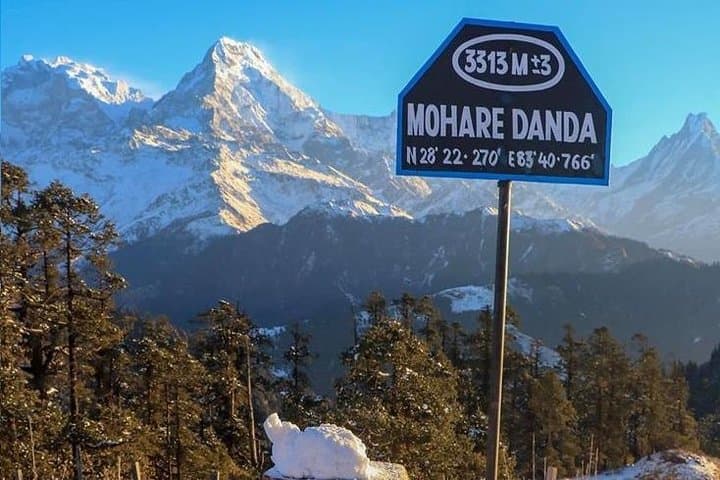
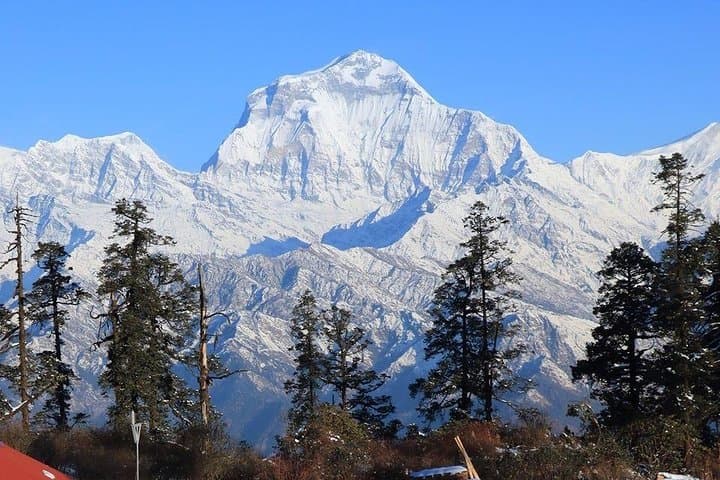
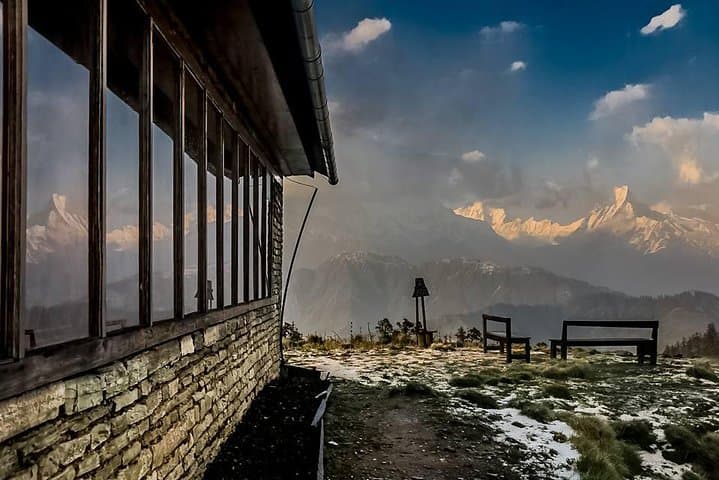
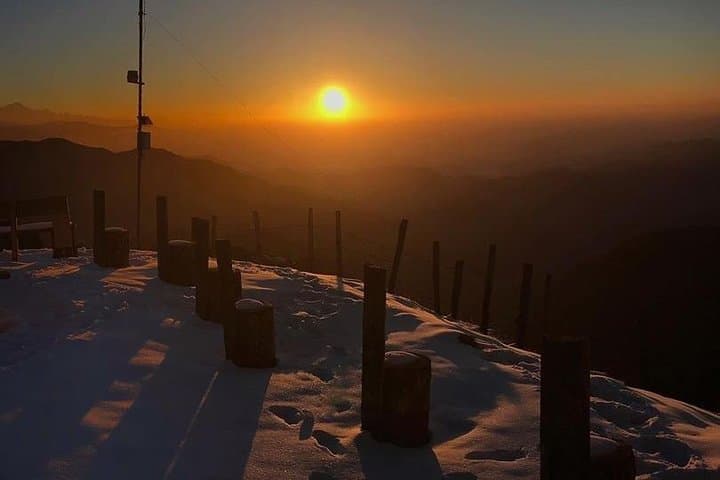
A low, cold wind pushes across Mohare Danda at dusk and the ridge seems to hold its breath as the last light carves the Annapurna massif into sharp planes. Walkers arrive from terraced villages and forest tracks, trading chatter for the hush of fir and rhododendron. From the 3,300 m hill station the horizon tilts with Dhaulagiri to the west and Annapurna’s southern flanks close enough to read like a geological ledger.
A low, cold wind pushes across Mohare Danda at dusk and the ridge seems to hold its breath as the last light carves the Annapurna massif into sharp planes. Walkers arrive from terraced villages and forest tracks, trading chatter for the hush of fir and rhododendron. From the 3,300 m hill station the horizon tilts with Dhaulagiri to the west and Annapurna’s southern flanks close enough to read like a geological ledger.
This route threads local Magar and Gurung settlements and is part of community-driven ecotourism tied to ACAP principles—small lodges, shared porter services and income that stays in villages. Geologically the views narrate the Himalaya’s collision: stratified ridgelines, glacial cirques visible on distant flanks, and river-cut gorges feeding the Kali Gandaki below. Culturally, guests pass organic farm schools and seasonal herding areas where traditional festivals still mark planting and harvest.
Practical guidance is straightforward: expect multi-day walking with several 6–7 hour days, single-track trails and unpaved mule tracks, and basic eco-lodges on full board. Altitude reaches 3,300 m so pace for acclimatization and carry layers for strong sun and freezing nights. Footwear with good traction and a light rain shell are essential; trekking poles ease steep ascents. Start early to catch sunrise panoramas and leave no trace—water treatment and waste disposal matter in fragile highland ecosystems.
For planners short on time, Mohare Danda delivers raw mountain scenery, close community contact and a compact Annapurna ridge experience that rewards simple preparation.