THE ADVENTURE COLLECTIVE® · Independent discovery and booking for outdoor travel

Walk among near-perfect stone spheres on Koekohe Beach with a self-guided audio tour that mixes Māori legend, geology and practical tips. Plan for low tide, sturdy footwear and 45–60 minutes to explore and photograph the Moeraki Boulders.
Walk among near-perfect stone spheres on Koekohe Beach with a self-guided audio tour that mixes Māori legend, geology and practical tips. Plan for low tide, sturdy footwear and 45–60 minutes to explore and photograph the Moeraki Boulders.
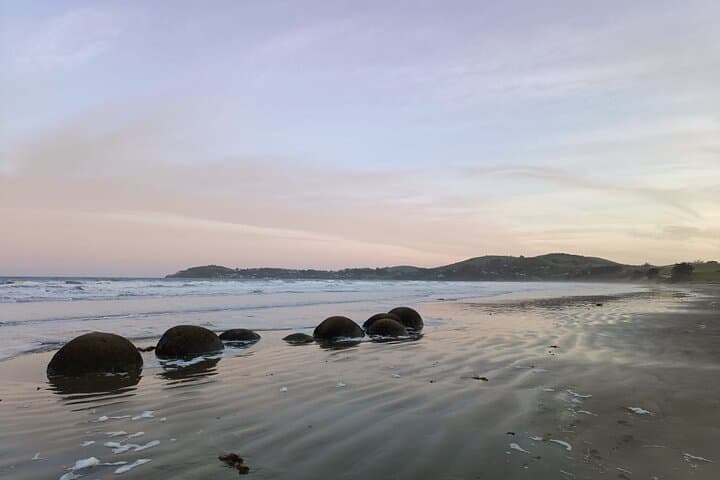
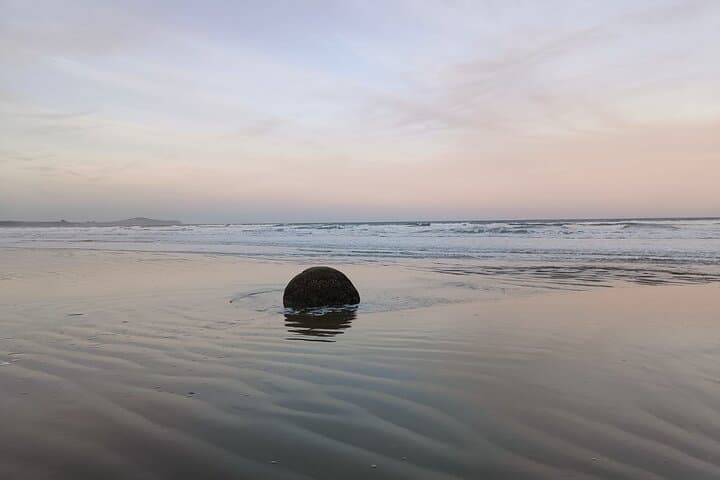
The wind off the Pacific sculpts sand into ripples and the beach opens into a field of enormous stone spheres—some cracked like broken eggs, others still perfectly rounded. You arrive at Koekohe Beach with an audio guide in your pocket, the narrator’s voice timing history and instructions to the rhythm of the surf.
Verified experiences and guided adventures in the surrounding area.
Operated by Aotearoa Audio Tours · Moeraki, Otago
The wind off the Pacific sculpts sand into ripples and the beach opens into a field of enormous stone spheres—some cracked like broken eggs, others still perfectly rounded. You arrive at Koekohe Beach with an audio guide in your pocket, the narrator’s voice timing history and instructions to the rhythm of the surf.
Geologically these are septarian concretions formed roughly 60 million years ago inside Paleocene mudstones; wave action and coastal erosion have revealed them on the foreshore. Culturally the site holds Māori stories—local iwi tell of the ancestral canoe Arai-te-Uru, its cargo turned to boulders when it washed ashore. Nearby Ōamaru grew as a Victorian port; today cafes and galleries supply the practical comforts after a morning on the beach.
The walk is low-slung and accessible: mostly sand and firm beach, with short sections of rock to negotiate at low tide. Photographers time visits for sunrise or low tide when the boulders sit in shallow pools, reflecting the sky. Wildlife—shags and occasional seals—often share the coastline, moving with the incoming sea.
Practical guidance: check tide charts and plan 45–60 minutes for a thorough visit. Wear sturdy shoes for slippery algae-coated rock and a windproof layer—weather off the Otago coast changes quickly. Follow signage: the concretions are fragile; do not remove or climb on the largest boulders. The audio guide enhances context—language options include Māori, Mandarin and German—letting you pace the experience and leave with a clearer sense of how deep time, culture and coastal forces made these spheres.
easy.
45–60 minutes.
Suitable for most fitness levels; requires short, flat beach walking and minimal scrambling over rocks.
Low tide offers the best access and photo opportunities; early morning reduces crowds and gives softer light.
No entry fee is required for Koekohe Beach; the audio tour is optional and self-guided, downloaded to your device.
Smaller stones can be handled but the large concretions are fragile and should not be climbed or removed to protect the site.
Allow 45–60 minutes to listen to the audio guide, walk the beach, and photograph key formations; longer if you explore nearby viewpoints.
Māori tradition links the boulders to the wreck of the ancestral canoe Arai-te-Uru; geologically they are septarian concretions formed in Paleocene mudstones.
The foredune and intertidal areas are sensitive—stay on marked paths, don’t remove stones, and follow signage to minimize erosion and habitat disturbance.
Aotearoa Audio Tours operates guided outdoor trips and adventures with an emphasis on safety, stewardship, and memorable experiences.
The wind off the Pacific sculpts sand into ripples and the beach opens into a field of enormous stone spheres—some cracked like broken eggs, others still perfectly rounded. You arrive at Koekohe Beach with an audio guide in your pocket, the narrator’s voice timing history and instructions to the rhythm of the surf.
The wind off the Pacific sculpts sand into ripples and the beach opens into a field of enormous stone spheres—some cracked like broken eggs, others still perfectly rounded. You arrive at Koekohe Beach with an audio guide in your pocket, the narrator’s voice timing history and instructions to the rhythm of the surf.
Geologically these are septarian concretions formed roughly 60 million years ago inside Paleocene mudstones; wave action and coastal erosion have revealed them on the foreshore. Culturally the site holds Māori stories—local iwi tell of the ancestral canoe Arai-te-Uru, its cargo turned to boulders when it washed ashore. Nearby Ōamaru grew as a Victorian port; today cafes and galleries supply the practical comforts after a morning on the beach.
The walk is low-slung and accessible: mostly sand and firm beach, with short sections of rock to negotiate at low tide. Photographers time visits for sunrise or low tide when the boulders sit in shallow pools, reflecting the sky. Wildlife—shags and occasional seals—often share the coastline, moving with the incoming sea.
Practical guidance: check tide charts and plan 45–60 minutes for a thorough visit. Wear sturdy shoes for slippery algae-coated rock and a windproof layer—weather off the Otago coast changes quickly. Follow signage: the concretions are fragile; do not remove or climb on the largest boulders. The audio guide enhances context—language options include Māori, Mandarin and German—letting you pace the experience and leave with a clearer sense of how deep time, culture and coastal forces made these spheres.