THE ADVENTURE COLLECTIVE® · Independent discovery and booking for outdoor travel

A family-friendly guided walk from Moeciu de Sus to the Bisericuța viewpoint offers 10 km of pastoral trails, 350 m of ascent and sweeping views of the Bucegi and Piatra Craiului ranges. Expect cultural stops, a traditional stable, and local stories from a native Spanish-speaking guide.
A family-friendly guided walk from Moeciu de Sus to the Bisericuța viewpoint offers 10 km of pastoral trails, 350 m of ascent and sweeping views of the Bucegi and Piatra Craiului ranges. Expect cultural stops, a traditional stable, and local stories from a native Spanish-speaking guide.
A low cloud lifts off the ridge and the valley exhales—this is Moeciu de Sus on a morning when the light finds every fold of pasture. You start on gentle trails that climb toward Bisericuța (1,322 m), where a compact viewpoint opens onto Fundata, the Bucegi Massif and the serrated spine of Piatra Craiului. The route moves through villagers’ pastures, past an odaie (traditional mountain stable), and across seasonal meadows that still feel worked by hand.
Verified experiences and guided adventures in the surrounding area.
Operated by Hola Transylvania / Guia Español Transilvania · Moeciu de Sus, Brașov County
A low cloud lifts off the ridge and the valley exhales—this is Moeciu de Sus on a morning when the light finds every fold of pasture. You start on gentle trails that climb toward Bisericuța (1,322 m), where a compact viewpoint opens onto Fundata, the Bucegi Massif and the serrated spine of Piatra Craiului. The route moves through villagers’ pastures, past an odaie (traditional mountain stable), and across seasonal meadows that still feel worked by hand.
The landscape here is shaped by glacial valleys and limestone ridges; Piatra Craiului’s karst cliffs are the visible edge of a deeper geological story. Culturally, Moeciu’s life revolves around transhumant shepherding—summer pastures, simple wooden huts and cheeses made the old way. A native Spanish-speaking guide adds context, translating local stories and pointing out architectural details in houses and stables.
Practically, the hike is a 10 km circular with roughly 350 m of ascent and descent, suitable for families with a moderate fitness level. Trails are mostly singletrack and pastoral paths—expect exposed sun on ridgelines and muddier sections after rain. Wear sturdy footwear, carry 1–2 liters of water per person, and layer for wind at the top.
Timing matters: mornings often give the clearest views, while mid-afternoon brings changing light and more wind. Respect private pastures, follow your guide’s lead around livestock areas, and leave the odaie as you found it—the stories are best shared, not disturbed.
moderate.
3–4 hours.
Suitable for people with moderate fitness; able to sustain steady walking on uneven terrain and short climbs.
Yes—the tour includes a native Spanish-speaking guide who explains local history, traditions and landmarks in Spanish.
No—according to the itinerary, the stable (odaie) typically has no animals from June through September; guides will explain its traditional use regardless.
The route is non-technical but steady: 10 km with about 350 m of ascent, featuring pastoral tracks and singletrack that are manageable for families used to moderate walks.
This product is sold under an all-sales-final policy—no refunds are available for cancellations, and the operator may cancel in bad weather.
The area’s economy has long been based on transhumance—seasonal movement of flocks between lowland villages and high mountain pastures, a practice still visible in farm structures and local stories.
Trails cross private grazing lands and sensitive meadows—stay on designated paths, avoid disturbing pasture animals, and support local guides who protect access through responsible use.
Hola Transylvania / Guia Español Transilvania operates guided outdoor trips and adventures with an emphasis on safety, stewardship, and memorable experiences.
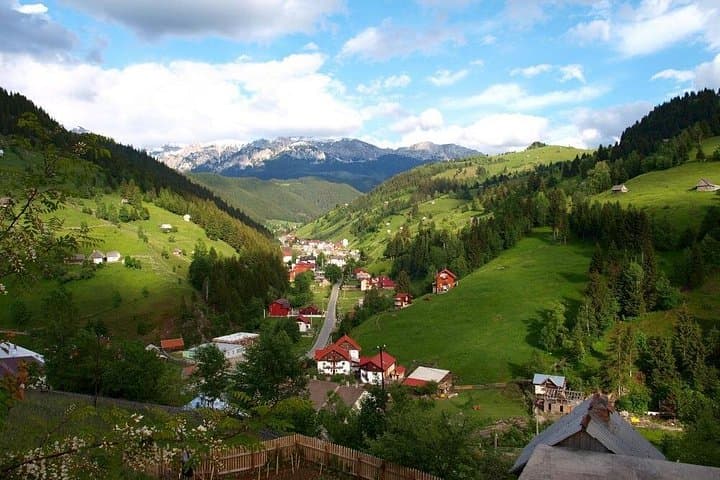
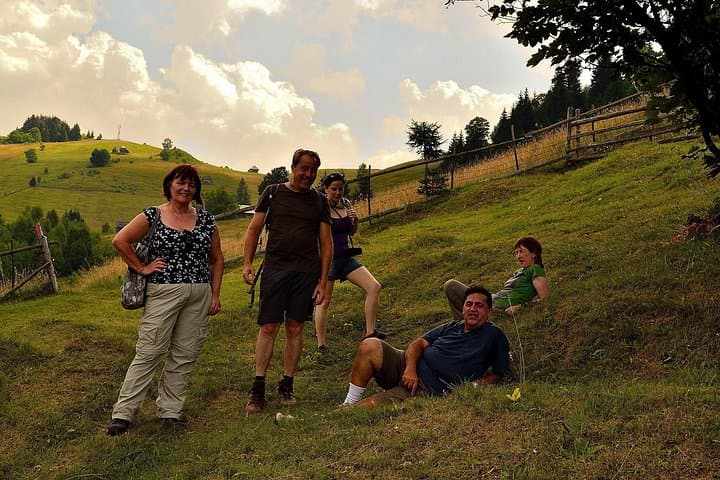
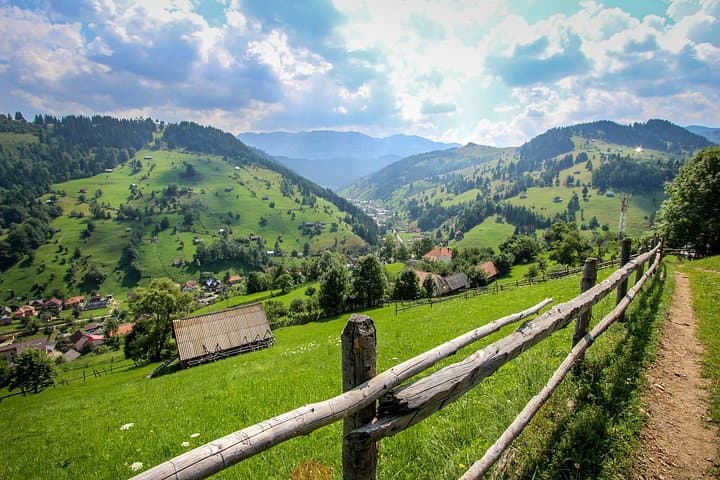
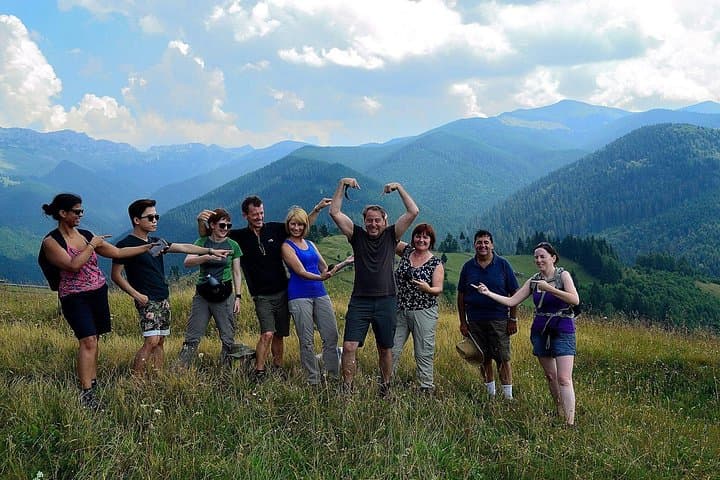
A low cloud lifts off the ridge and the valley exhales—this is Moeciu de Sus on a morning when the light finds every fold of pasture. You start on gentle trails that climb toward Bisericuța (1,322 m), where a compact viewpoint opens onto Fundata, the Bucegi Massif and the serrated spine of Piatra Craiului. The route moves through villagers’ pastures, past an odaie (traditional mountain stable), and across seasonal meadows that still feel worked by hand.
A low cloud lifts off the ridge and the valley exhales—this is Moeciu de Sus on a morning when the light finds every fold of pasture. You start on gentle trails that climb toward Bisericuța (1,322 m), where a compact viewpoint opens onto Fundata, the Bucegi Massif and the serrated spine of Piatra Craiului. The route moves through villagers’ pastures, past an odaie (traditional mountain stable), and across seasonal meadows that still feel worked by hand.
The landscape here is shaped by glacial valleys and limestone ridges; Piatra Craiului’s karst cliffs are the visible edge of a deeper geological story. Culturally, Moeciu’s life revolves around transhumant shepherding—summer pastures, simple wooden huts and cheeses made the old way. A native Spanish-speaking guide adds context, translating local stories and pointing out architectural details in houses and stables.
Practically, the hike is a 10 km circular with roughly 350 m of ascent and descent, suitable for families with a moderate fitness level. Trails are mostly singletrack and pastoral paths—expect exposed sun on ridgelines and muddier sections after rain. Wear sturdy footwear, carry 1–2 liters of water per person, and layer for wind at the top.
Timing matters: mornings often give the clearest views, while mid-afternoon brings changing light and more wind. Respect private pastures, follow your guide’s lead around livestock areas, and leave the odaie as you found it—the stories are best shared, not disturbed.