THE ADVENTURE COLLECTIVE® · Independent discovery and booking for outdoor travel

Witness thousands of mobula rays migrating off Cabo San Lucas—an intense, three-hour snorkeling excursion (May–July) that combines the Arch, a sea lion colony, and multiple chances to enter the water with these acrobatic rays.
Witness thousands of mobula rays migrating off Cabo San Lucas—an intense, three-hour snorkeling excursion (May–July) that combines the Arch, a sea lion colony, and multiple chances to enter the water with these acrobatic rays.
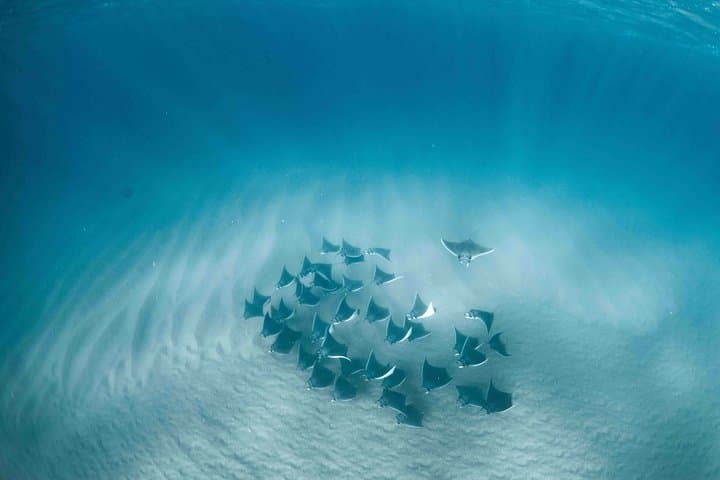
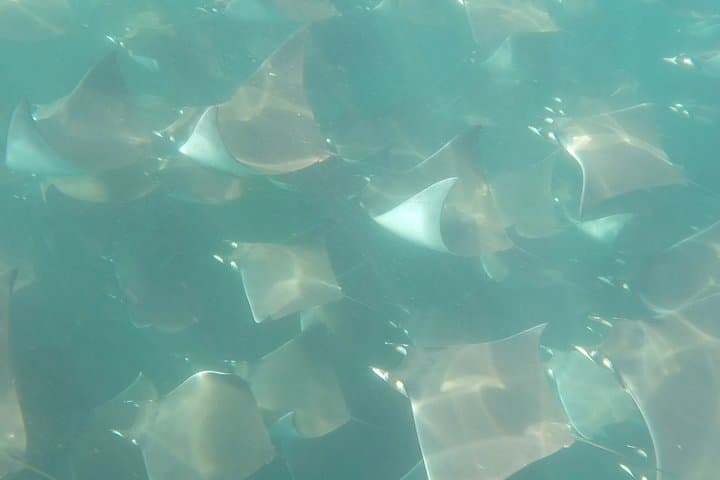
The boat slips quiet out of the marina at first light, engines low and the harbor dissolving behind a spray of salt. In front, the Pacific widens and the rock fingers of Land’s End slice the horizon—an abrupt geology of granite and wind that has guided mariners for centuries. Guides scan the water, eyes trained for a shimmer that turns the surface into a living road: a migrating school of mobula rays, thousands moving like a single creature.
Verified experiences and guided adventures in the surrounding area.
Operated by Cabo Trek · Cabo San Lucas, Baja California Sur
The boat slips quiet out of the marina at first light, engines low and the harbor dissolving behind a spray of salt. In front, the Pacific widens and the rock fingers of Land’s End slice the horizon—an abrupt geology of granite and wind that has guided mariners for centuries. Guides scan the water, eyes trained for a shimmer that turns the surface into a living road: a migrating school of mobula rays, thousands moving like a single creature.
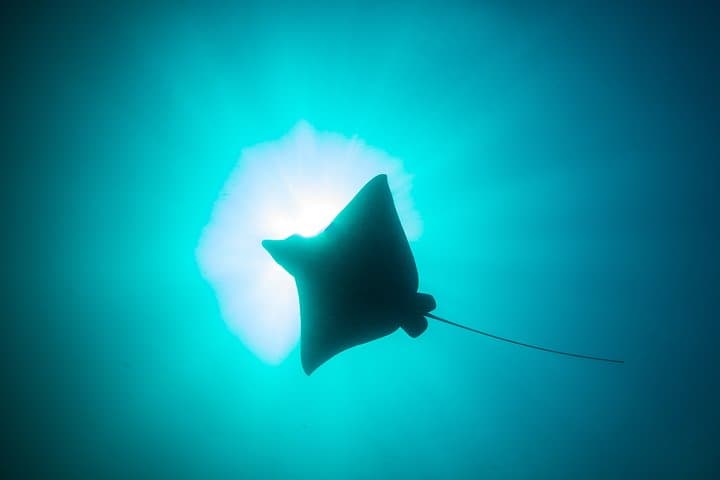
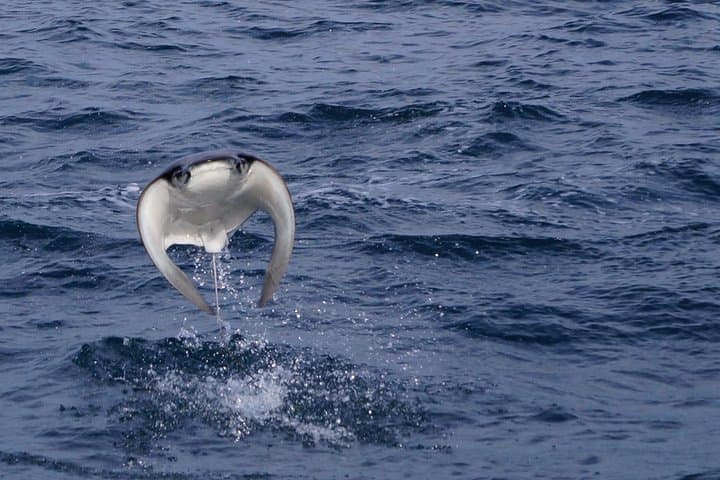
Mobula rays visit Baja California Sur in force between May and July, making the bay around Cabo San Lucas one of the most reliable places on earth to observe the spectacle. These relatives of the manta reach wingspans up to 6–7 feet and are notorious for breaching—launching themselves six to eight feet into the air. The behavior is both courtship and feeding: schooling fish press against the surface, the rays dart through, and the sea answers in sudden motion.
Geology plays a quiet role in the show. The steep submarine drop-off at Land’s End stirs nutrient-rich currents that funnel baitfish, and tidal dynamics gather the mobulas where water funnels narrow. The iconic Arch—scoured by waves over millennia—forms a dramatic waypoint; nearby a noisy colony of California sea lions barks and sunbathes on the rocks, oblivious to human wonder.
Locals treat the migration with a practical reverence. Fishing communities and tour operators have learned a rhythm: time the visits, respect the animals, and use reef-safe products to keep the waters productive. The operator meets travelers at the Tesoro Hotel office on the marina—close to docks M–O—before a three-hour stretch of open ocean, sightseeing and multiple snorkeling opportunities once the school is found.
For would-be snorkelers, preparation matters. Wear a snug mask and fins, apply reef-safe sunscreen, and be honest about your comfort in the water—guides will assess conditions before letting groups enter. The trip includes all necessary snorkeling equipment, soft drinks and snacks, and small-group attention (max eight guests), but it’s not recommended for those with serious cardiovascular issues or advanced pregnancy.
Practicalities: departures are commonly at 9 a.m. when the sea is calmer, the duration is roughly three hours, and boats return to the same marina slip. Bring a towel, waterproof camera or housing, and motion-sickness medication if you’re prone to queasy mornings. Above all, keep the interaction ethical: enjoy the breaching from a respectful distance, let the current push you along, and let the rays lead the encounter.
Seeing thousands of rays breach and thread through the blue is an elemental event—part wildlife spectacle, part oceanic choreography. It’s a trip that pairs adrenaline with a low, steady awe: nature moving on its own timetable, daring you to keep pace.
moderate.
3 hours.
Moderate fitness required—comfortable treading water, basic snorkeling ability, and ability to climb aboard a small boat
Mobula ray migration is most consistent May through July; morning departures often offer calmer seas and better visibility.
No—basic snorkeling skills and comfort in open water are sufficient; guides will pair less confident swimmers with extra support and limit entries based on conditions.
Yes—all snorkeling equipment, soft drinks, snacks, and guide fees are included. Many guests bring their own masks for fit and comfort.
Infants can ride in a stroller prior to boarding and must sit on an adult’s lap; operators assess each child’s ability to safely participate in snorkeling.
Common sightings include California sea lions, dolphins, and occasionally sea turtles; whales are less common during the peak mobula season.
Full refunds are available if canceled at least 24 hours before departure; the operator may cancel for bad weather or insufficient travelers with a refund.
Cabo’s Arch formed from millions of years of wave-cut erosion and marks the meeting point of the Pacific and Sea of Cortez, long a passage for fishermen and mariners.
Operators recommend reef-safe sunscreen, no-touch policies, and limiting in-water time to minimize stress on the rays and surrounding marine life.
Cabo Trek operates guided outdoor trips and adventures with an emphasis on safety, stewardship, and memorable experiences.
The boat slips quiet out of the marina at first light, engines low and the harbor dissolving behind a spray of salt. In front, the Pacific widens and the rock fingers of Land’s End slice the horizon—an abrupt geology of granite and wind that has guided mariners for centuries. Guides scan the water, eyes trained for a shimmer that turns the surface into a living road: a migrating school of mobula rays, thousands moving like a single creature.
The boat slips quiet out of the marina at first light, engines low and the harbor dissolving behind a spray of salt. In front, the Pacific widens and the rock fingers of Land’s End slice the horizon—an abrupt geology of granite and wind that has guided mariners for centuries. Guides scan the water, eyes trained for a shimmer that turns the surface into a living road: a migrating school of mobula rays, thousands moving like a single creature.
Mobula rays visit Baja California Sur in force between May and July, making the bay around Cabo San Lucas one of the most reliable places on earth to observe the spectacle. These relatives of the manta reach wingspans up to 6–7 feet and are notorious for breaching—launching themselves six to eight feet into the air. The behavior is both courtship and feeding: schooling fish press against the surface, the rays dart through, and the sea answers in sudden motion.
Geology plays a quiet role in the show. The steep submarine drop-off at Land’s End stirs nutrient-rich currents that funnel baitfish, and tidal dynamics gather the mobulas where water funnels narrow. The iconic Arch—scoured by waves over millennia—forms a dramatic waypoint; nearby a noisy colony of California sea lions barks and sunbathes on the rocks, oblivious to human wonder.
Locals treat the migration with a practical reverence. Fishing communities and tour operators have learned a rhythm: time the visits, respect the animals, and use reef-safe products to keep the waters productive. The operator meets travelers at the Tesoro Hotel office on the marina—close to docks M–O—before a three-hour stretch of open ocean, sightseeing and multiple snorkeling opportunities once the school is found.
For would-be snorkelers, preparation matters. Wear a snug mask and fins, apply reef-safe sunscreen, and be honest about your comfort in the water—guides will assess conditions before letting groups enter. The trip includes all necessary snorkeling equipment, soft drinks and snacks, and small-group attention (max eight guests), but it’s not recommended for those with serious cardiovascular issues or advanced pregnancy.
Practicalities: departures are commonly at 9 a.m. when the sea is calmer, the duration is roughly three hours, and boats return to the same marina slip. Bring a towel, waterproof camera or housing, and motion-sickness medication if you’re prone to queasy mornings. Above all, keep the interaction ethical: enjoy the breaching from a respectful distance, let the current push you along, and let the rays lead the encounter.
Seeing thousands of rays breach and thread through the blue is an elemental event—part wildlife spectacle, part oceanic choreography. It’s a trip that pairs adrenaline with a low, steady awe: nature moving on its own timetable, daring you to keep pace.