THE ADVENTURE COLLECTIVE® · Independent discovery and booking for outdoor travel

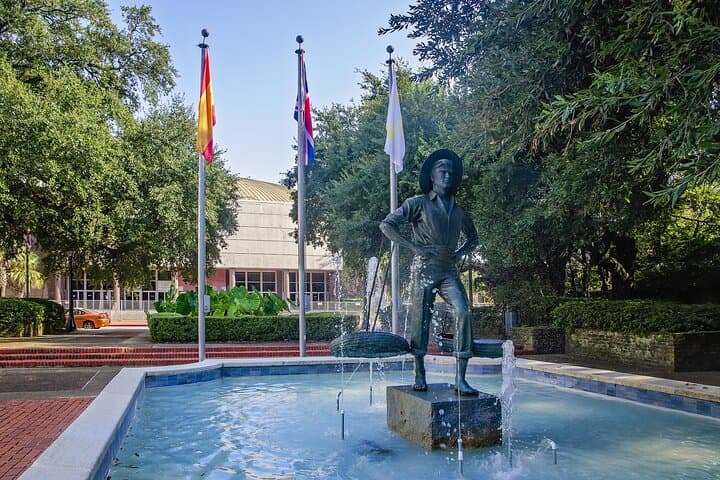
Take a 50–60 minute self-guided audio walk through downtown Mobile. Learn the city’s French, Spanish, British and American eras while visiting Mardi Gras Park, Dauphin Street, the Cathedral and Malaga Square at your own pace.
Take a 50–60 minute self-guided audio walk through downtown Mobile. Learn the city’s French, Spanish, British and American eras while visiting Mardi Gras Park, Dauphin Street, the Cathedral and Malaga Square at your own pace.
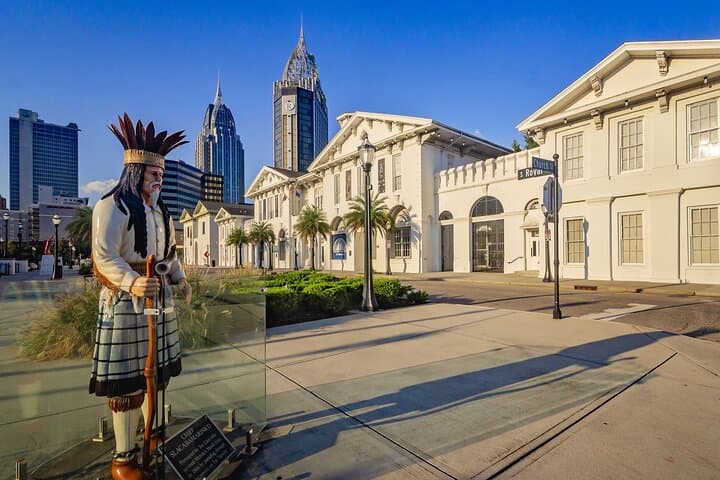
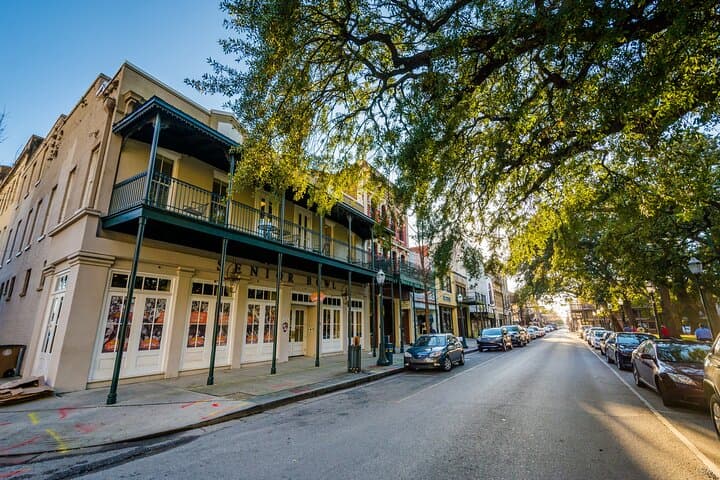
Stand on the sidewalk outside the Condé-Charlotte Museum and the city opens like a handbook of ports and flags: French street grids, Spanish plazas, British-era brickwork and American civic buildings layered within a few blocks. The Mobile River pushes past downtown, daring you to look across to the wide bay; live oaks shade the walk while street brass and shopfronts hum the city’s stories.
Verified experiences and guided adventures in the surrounding area.
Operated by WalknTours · Mobile, AL
Stand on the sidewalk outside the Condé-Charlotte Museum and the city opens like a handbook of ports and flags: French street grids, Spanish plazas, British-era brickwork and American civic buildings layered within a few blocks. The Mobile River pushes past downtown, daring you to look across to the wide bay; live oaks shade the walk while street brass and shopfronts hum the city’s stories.
Mobile’s history is immediate here—founded under French rule in 1702, governed later by Spain and Britain before joining the United States. Geologically the downtown sits on the Gulf Coastal Plain: low, flat ground shaped by ancient rivers and coastal sediments, which explains the city’s broad squares and frequent oak-lined parks. Culturally Mobile stakes a claim as one of America’s earliest Mardi Gras cities; Dauphin Street still carries the rattle of parades and the murmur of jazz and seafood kitchens.
This smartphone-guided tour is location-aware and runs 50–60 minutes over mostly flat, paved sidewalks with negligible elevation gain. Expect frequent stops at plazas, the cathedral, Mardi Gras Park, historic Dauphin Street and Malaga Square. Practicalities: download the WalknTours app, unlock with the provided code, and carry a charged phone and headphones. Because Mobile is subtropical, time your walk for morning or late afternoon in summer to avoid heat and afternoon thunderstorms.
The route is wheelchair and stroller accessible and suitable for most fitness levels. Use local maps to extend the tour into nearby museums or riverfront walks if you want to add an hour. Bring water, good shoes, and a curiosity for layered histories—this is a city that reveals itself block by block.
easy.
50–60 minutes.
Suitable for most fitness levels; minimal walking intensity and no steep elevation.
The guided experience runs 50–60 minutes and covers roughly 1–1.5 miles on paved sidewalks, with frequent narrated stops.
The WalknTours app requires initial download and activation; once unlocked the audio plays location-aware but keep data or offline assets available as recommended by the app.
Yes—downtown sidewalks and the route points of interest are wheelchair and stroller accessible according to the operator.
Yes—the app is designed to let you stop and continue later at your own pace; narration will resume when you return to the route.
Mobile was founded by the French in 1702, later controlled by Spain and Britain before U.S. incorporation; its street plan and squares reflect colonial-era civic design.
Downtown preservation efforts prioritize historic building restoration and tree canopy protection; visitors are encouraged to use refillable bottles and stay on paved routes to limit erosion.
WalknTours operates guided outdoor trips and adventures with an emphasis on safety, stewardship, and memorable experiences.

Stand on the sidewalk outside the Condé-Charlotte Museum and the city opens like a handbook of ports and flags: French street grids, Spanish plazas, British-era brickwork and American civic buildings layered within a few blocks. The Mobile River pushes past downtown, daring you to look across to the wide bay; live oaks shade the walk while street brass and shopfronts hum the city’s stories.
Stand on the sidewalk outside the Condé-Charlotte Museum and the city opens like a handbook of ports and flags: French street grids, Spanish plazas, British-era brickwork and American civic buildings layered within a few blocks. The Mobile River pushes past downtown, daring you to look across to the wide bay; live oaks shade the walk while street brass and shopfronts hum the city’s stories.
Mobile’s history is immediate here—founded under French rule in 1702, governed later by Spain and Britain before joining the United States. Geologically the downtown sits on the Gulf Coastal Plain: low, flat ground shaped by ancient rivers and coastal sediments, which explains the city’s broad squares and frequent oak-lined parks. Culturally Mobile stakes a claim as one of America’s earliest Mardi Gras cities; Dauphin Street still carries the rattle of parades and the murmur of jazz and seafood kitchens.
This smartphone-guided tour is location-aware and runs 50–60 minutes over mostly flat, paved sidewalks with negligible elevation gain. Expect frequent stops at plazas, the cathedral, Mardi Gras Park, historic Dauphin Street and Malaga Square. Practicalities: download the WalknTours app, unlock with the provided code, and carry a charged phone and headphones. Because Mobile is subtropical, time your walk for morning or late afternoon in summer to avoid heat and afternoon thunderstorms.
The route is wheelchair and stroller accessible and suitable for most fitness levels. Use local maps to extend the tour into nearby museums or riverfront walks if you want to add an hour. Bring water, good shoes, and a curiosity for layered histories—this is a city that reveals itself block by block.