THE ADVENTURE COLLECTIVE® · Independent discovery and booking for outdoor travel

Ride a 4x4 from downtown Moab to hidden petroglyph panels along the Colorado River. In two hours a guide explains ancient imagery, local geology, and the human stories written into the rock.
Ride a 4x4 from downtown Moab to hidden petroglyph panels along the Colorado River. In two hours a guide explains ancient imagery, local geology, and the human stories written into the rock.
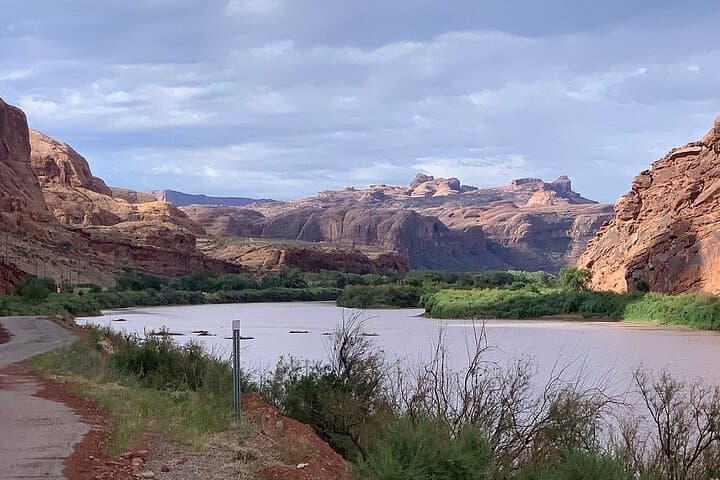
You feel the seat give under you as the UTV eases onto a sandy track; red rock walls lean in like old storytellers and the Colorado River flashes silver below, daring you to look closer.
Verified experiences and guided adventures in the surrounding area.
Operated by Moab Tourism Center · Moab, Utah
You feel the seat give under you as the UTV eases onto a sandy track; red rock walls lean in like old storytellers and the Colorado River flashes silver below, daring you to look closer.
On this private two‑hour ride from downtown Moab you’ll stop at weathered panels etched by Ancestral Puebloan (often called Anasazi) and Ute hands, hop out for short, guided walks, and watch spring-fed seeps bend through slickrock. The geology here is blunt and honest — Navajo and Entrada sandstones sculpted by wind and water into fins, bows, and rounded domes — while the river’s incision reveals the deep-time process that carved the canyon rims.
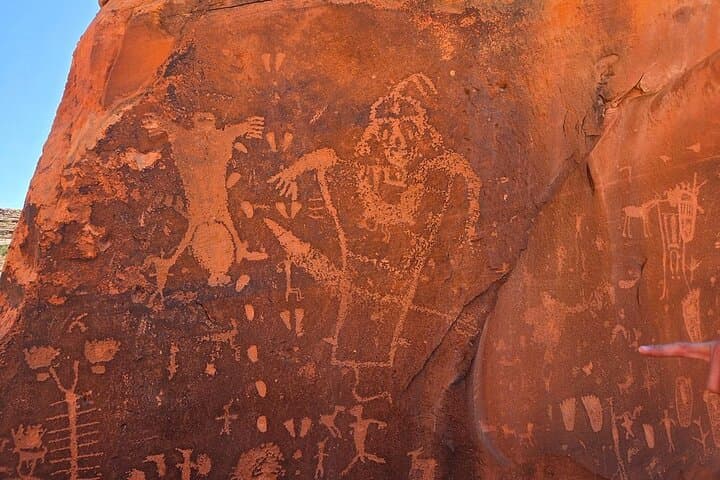
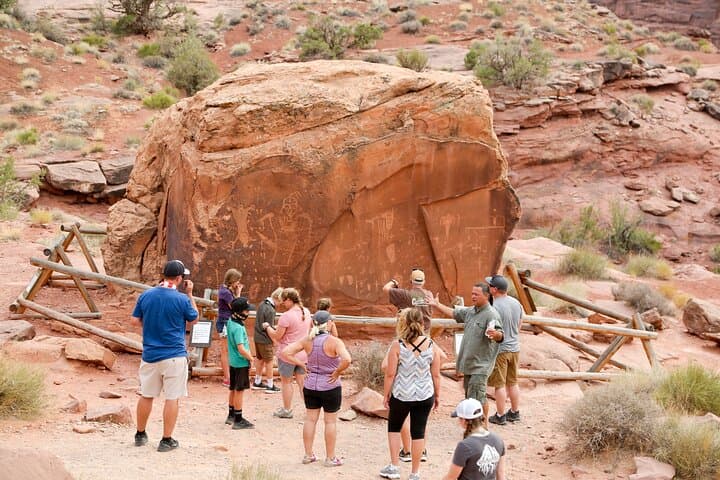
Guides link the imagery on the stone to hunting routes, seasonal cycles, and clan markings, and they place the glyphs in a living cultural landscape rather than a museum case. Sites like Moonflower and the Birthing Stone are less trafficked than park monuments, so the panels feel immediate; you’re close enough to trace motifs with your eye but asked to keep hands off.
Practical notes: tours depart from the Moab Tourism Center at 606 S Main Street and run about two hours. This is a ride‑with‑guide experience in a 4x4 UTV (drivers can also follow in their own Kawasaki-style vehicles if needed). Expect short, uneven stops and sun, dust and occasional wind — bring sun protection, a reusable water bottle (bottled water is provided), closed-toe shoes, and a light layer for changing temperatures. Tours operate in most weather; notify the operator of mobility restrictions or pregnancy when booking. The combination of geology, quiet panels and river views makes this an efficient, accessible way to see Moab’s deep history.
easy.
2 hours.
Suitable for most fitness levels; able to step in and out of an off‑road vehicle and walk short uneven sections.
The tour is approximately two hours and departs from the Moab Tourism Center at 606 South Main Street; you return to the same location.
You can follow the guide in an approved Kawasaki-style 4x4 if you prefer to drive; guides also offer ride-with-guide where they do the driving.
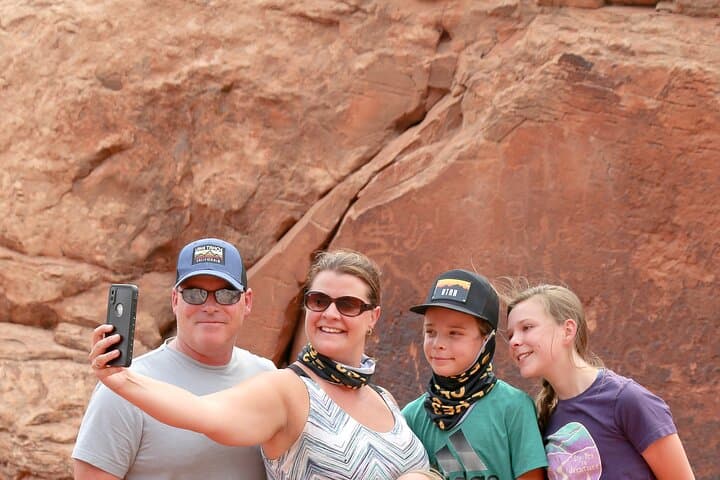
Photography is encouraged but touching or chalking glyphs is prohibited to preserve fragile rock art; follow your guide’s directions at each stop.
Children must be accompanied by an adult and the tour is generally family‑friendly, but it’s not recommended for pregnant travelers or those with serious spinal or cardiovascular conditions — disclose restrictions when booking.
Petroglyphs in the Moab region record several cultural layers from Ancestral Puebloan artisans to later Ute groups; motifs often mark resource routes and ceremonial sites.
Stay on designated access tracks and follow leave-no-trace guidance — rock art is nonrenewable and sensitive to oils, graffiti, and vehicle erosion.
Moab Tourism Center operates guided outdoor trips and adventures with an emphasis on safety, stewardship, and memorable experiences.
You feel the seat give under you as the UTV eases onto a sandy track; red rock walls lean in like old storytellers and the Colorado River flashes silver below, daring you to look closer.
You feel the seat give under you as the UTV eases onto a sandy track; red rock walls lean in like old storytellers and the Colorado River flashes silver below, daring you to look closer.
On this private two‑hour ride from downtown Moab you’ll stop at weathered panels etched by Ancestral Puebloan (often called Anasazi) and Ute hands, hop out for short, guided walks, and watch spring-fed seeps bend through slickrock. The geology here is blunt and honest — Navajo and Entrada sandstones sculpted by wind and water into fins, bows, and rounded domes — while the river’s incision reveals the deep-time process that carved the canyon rims.
Guides link the imagery on the stone to hunting routes, seasonal cycles, and clan markings, and they place the glyphs in a living cultural landscape rather than a museum case. Sites like Moonflower and the Birthing Stone are less trafficked than park monuments, so the panels feel immediate; you’re close enough to trace motifs with your eye but asked to keep hands off.
Practical notes: tours depart from the Moab Tourism Center at 606 S Main Street and run about two hours. This is a ride‑with‑guide experience in a 4x4 UTV (drivers can also follow in their own Kawasaki-style vehicles if needed). Expect short, uneven stops and sun, dust and occasional wind — bring sun protection, a reusable water bottle (bottled water is provided), closed-toe shoes, and a light layer for changing temperatures. Tours operate in most weather; notify the operator of mobility restrictions or pregnancy when booking. The combination of geology, quiet panels and river views makes this an efficient, accessible way to see Moab’s deep history.