THE ADVENTURE COLLECTIVE® · Independent discovery and booking for outdoor travel

Descend into narrow sandstone slots and finish with a bold 220-foot rappel on this private canyoneering tour in Moab. Guided instruction, full gear, and local geological insight make it accessible to adventurous beginners and experienced canyoneers alike.
Descend into narrow sandstone slots and finish with a bold 220-foot rappel on this private canyoneering tour in Moab. Guided instruction, full gear, and local geological insight make it accessible to adventurous beginners and experienced canyoneers alike.
You step off the truck into a sun-baked hush where wind has carved red stone into tight slots and honeycomb ledges. The guide checks your harness and helmet, the leather of webbing snapping in the dry air, and the canyon ahead seems to breathe — narrow, cool, and impatient to be descended.
Verified experiences and guided adventures in the surrounding area.
Operated by Desert Highlights · Moab, Utah
You step off the truck into a sun-baked hush where wind has carved red stone into tight slots and honeycomb ledges. The guide checks your harness and helmet, the leather of webbing snapping in the dry air, and the canyon ahead seems to breathe — narrow, cool, and impatient to be descended.
This route was pioneered in the late 1990s and threads classic Colorado Plateau sandstone: cross-bedded Entrada and Navajo layers sculpted by ancient dunes and sudden flash floods. The area sits within the broader cultural landscape of southeastern Utah, where Ancestral Puebloan artifacts and pioneer routes intersect modern climbing and outdoor guiding traditions. Geologically recent uplift and episodic erosion created the corkscrew slots and sheer rappel faces you'll encounter.
Expect a mixed day of hiking, scrambling, and technical rappels — an introductory 30-foot drop followed by a dramatic 220-foot descent that finishes on a broad ledge. Guides from Desert Highlights supply ropes and instruction, teaching safe rigging, rope management, and descent technique while pointing out cryptobiotic soils, pinyon-juniper ecology, and signs of desert wildlife.
Practically: plan for 6–8 hours on uneven slickrock and sand. Hydrate heavily before and during the trip; temperatures can spike. Wear grippy shoes with ankle support and bring sun protection, a small daypack, and layers for wind and cooler canyon bottoms. Be prepared for short exposed approaches and confined slot sections; if you have a reasonable fitness base and no fear of heights, the technical learning and the final rappel make this a memorable way to experience Moab’s hidden corridors.
challenging.
6–8 hours.
Moderate to fit: you should be comfortable hiking 4–6 miles with elevation changes, scrambling, and working in exposed terrain.
No — guides provide instruction, gear, and supervision; beginners who are comfortable with heights and physically fit can participate.
Age and weight limits vary by operator; most private canyoneering tours accept teenagers accompanied by adults—confirm at booking.
Expect a mix: open ledges and exposed rappels plus tighter corkscrew slot sections that require careful foot placement and low overhead clearance.
Tours can be canceled for flash flood risk or unsafe conditions; operators typically refund if canceled within the posted window.
This guided line was established in the late 1990s, drawing on local knowledge of lesser-visited canyons on the Colorado Plateau and building on decades of climbing and guiding in the Moab area.
Stay on durable rock and sandy approaches to protect cryptobiotic soil; guides prioritize leave-no-trace practices and minimize vegetation disturbance.
Desert Highlights operates guided outdoor trips and adventures with an emphasis on safety, stewardship, and memorable experiences.


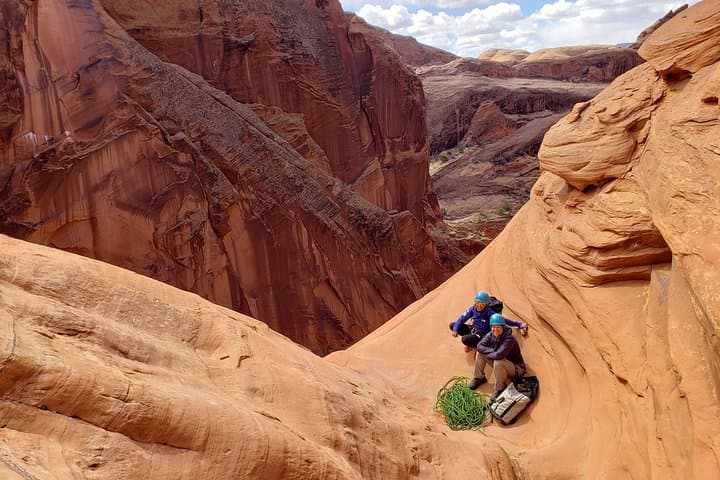
You step off the truck into a sun-baked hush where wind has carved red stone into tight slots and honeycomb ledges. The guide checks your harness and helmet, the leather of webbing snapping in the dry air, and the canyon ahead seems to breathe — narrow, cool, and impatient to be descended.
You step off the truck into a sun-baked hush where wind has carved red stone into tight slots and honeycomb ledges. The guide checks your harness and helmet, the leather of webbing snapping in the dry air, and the canyon ahead seems to breathe — narrow, cool, and impatient to be descended.
This route was pioneered in the late 1990s and threads classic Colorado Plateau sandstone: cross-bedded Entrada and Navajo layers sculpted by ancient dunes and sudden flash floods. The area sits within the broader cultural landscape of southeastern Utah, where Ancestral Puebloan artifacts and pioneer routes intersect modern climbing and outdoor guiding traditions. Geologically recent uplift and episodic erosion created the corkscrew slots and sheer rappel faces you'll encounter.
Expect a mixed day of hiking, scrambling, and technical rappels — an introductory 30-foot drop followed by a dramatic 220-foot descent that finishes on a broad ledge. Guides from Desert Highlights supply ropes and instruction, teaching safe rigging, rope management, and descent technique while pointing out cryptobiotic soils, pinyon-juniper ecology, and signs of desert wildlife.
Practically: plan for 6–8 hours on uneven slickrock and sand. Hydrate heavily before and during the trip; temperatures can spike. Wear grippy shoes with ankle support and bring sun protection, a small daypack, and layers for wind and cooler canyon bottoms. Be prepared for short exposed approaches and confined slot sections; if you have a reasonable fitness base and no fear of heights, the technical learning and the final rappel make this a memorable way to experience Moab’s hidden corridors.